
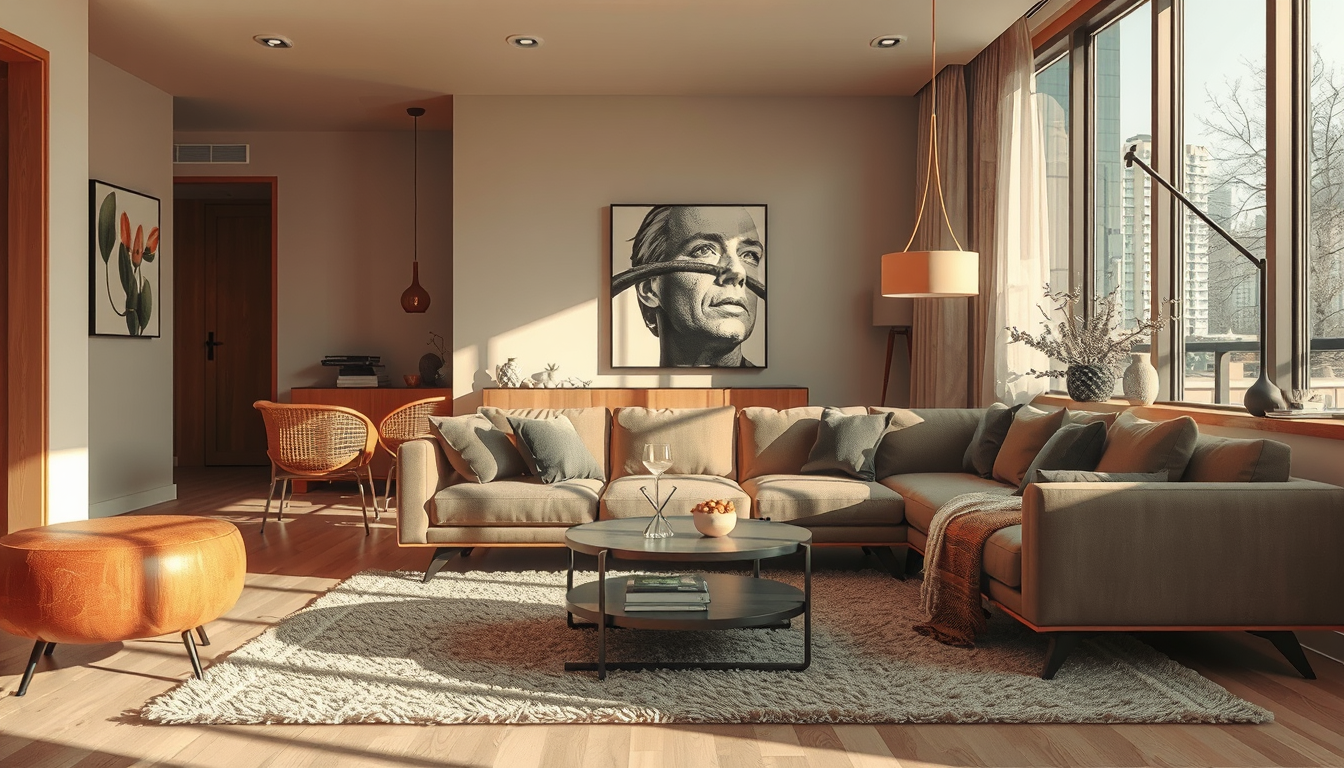
A mid century modern living room canada homeowners can live in year-round looks nothing like the sun-bleached Palm Springs showpieces filling your Pinterest board. It looks like walnut credenzas glowing under a Sputnik chandelier while January winds rattle the windows. It looks like a compact Scarborough bungalow where every piece of furniture earns its square footage. The style — born roughly 1945–1969 from post-war optimism, Scandinavian restraint, and Bauhaus function — was literally designed for modest homes, which makes it a near-perfect match for Toronto’s housing reality. Here at Toronto Interior Designer, we think it deserves a Canadian playbook, not a Californian one.
Why Mid-Century Modern Living Room Design Works in Canadian Homes
Mid-century modern succeeded because it solved real problems: small post-war houses needed furniture that was light, functional, and beautiful without being fussy. Toronto faces the same pressures today. The average condo in the city sits at approximately 660 square feet , and even semi-detached Victorians rarely offer sprawling main floors. MCM’s low-profile silhouettes, tapered legs that expose floor area, and built-in storage philosophy all work harder per square foot than bulkier traditional styles.
Canada also has its own MCM lineage. Don Mills, built in 1953 as the country’s first master-planned community, remains one of the largest concentrations of original mid-century residential architecture in Canada. Architects like Ron Thom and Arthur Erickson adapted the movement’s principles to Canadian light, climate, and materials — think deeper overhangs for snow load and bigger windows to pull in every minute of winter daylight. The style isn’t imported; it has roots here.
The real advantage, though, is warmth. MCM’s signature materials — walnut, teak, warm brass — fight back against Toronto’s eight-plus hours of winter darkness in December. Where all-white minimalism can feel clinical by February, a well-styled MCM room actually improves with the season. Those rich wood grains absorb and reflect lamplight in a way that painted MDF simply cannot.
7 Timeless Mid-Century Modern Living Room Looks for Canada
Source Scaled-Right Living Room Pieces
Start with apartment-scale sofas, nesting tables, and layered lighting that fit Toronto floor plans without overwhelming them.
Toronto Interior Designer may earn a commission if you shop through these links at no extra cost to you.
Not every MCM living room needs to look the same. Here are seven approaches scaled to how Canadians actually live, from a 550-square-foot condo to a detached home with room to spare. If you’re working with a smaller footprint, our guide to the best sofas for small Toronto condos pairs well with several of these looks.
| # | Look | Key Pieces | Budget Range (CAD) | Works Best In |
|---|---|---|---|---|
| 1 | Classic Walnut & White | Walnut credenza, white bouclé sofa, arc lamp | $3,500–$7,000 | Condos, semis |
| 2 | Warm Scandinavian Hybrid | Oak-frame lounge chair, sheepskin throws, pendant light | $2,500–$5,500 | Any size room |
| 3 | Neo Deco Blend | Velvet channel-tufted sofa, brass accents, geometric rug | $4,000–$8,000 | Victorian semis, lofts |
| 4 | 1970s Revival | Cognac leather sofa, travertine coffee table, macramé | $3,000–$6,500 | Bungalows, townhomes |
| 5 | Compact Condo MCM | Slim-profile loveseat, wall-mounted shelving, nesting tables | $2,000–$4,500 | Units under 650 sq ft |
| 6 | West Coast Canadian | Douglas fir accents, linen upholstery, ceramic vessels | $3,000–$6,000 | Open-plan homes |
| 7 | Collected Vintage | Mixed-era thrifted pieces, statement Danish chair, kilim rug | $1,500–$4,000 | Any home with patience |
Look 3 — the Neo Deco Blend — reflects one of 2026’s most significant directions. Architectural Digest’s trend coverage highlights designers layering MCM clean lines with richer Art Deco ornamentation rather than committing to a single style period . For Toronto Victorians with existing crown moulding and arched doorways, this hybrid approach lets you keep the bones of your home instead of fighting them.
“Mid-century modern was never meant to be a museum piece. It was designed for regular families in regular-sized homes — that’s exactly why it still works in Toronto today.”
Best Places to Source Mid-Century Modern Furniture in Toronto and Canada
You have two strong paths: buy Canadian-made new or hunt vintage locally.
Canadian manufacturers worth knowing include EQ3, founded in Winnipeg, and Bensen, based in Vancouver. Both design for North American proportions and ship domestically without cross-border duties — a real advantage when a single US-imported dining chair can add $150–$300 in shipping and brokerage fees.
Toronto vintage sources offer the most affordable entry point:
- Smash Salvage — curated MCM furniture with restoration services
- Vintage Reworks — refinished mid-century case goods and seating
- Mid Century Modern Toronto (MCMT) — dedicated MCM dealer with rotating inventory
- Leslieville Flea — regular weekend market with multiple MCM vendors
- Facebook Marketplace and estate sales — highest effort, lowest prices; search “teak,” “Danish,” or “walnut credenza” for best results
A smart sourcing strategy: buy your sofa and any upholstered pieces new from a Canadian maker for warranty and comfort, then source case goods — credenzas, coffee tables, shelving — vintage. The hard goods from this era were built from solid wood and often outlast their modern equivalents by decades.
How to Style a Mid-Century Modern Living Room for Canadian Winters
The biggest mistake in MCM styling is treating it like a warm-climate aesthetic. Toronto demands adaptation. Here is a seasonal layering checklist:
- Swap out cotton throws for wool or mohair from October through April — Canadian brands like Trapper Point and MacAusland’s make heirloom-quality options.
- Add a thick-pile area rug under your coffee table. MCM originals often sat on bare floors, but Toronto’s cold-conducted-through-concrete-slab condos need that insulation.
- Position at least two warm-toned light sources below eye level. An arc floor lamp beside the sofa plus a table lamp on the credenza fights the 4:30 p.m. darkness without overhead glare.
- Use walnut and teak over lighter oak if your room faces north or gets limited winter sun — darker warm woods hold visual warmth better in flat light.
- Incorporate one or two textile-heavy accent pillows in ochre, rust, or olive — colours that read as cozy without clashing with MCM’s restrained palette.
If you’re also rethinking the wall colour behind your MCM pieces, our warm neutral paint guide covers the ten best-performing options for Canadian light conditions.
Mixing Mid-Century Modern With Popular Toronto Home Styles
Pure period rooms photograph well but rarely reflect how people actually live. Toronto’s housing stock practically demands mixing. A Victorian semi with 9-foot ceilings and original trim looks incredible with a low-slung MCM sofa — the contrast between ornate architecture and clean furniture creates tension that both styles benefit from. A post-war Scarborough bungalow already shares MCM’s DNA in its open floor plan and picture windows; lean into that by matching the era rather than fighting it.
The rule Toronto Interior Designer stylists rely on: keep architecture original, let furniture do the era-shifting. Don’t rip out baseboards to look more “modern,” and don’t add crown moulding to look more “traditional.” The mix is the point.
For more layout and styling ideas across different Toronto home types, browse our living spaces archive.
What to Do Next
A mid-century modern living room that Canadian families can actually enjoy through every season starts with honest assessment, not impulse buying. Here’s your action plan:
- Measure your living room and note window orientation — north-facing rooms need warmer wood tones and more lamp positions.
- Pick one of the seven looks above as your starting direction, then adapt it to your home’s architecture.
- Visit two Toronto vintage shops before buying anything new — you’ll calibrate your eye and your budget fast.
- Invest in one anchor piece first (sofa or credenza) and build outward over three to six months rather than furnishing all at once.
- Layer for winter now, not later — if you skip textiles and warm lighting, the room will feel cold by November and you’ll blame the style instead of the styling.
Mid-century modern living room searches spike every January, right when people are staring at their spaces during the long dark. Don’t wait for that moment. Start now, source smart, and build a room that actually gets better when the temperature drops.
Finish the Room With Texture
Layer in rugs, side tables, and decor accents that warm up condo living rooms without adding clutter.
Toronto Interior Designer may earn a commission if you shop through these links at no extra cost to you.
Sources
- Urbanation Toronto Condo Market Data — https://www.urbanation.ca
- Architectural Digest 2026 Trends — https://www.architecturaldigest.com
Frequently Asked Questions
Where can I buy mid-century modern furniture in Canada?
Canadian manufacturers like EQ3 (Winnipeg) and Bensen (Vancouver) offer new MCM pieces without cross-border duties. For vintage, Toronto shops such as Smash Salvage, Mid Century Modern Toronto, and Leslieville Flea carry curated selections. Facebook Marketplace estate sales are the most affordable option.
How do I make a mid-century modern living room feel warm in Canadian winters?
Swap cotton throws for wool or mohair from October to April, add a thick-pile area rug for insulation, and position at least two warm-toned lamps below eye level. Choose walnut or teak over lighter woods in north-facing rooms to hold visual warmth in flat winter light.
Does mid-century modern work in small Canadian condos?
Yes. MCM furniture was designed for modest post-war homes, making it ideal for Toronto condos averaging 660 square feet. Low-profile silhouettes, tapered legs that expose floor area, and built-in storage maximize every square foot.