
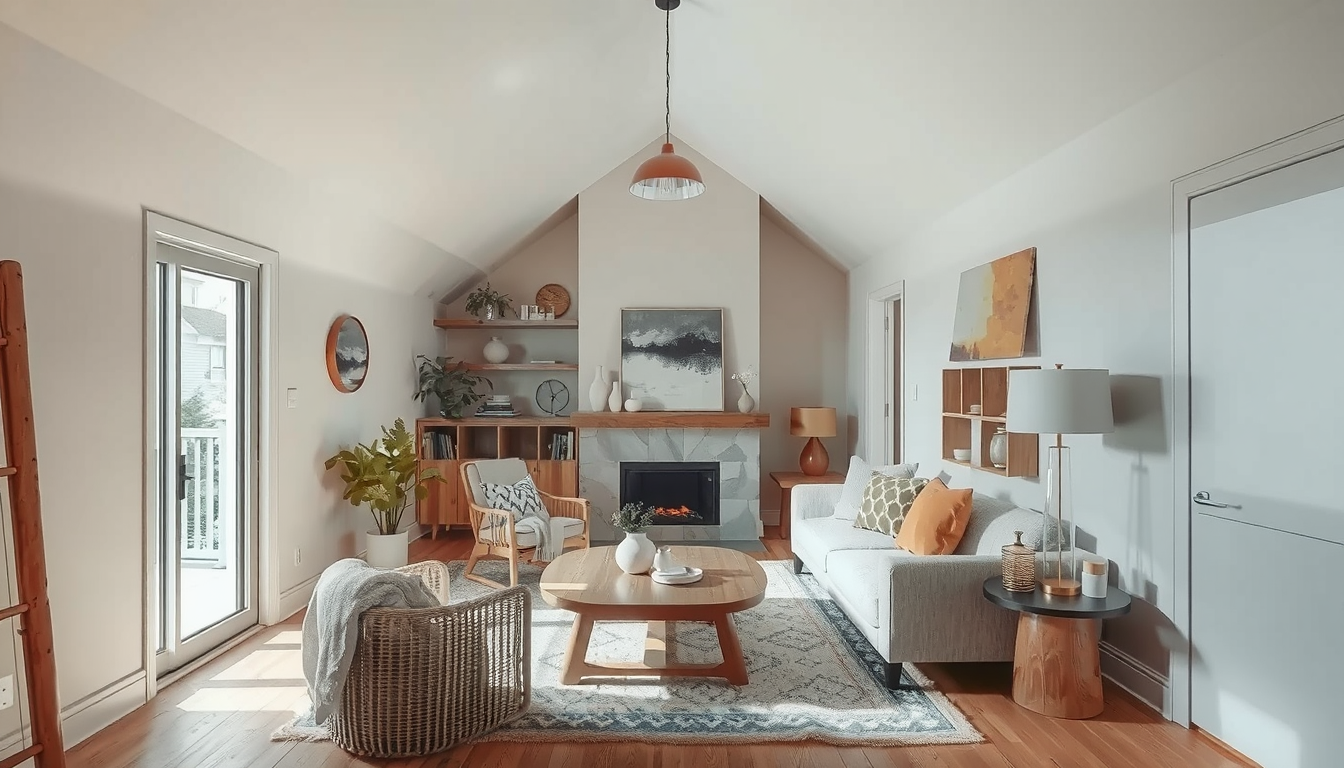
Attic conversion Canada interest has surged — and for good reason. In a city where the average detached home costs well over $1 million, adding a finished room above your existing footprint is one of the smartest ways to gain square footage without buying bigger. But unlike a fresh coat of paint or a furniture swap, converting a Toronto attic means navigating the Ontario Building Code, climate-specific insulation demands, and a permit process that trips up even experienced renovators. This guide from Toronto Interior Designer covers every step: the regulations you must meet, the costs you should expect, and the design strategies that make sloped ceilings feel like features rather than flaws.
Attic Conversion Canada Costs: 2026 Toronto Price Breakdown
Before you start sketching layouts, understand where the money goes. These figures reflect 2026 contractor estimates for a typical Toronto semi-detached or detached home.
Total range: roughly $45,000–$110,000+ CAD depending on scope, finishes, and whether structural work is needed .
Avoid This Mistake
Do not skip the structural engineering assessment. Many Toronto homeowners assume their attic floor is strong enough because it “feels solid.” Attic joists in most pre-1980 Ontario homes are 2×6 or 2×8 lumber rated for dead storage loads — not the live loads required for a bedroom or office. Reinforcing after drywall is up costs two to three times more than doing it first, and it disrupts every finished surface in the process.
Structural and Code Requirements for Canadian Attic Conversions
Price Out the High-Impact Pieces First
Before committing to a renovation mood board, benchmark the furniture, lighting, and storage pieces that set the tone.
Toronto Interior Designer may earn a commission if you shop through these links at no extra cost to you.
Not every attic qualifies. The Ontario Building Code requires a minimum ceiling height of 2.1 m (6 ft 11 in) over at least 50 % of the finished floor area for any habitable room . Measure from the top of the subfloor to the underside of the ridge beam. If your roof pitch is shallower than about 7:12, you may struggle to hit that threshold without raising the roofline — a costly structural change that often requires Committee of Adjustment approval.
A quick self-assessment checklist:
- Ridge height: Is the peak at least 2.4 m from the existing floor?
- Roof pitch: Is it 7:12 or steeper?
- Floor joists: Are they 2×8 or larger? (2×6 almost always needs reinforcement.)
- Access: Is there room on the floor below for a permanent staircase?
If you check three or four of these boxes, your attic is a strong candidate. Even two checks may be workable with the right engineering solutions, but expect higher costs to bridge the gaps.
Toronto Permits, Zoning, and Committee of Adjustment Process
With structural viability confirmed, the next step is the permit process. The City of Toronto requires a building permit for any conversion that changes the use of a space or involves structural modifications . Skipping the permit is not just risky during construction — unpermitted work must be disclosed on resale under Ontario’s Real Estate and Business Brokers Act, and it can derail a sale or reduce your offer price.
Here is the typical permit path:
- Hire a designer or architect to produce drawings that meet OBC requirements.
- Submit a building permit application to Toronto Building. Expect 4–8 weeks for review on a straightforward conversion.
- Zoning check. If your conversion adds a kitchen or second dwelling unit, you may need a zoning amendment or minor variance through the Committee of Adjustment — a process that adds 2–4 months and roughly $5,000–$8,000 in application and legal fees.
- Schedule inspections at each stage: framing, insulation, electrical, plumbing (if applicable), and final.
“The permit process feels intimidating until you realize it exists to protect your investment. A properly permitted attic conversion adds real, documentable value — an unpermitted one is a liability on paper.” — Toronto Interior Designer editorial team
A finished, permitted attic conversion can increase a Toronto home’s resale value by an estimated 10–20 %, comparable to a basement finish .
Insulation, Ventilation, and HVAC for Canadian Four-Season Attics
Toronto sits in NRCan’s Climate Zone 6, where recommended attic insulation values reach R-60 for ceilings. Spray-foam insulation applied directly to the roof deck is the most common choice for conversions because it insulates and air-seals in one step, and it preserves headroom better than batts between rafters.
Key considerations:
- Vapour barrier placement. In a conditioned attic, the vapour barrier sits on the warm side (interior face of the insulation). Getting this wrong causes condensation inside the roof assembly — a mould risk that worsens through freeze–thaw cycles.
- Ventilation. A traditional vented attic becomes an unvented, conditioned space once you insulate at the roofline. Your contractor must seal soffit vents and ensure the spray-foam layer is continuous from eave to ridge.
- HVAC. Extending your furnace ductwork works if capacity allows, but a ductless mini-split is often the better investment — it provides independent heating and cooling, handles summer humidity, and avoids tearing open walls on the floor below. For guidance on making these mechanical systems blend into your room design, explore more renovation strategies.
5 Attic Conversion Layout Ideas for Sloped Ceilings
Sloped ceilings are the defining design challenge of any attic conversion. The trick is placing tall furniture and standing-height activities under the ridge, and using the low knee-wall zones for built-ins.
1. Primary bedroom with built-in wardrobes. Position the bed centred under the peak. Line the knee walls with custom closet modules — standard 600 mm deep cabinets fit perfectly where the ceiling drops below standing height. Pair neutral tones with warm wood built-ins to keep the room feeling open.
2. Home office with dormer reading nook. A dormer adds headroom and natural light right where you need a desk. The flanking low zones become bookshelves or file storage.
3. Kids’ playroom and homework zone. Low ceilings are an advantage here — kid-height furniture fits naturally under the eaves, and you can build in toy cubbies that would waste space in a full-height room.
4. Guest suite with ensuite three-piece bath. Tuck the shower or tub under the slope (a freestanding tub under a skylight is a classic move) and keep the toilet and vanity under the peak where you need standing clearance. For more on shower enclosure options, see our guide to glass shower doors vs. curtains.
5. Media room or library loft. Low ambient light from small dormers is actually ideal for a screening room. Use the knee walls for vinyl storage, bookshelves, or equipment racks.
What to Do Next
Attic conversions reward careful upfront planning more than any other renovation in a Toronto home. Here is your action checklist:
- Measure your ridge height and roof pitch to confirm OBC ceiling-height compliance before spending a dollar on design.
- Hire a structural engineer for a joist assessment — budget $500–$1,000 for the report.
- Consult a Toronto-licensed architect or designer to produce permit-ready drawings.
- Get three contractor quotes that itemize structural, insulation, mechanical, and finish costs separately.
- Apply for your building permit early — processing times at Toronto Building fluctuate seasonally.
- Plan your insulation and HVAC strategy with a certified energy advisor to ensure you meet NRCan R-value guidelines and protect your insurance coverage.
A well-executed attic conversion turns dead space into one of the most characterful rooms in your home — and in Toronto’s market, it is one of the few renovations that reliably pays for itself. At Toronto Interior Designer, we will continue covering the code updates, cost benchmarks, and design ideas that help you make that investment with confidence.
Balance Budget and Finish Quality
Mix accessible basics with a few standout pieces so the room feels layered rather than one-note.
Toronto Interior Designer may earn a commission if you shop through these links at no extra cost to you.
Sources
- NRCan — https://natural-resources.canada.ca/energy-efficiency/homes
- Ontario Building Code 9.9.10 — https://www.ontario.ca/laws
- Appraisal Institute of Canada — https://www.aicanada.ca/
- Ontario Building Code Section 9.5 — https://www.ontario.ca/laws
- City of Toronto Building Permits — https://www.toronto.ca/city-government/planning-development/
Frequently Asked Questions
How much does an attic conversion cost in Canada?
A full attic conversion in Toronto typically costs $45,000–$110,000+ CAD in 2026, covering structural reinforcement, spray-foam insulation to R-60, egress windows, HVAC, staircase construction, and interior finishing. Budget an additional 10–15% contingency for unexpected structural work.
Do you need a permit for an attic conversion in Ontario?
Yes. The City of Toronto requires a building permit for any conversion that changes the use of a space or involves structural modifications. Unpermitted work must be disclosed on resale and can reduce your home’s sale price or derail a transaction entirely.
What is the minimum ceiling height for an attic conversion in Canada?
Under the Ontario Building Code, habitable rooms require a minimum ceiling height of 2.1 m (6 ft 11 in) over at least 50% of the finished floor area. A ridge height of at least 2.4 m and a roof pitch of 7:12 or steeper generally ensures compliance.