
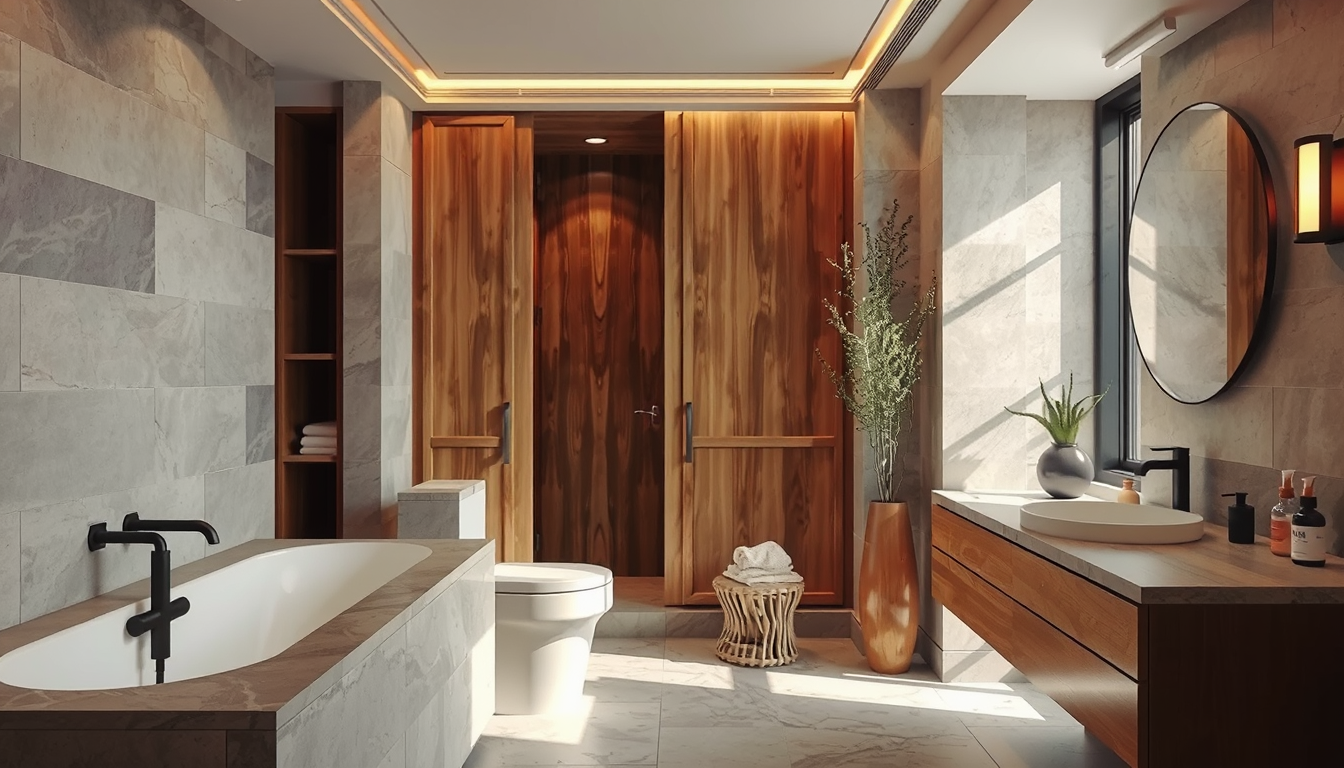
If you have ever searched for bathroom lighting ideas Canada and landed on advice written for sun-soaked California homes, you already know the problem: most of that guidance does not apply here. Toronto sits at 43°N latitude, which means roughly 8.5 hours of daylight on the winter solstice versus over 15 hours in late June. For about half the year, your bathroom lights are the first thing you see in the morning and the last thing you rely on at night. Get the layers wrong and you are squinting through a dark January, dealing with unflattering shadows at the vanity, or wasting energy with fixtures that fight the space instead of supporting it. This guide breaks down exactly how to light a Canadian bathroom — from code-compliant fixture selection to colour temperature choices that actually work with our seasons.
Why Canadian Bathrooms Need a Different Lighting Strategy
The bathroom lighting advice you find in most shelter magazines assumes two things: your bathroom has a window, and you live somewhere with moderate, consistent daylight. Neither applies to the average Toronto home.
Approximately 60 per cent of Toronto condo bathrooms have no exterior window at all, which makes layered artificial lighting a necessity rather than a style upgrade. Even in houses with bathroom windows, those north-facing panes deliver cold, grey light for months at a stretch. The Canadian Electrical Code adds another layer of complexity: all fixtures within the bathroom must be damp-rated, and anything inside a shower or tub zone requires a wet-rated certification carrying CSA or cUL markings for legal installation . Ignoring these ratings is not just a code violation — it is a safety risk in a room full of moisture.
The bottom line: you cannot simply pick the prettiest sconce from a US retailer and call it done. Canadian bathrooms demand fixtures rated for our codes, sized for our typically compact layouts, and calibrated for our dramatic seasonal light shifts. If you are planning a full bathroom refresh, pair your lighting plan with the right finishes — our guide to bathroom paint colours that work in small Canadian spaces covers how colour and light interact in tight quarters.
The 3-Layer Bathroom Lighting System: Ambient, Task, and Accent
Upgrade the Details That Change Everything
Lighting, mirrors, and matte hardware can make a modest bathroom renovation feel far more custom.
Toronto Interior Designer may earn a commission if you shop through these links at no extra cost to you.
Every well-lit bathroom uses three distinct layers of light. Here is how each one functions and what to prioritize in a Canadian context.
| Layer | Purpose | Best Fixture Types | Colour Temp | Budget Range (CAD) |
|---|---|---|---|---|
| Ambient | General room illumination; replaces daylight in windowless spaces | Flush-mount ceiling, recessed pot lights | 3000K | $60–$250 |
| Task | Focused light at the vanity for grooming, makeup, shaving | Wall sconces flanking the mirror, LED mirror, light bar | 2700K–3000K, CRI 90+ | $80–$400 |
| Accent | Mood, depth, and spa atmosphere | LED strip under vanity, niche lighting in shower, toe-kick glow | 2700K | $30–$150 |
Ambient lighting is your foundation. In a windowless condo bathroom, this layer does the heavy lifting that daylight would handle elsewhere. Recessed pot lights on a dimmer give you full brightness for cleaning and a softer glow for evening baths. Aim for a minimum of 50 lumens per square foot — in a typical 40-square-foot bathroom, that means at least 2,000 lumens of total ambient output.
Task lighting is where most bathrooms fail. A single overhead light casts shadows under your brow and chin — the worst possible setup for shaving or applying makeup. The fix: mount sconces or vertical light bars on both sides of the mirror at roughly eye level, centred around 65 inches from the floor. Choose fixtures with a CRI of 90 or above for accurate skin-tone rendering .
Accent lighting transforms a functional room into a space that feels intentional. An LED strip tucked beneath a floating vanity creates a soft halo that doubles as a nightlight. In-niche shower lighting adds depth without glare. These small touches are what separate a builder-grade bathroom from a thoughtfully designed space.
A bathroom should light you the way a good friend sees you — warm, honest, and never harsh. If your mirror makes you wince at 7 a.m. in January, your lighting is working against you.
Best Vanity Lighting for Dark Canadian Winter Mornings
The colour temperature debate matters more in Canada than almost anywhere else. Stick with 2700K to 3000K for vanity lighting. This range produces a warm, flattering tone that renders skin accurately without the clinical feel of cool white (4000K+). On a dark December morning, 4000K light paired with grey daylight through a window can make a bathroom feel sterile and unwelcoming — exactly the opposite of what you need when the sun does not rise until after 8 a.m.
If your bathroom does double duty — morning routine and evening wind-down — install a dimmer on every circuit. Dimming a 3000K fixture down to 30 per cent creates the warm, amber glow that spa designers use to trigger relaxation, without a separate fixture set. LED fixtures use up to 75 per cent less energy than halogen equivalents, which matters when Ontario hydro rates run between $0.10 and $0.17 per kWh on time-of-use pricing .
Five-point vanity lighting checklist:
- Mount sconces at eye level on both sides of the mirror — never rely on a single bar above.
- Choose 2700K–3000K with CRI 90+ for accurate colour rendering year-round.
- Use a dimmer switch to shift from bright task mode to soft ambient mode.
- Verify CSA or cUL certification on every fixture before purchase.
- Size the fixture to the mirror — sconces should sit within the mirror’s width, not beyond it.
If you are also rethinking your shower layout while updating fixtures, our walk-in shower design guide covers waterproof lighting placement inside wet zones.
Bathroom Lighting Ideas Canada: Windowless Condos and Small Spaces
Windowless bathrooms are the norm in Toronto’s condo market, and they require a deliberate approach. Without any natural light cue, your artificial lighting must handle every role — from waking you up to winding you down.
Start with a bright ambient layer. A 14-inch flush-mount LED in the 3000K range with 1,500–2,000 lumens will fill a typical 40-square-foot condo bathroom without overwhelming the space. Pair it with a dimmer so you are not blasted with full output during a 2 a.m. trip.
Add a backlit mirror. This is the single most effective upgrade for a small, windowless bathroom. A perimeter-lit LED mirror provides even task lighting across your face without the bulk of wall sconces — critical when your vanity wall is only 48 inches wide. Many models now include a colour-temperature toggle, letting you switch between warm and neutral tones depending on the time of day.
Use reflective surfaces strategically. Light-coloured tiles, a frameless glass shower screen, and a glossy vanity finish all bounce light around the room, making it feel larger and brighter. At Toronto Interior Designer, we often pair high-gloss tile with warm LED strips beneath the vanity to create the illusion of a floating cabinet — a small detail that makes a compact bathroom feel open and grounded.
Where to Buy CSA-Approved Bathroom Fixtures in Canada
You do not need a trade account to find code-compliant, well-designed bathroom lighting. Several Canadian retailers stock CSA-rated options at every price point:
- Wayfair.ca carries vanity sconces and flush-mounts starting under $80 CAD, with CSA certification clearly listed in product specs.
- Lowe’s Canada offers reliable mid-range options from brands like Kichler and Progress Lighting, typically $100–$300 CAD.
- DERA Design (Toronto-based) stocks curated, design-forward fixtures for those willing to invest in statement pieces.
- CB2 Canada and West Elm Canada carry modern backlit mirrors and minimalist sconces in the $150–$500 range.
Always confirm the CSA or cUL mark on the product listing before ordering. US-only UL certification does not satisfy the Canadian Electrical Code and your electrician should refuse to install non-compliant fixtures.
What to Do Next
Upgrading your bathroom lighting does not require a full renovation. Start with the changes that deliver the biggest impact:
- Audit your current setup. Count your light sources and note the colour temperature on each bulb. If you have one overhead light and nothing else, you are under-lit.
- Add side-mounted vanity sconces or a backlit mirror. This single upgrade eliminates facial shadows and dramatically improves your morning routine.
- Install dimmers on every bathroom circuit. Budget about $25–$40 CAD per switch — one of the best returns on investment in any room.
- Check every fixture for CSA or cUL certification. Replace any non-compliant fixtures, especially in wet zones.
- Choose 2700K–3000K, CRI 90+ LEDs. Remove any cool-white bulbs that are making your space feel harsh during winter months.
- Browse our bathroom category for more design ideas tailored to Canadian homes and condos.
The best bathroom lighting ideas Canada homeowners can adopt all share one principle: design for the darkest morning, and every other day takes care of itself. At Toronto Interior Designer, that is where every bathroom project starts — because when the light is right, everything else in the room looks better.
Keep Small Bathrooms Working Hard
Compact storage, simple shelving, and clean-lined accessories are the fastest way to add polish without crowding the room.
Toronto Interior Designer may earn a commission if you shop through these links at no extra cost to you.
Sources
- Canadian Electrical Code — https://www.csagroup.org
- Illuminating Engineering Society — https://www.ies.org
- Ontario Energy Board — https://www.oeb.ca
Frequently Asked Questions
What colour temperature is best for bathroom lighting in Canada?
Stick with 2700K to 3000K for vanity lighting. This warm range renders skin tones accurately without the clinical feel of cool white, which can look especially harsh paired with grey winter daylight common across Canadian cities like Toronto.
Do bathroom light fixtures need CSA certification in Canada?
Yes. The Canadian Electrical Code requires all bathroom fixtures to carry CSA or cUL markings. Fixtures in shower or tub zones must be wet-rated, while those elsewhere in the bathroom need at least a damp rating. US-only UL certification does not meet Canadian code requirements.
How do you light a windowless condo bathroom in Toronto?
Start with a bright flush-mount LED ceiling light around 3000K and 1,500–2,000 lumens for ambient coverage. Add a backlit LED mirror for shadow-free task lighting, and install LED strips beneath a floating vanity for accent glow. Put every circuit on a dimmer for flexible control throughout the day.