
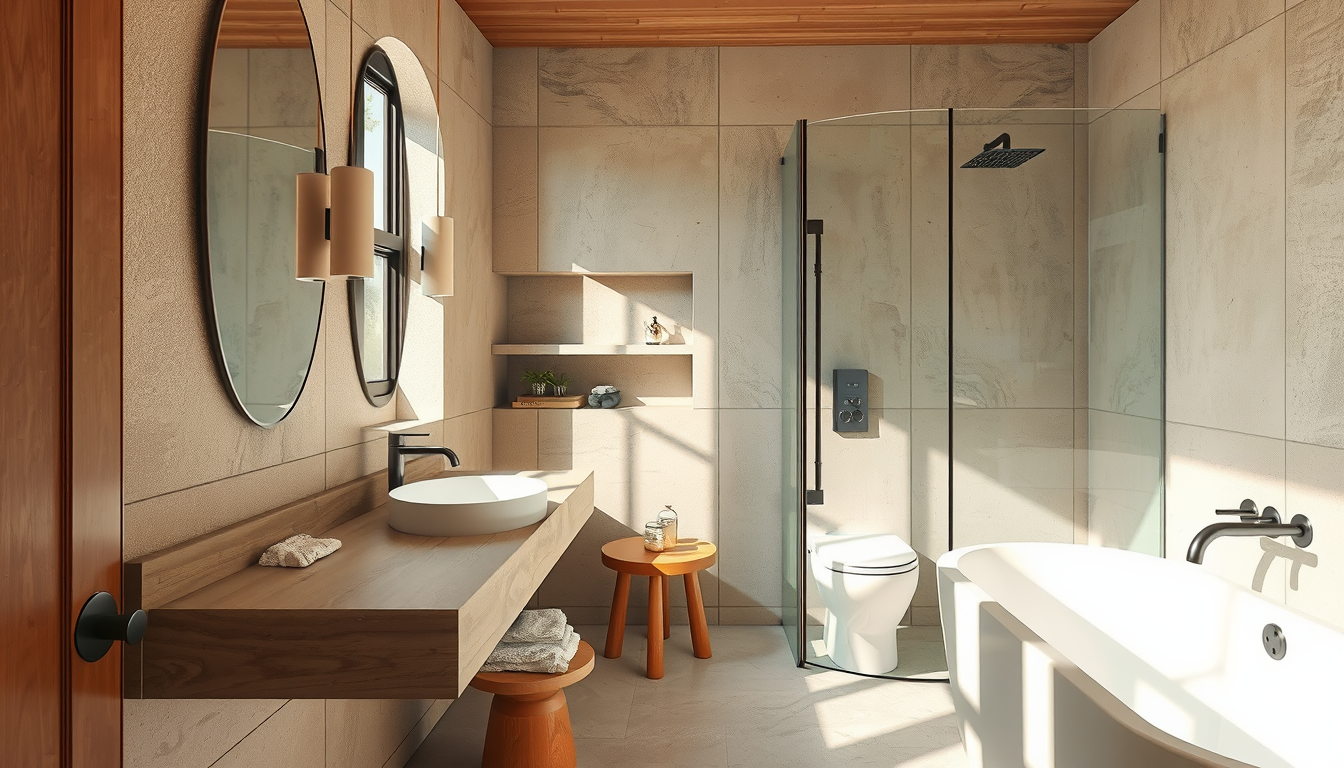
If you are searching for walk in shower ideas canada homeowners are actually building in 2026, the answer starts with one word: curbless. The barrier-free, glass-enclosed shower has moved from luxury spa catalogues into mainstream Canadian bathrooms — and for good reason. A well-designed walk-in shower reclaims 4–6 square feet compared to a tub-shower combo, eliminates a tripping hazard, and delivers the clean-line look that dominates modern renovation wishlists. But in a country where freeze-thaw cycles stress subfloors and building codes dictate precise drainage slopes, inspiration photos alone will not get you to a finished shower. This guide from Toronto Interior Designer pairs design ideas with the Canadian-specific technical details you actually need before you call a contractor.
Why Curbless Walk-In Showers Are Canada’s Best Bathroom Upgrade in 2026
Three forces are driving the curbless trend across Canada. First, aging-in-place planning: the Canada Mortgage and Housing Corporation reports that barrier-free bathroom features can increase resale value by an estimated 3–5% . Second, the compact condo boom — Toronto alone has thousands of units under 700 square feet where every inch counts. A curbless shower with a fixed glass panel visually doubles a small bathroom because sight lines run uninterrupted from wall to wall. Third, the spa-at-home movement is no longer reserved for high-end builds. House & Home recently featured a spa-inspired bathroom designed to be kid-friendly, proving that barrier-free and family-functional can coexist .
If you are working with a compact layout, our guide to small condo bathroom upgrades covers complementary strategies for maximizing every square foot.
A curbless shower is not just an aesthetic choice — it is an accessibility investment that pays dividends in daily comfort, resale value, and long-term livability.
Walk-In Shower Glass Options: Frameless, Semi-Frameless & Fixed Panel Costs in Canada
Upgrade the Details That Change Everything
Lighting, mirrors, and matte hardware can make a modest bathroom renovation feel far more custom.
Toronto Interior Designer may earn a commission if you shop through these links at no extra cost to you.
The glass you choose sets the tone for the entire bathroom. Here is how the three main enclosure types — plus one increasingly popular alternative — compare for Canadian installations:
| Enclosure Style | Best For | Installed Cost (CAD) | Maintenance Level | Visual Effect |
|---|---|---|---|---|
| Frameless (10mm tempered) | Large showers, luxury feel | $1,800–$3,500 | Low — fewer seams to clean | Maximum openness |
| Semi-frameless | Mid-range budgets, standard openings | $1,000–$2,000 | Medium — minimal hardware | Clean but structured |
| Fixed glass panel | Compact condos, wet-room layouts | $600–$1,400 | Very low — no door track | Open, airy |
| Sliding barn-door glass | Tight entries, accessibility | $1,500–$2,800 | Medium — track requires upkeep | Modern-industrial |
Frameless panels in 10mm tempered glass remain the most-specified enclosure in Canadian bathroom renovations, prized for their minimal sightlines and ease of cleaning . For Toronto condos under 600 square feet, a single fixed panel at 900mm wide is often the smartest play — it contains water without closing the room off visually. Pair any glass choice with a nano-coating treatment to repel hard-water buildup, a common nuisance in Ontario municipalities with high mineral content.
Material trend to watch: Tinted, fluted, and reeded glass are replacing clear panes in 2026. These textured options add warmth and privacy while keeping the frameless silhouette. If you are drawn to warmer palettes, our warm neutral paint guide pairs well with tonal glass choices.
No-Curb Shower Essentials: Drainage, Waterproofing & Ontario Building Code Requirements
This is where Canadian installations differ sharply from the Pinterest photos you have been saving. A curbless shower in Ontario must meet specific code and climate requirements that your contractor needs to get right the first time:
- Floor slope: The Ontario Building Code and the National Building Code of Canada (NBC Part 7) require a minimum 2% floor slope toward the drain in curbless applications. That means the shower floor drops roughly 6mm per 300mm of run — enough to direct water but not enough to feel underfoot .
- Linear drain placement: Linear drains from manufacturers like Schlüter-KERDI-LINE and Infinity Drain have overtaken centre-point drains, accounting for an estimated 70% or more of new curbless installations in urban Canadian markets. Position the linear drain at the wall opposite the shower entry for the cleanest look and simplest single-direction slope.
- Waterproofing membrane: In Toronto’s freeze-thaw climate, a bonded waterproofing membrane (Schlüter-DITRA or equivalent) applied over the entire shower area and extending at least 150mm up the walls is non-negotiable. Moisture migrating into a wood-frame subfloor during winter causes rot that a surface seal alone will not prevent.
- Subfloor preparation: Older Toronto homes — especially pre-war semis and wartime bungalows — often have subfloors that need levelling or reinforcement before a curbless build. Budget an extra $500–$1,500 for subfloor work if your home was built before 1970.
- Accessibility compliance: If you are building for aging-in-place or mobility needs, ensure grab-bar blocking is installed behind the tile at rough-in stage. Ontario’s accessibility renovation programs may offset a portion of costs — check current provincial and municipal grant availability before starting work.
Walk-In Shower Layouts for Toronto Condos, Townhouses & Older Canadian Homes
Not every bathroom can support the same curbless configuration. Here are the layouts Toronto Interior Designer recommends most often, matched to common Canadian floor plans.
For condos under 600 sq ft — the wet-room corner: Remove the tub, tile the entire bathroom floor with a single-slope drain, and install one fixed glass panel. Total footprint stays the same, but the room feels twice the size. Use large-format porcelain tile (600×600mm or larger) to minimize grout lines and maximize the seamless look.
For semi-detached and townhouse main baths — the alcove walk-in: Replace the tub alcove with a curbless shower using the existing three-wall framing. A frameless glass door at the opening keeps water contained. This layout works within the standard 60-inch alcove width and avoids moving plumbing — a major cost saver on renovations where the budget needs to stretch.
For older detached homes with separate tub and shower: Convert the standalone shower stall to curbless while keeping the freestanding or built-in tub. This preserves resale flexibility (families want a tub) while giving you the upgraded shower experience you use every day.
For accessible or primary-suite builds: Design a full wet-room with a hand-held shower wand, built-in bench at 450mm height, and zero-threshold entry. Pair with slip-rated porcelain tile (R10 or higher) and contrasting grout colour for a result that is both beautiful and code-compliant.
For more layout strategies beyond the bathroom, explore our renovation tips for ideas that apply across every room.
Walk-In Shower Renovation Costs in Canada: 2026 Pricing Breakdown
Budget transparency matters — especially when the gap between a standard and curbless build catches homeowners off guard. Here is what Canadian homeowners are paying in 2026:
- Standard walk-in shower conversion (curbed, glass door): $5,000–$8,000 including demolition, plumbing adjustments, tiling, and glass enclosure.
- Curbless walk-in shower (linear drain, frameless glass): $8,000–$12,000 due to additional subfloor work, waterproofing membrane, and precision tile installation.
- Full bathroom renovation with curbless shower: $15,000–$35,000 depending on scope, fixtures, and finishes .
The price gap between curbed and curbless comes down to labour, not materials. A curbless build requires a more skilled tile setter and additional waterproofing steps — but the result is a shower that will look current and function safely for decades.
Your Next Steps Toward the Perfect Walk-In Shower
The best walk-in shower projects combine clean design with smart building science. Whether you are converting a tub alcove in a 500-square-foot condo or building a full wet room in a century home, getting the drainage slope, waterproofing, and glass selection right is what separates a beautiful shower from a costly repair.
What to Do Next:
- Measure your existing bathroom and note the subfloor type (concrete slab vs. wood-frame) — this determines your waterproofing approach and cost.
- Request quotes from at least three contractors experienced with curbless installations; ask specifically about their waterproofing system and code compliance.
- Choose your drain style early — linear vs. point drain affects the entire floor slope plan.
- Check provincial and municipal accessibility grants if your renovation includes aging-in-place features.
- Select your glass enclosure type based on the budget and layout table above, and request tempered-glass samples to compare clear, fluted, and tinted options in your space.
- Browse Toronto Interior Designer’s bathroom category for more design inspiration tailored to Canadian homes.
Keep Small Bathrooms Working Hard
Compact storage, simple shelving, and clean-lined accessories are the fastest way to add polish without crowding the room.
Toronto Interior Designer may earn a commission if you shop through these links at no extra cost to you.
Sources
- CMHC aging-in-place research — https://www.cmhc-schl.gc.ca
- House & Home — https://houseandhome.com
- industry pricing from Canadian glass suppliers — https://www.monarchglass.ca
- National Building Code of Canada, Part 7 — https://nrc.canada.ca/en/certifications-evaluations-standards/codes-canada/codes-canada-publications/national-building-code-canada-2020
- HomeStars renovation cost data — https://homestars.com
Frequently Asked Questions
How much does a curbless walk-in shower cost in Canada?
A curbless walk-in shower with a linear drain and frameless glass typically costs $8,000–$12,000 in Canada as of 2026. This includes subfloor preparation, waterproofing membrane, precision tile installation, and the glass enclosure. A standard curbed conversion runs $5,000–$8,000.
Do walk-in showers meet Ontario Building Code requirements?
Yes, but curbless walk-in showers must meet specific Ontario and National Building Code standards, including a minimum 2% floor slope toward the drain, a bonded waterproofing membrane extending at least 150mm up the walls, and slip-rated tile. Hiring a contractor experienced with barrier-free installations is essential for code compliance.
What is the best glass enclosure for a small condo walk-in shower?
A single fixed glass panel at 900mm wide is the best option for Toronto condos under 600 square feet. It contains water effectively without closing the room off visually, requires minimal maintenance with no door track, and costs $600–$1,400 installed — making it the most budget-friendly enclosure choice.