
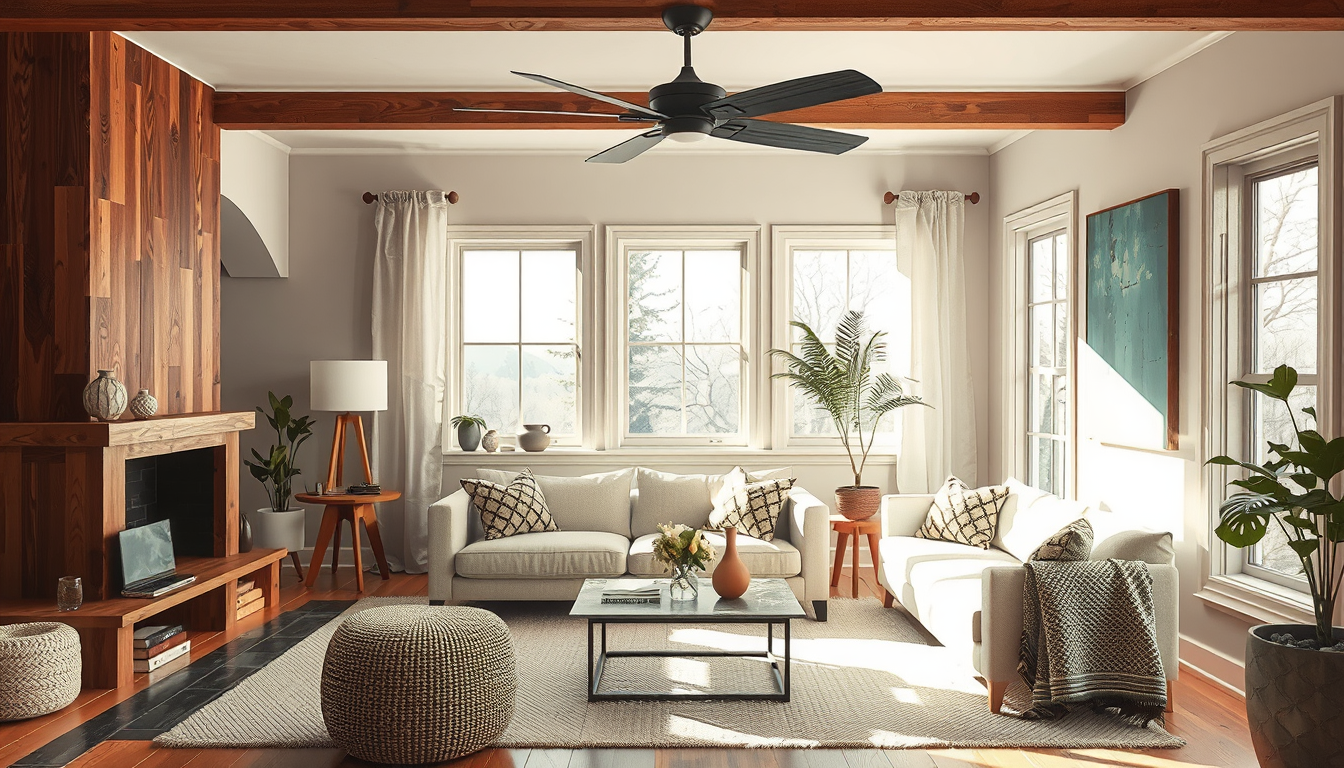
Finding the best ceiling fan Canada shoppers can actually buy — one that fits your ceiling, ships without a border markup, and handles both summer cooling and winter heat redistribution — is harder than it should be. Most online guides recommend American models that are either unavailable at Canadian retailers or priced 20–30% higher once you factor in CAD conversion and shipping. Add Toronto’s standard 8-to-9-foot condo ceilings into the mix, and suddenly half those “top picks” won’t even clear the minimum 7-foot safety height from the floor. This guide cuts through the noise with room-by-room sizing, Canadian-stocked models, and the Energy Star math that makes ceiling fans one of the smartest year-round upgrades for any home.
How to Size the Best Ceiling Fan for Any Canadian Room
Getting the blade span right is the single most important decision. Too small and you’re just stirring air in a circle; too large and the fan overwhelms the room and creates an uncomfortable draft. The sizing formula is straightforward — measure your room’s square footage, then match it to the blade span below.
| Room Size (sq ft) | Recommended Blade Span | Typical Room |
|---|---|---|
| Under 75 | 29–36″ | Bathroom, walk-in closet |
| 76–144 | 36–42″ | Small bedroom, home office |
| 144–225 | 44–50″ | Standard bedroom, condo living room |
| 225–400 | 50–54″ | Open-concept living/dining, master suite |
| Over 400 | 60″+ or dual fans | Great room, loft, finished basement |
The average Toronto condo living and dining area runs 200–250 square feet, which places most buyers squarely in the 44–50-inch sweet spot. If your space is open-concept — common in newer builds along the waterfront and midtown corridors — consider stepping up to 52 inches or adding a second fan to cover the full footprint. For more living room layout ideas, we have a full category of space-planning guides.
Ceiling height matters just as much as room size. Fans must hang at least 7 feet from the floor for safety and effective airflow. In a standard 8-foot ceiling, that leaves you roughly 12 inches total — meaning a flush-mount (hugger) fan is your only practical option. Rooms with 9-foot ceilings can accommodate a short downrod of 3–4 inches, while anything 10 feet or above benefits from a longer downrod to push airflow closer to the living zone. Measure from the finished ceiling to the floor before shopping, and account for any existing medallions or recessed housing that could eat into your clearance.
Best Ceiling Fans in Canada: 5 Top-Rated Picks Compared
Compare the Retailers Mentioned Here
Use the same shortlist from the article and compare scale, finish options, and delivery fit before you buy.
Toronto Interior Designer may earn a commission if you shop through these links at no extra cost to you.
Here at Toronto Interior Designer, we focused on models currently stocked by major Canadian retailers — no cross-border guesswork required. Every pick below is available through Home Depot Canada, Lowe’s Canada, or Wayfair.ca with standard domestic shipping.
| Product / Brand | Price Range (CAD) | Best For | Design Style |
|---|---|---|---|
| Hunter Low Profile III (42″) | $120–$150 | Low-ceiling condos and bedrooms | Classic white, brushed nickel |
| Fanimation Embrace (44″) | $350–$420 | Design-forward small rooms | Mid-century modern, matte black or brass |
| Home Decorators Merwry (52″) | $170–$210 | Open-concept living rooms on a budget | Transitional, integrated LED |
| Monte Carlo Maverick (60″) | $550–$650 | Large great rooms, lofts | Sleek contemporary, multiple finishes |
| Westinghouse Comet (52″) | $90–$130 | Basement reno, utility spaces | Basic white or espresso |
A ceiling fan is the only fixture in your home that earns its keep in both July and January. In reverse mode during winter, it pushes warm air pooling at the ceiling back down to where you actually live — and in a country with a six-month heating season, that adds up fast.
Who Should Buy a Ceiling Fan
- Condo owners with 8-foot ceilings — a flush-mount fan adds airflow without eating into headroom, reducing reliance on noisy portable fans or cranking the AC.
- Homeowners looking to cut heating costs — reverse-mode operation can reduce heating bills by up to 15% by redistributing warm air that collects near the ceiling .
- Open-concept renovators — a properly sized fan defines zones in large spaces without walls or room dividers.
- Anyone replacing builder-grade fixtures — swapping a basic flush light for a fan with an integrated LED is a weekend project that improves comfort and lighting in one move.
- Design-conscious buyers — today’s fans come in matte black, aged brass, and walnut-blade options that complement the quiet luxury material palettes trending in Toronto homes right now.
Energy Star Ceiling Fans That Cut Canadian Winter Heating Costs
Energy Star–certified ceiling fans use approximately 60% less energy than conventional models and move air about 20% more efficiently . In a Canadian context, where heating accounts for the largest share of residential energy use, the winter reverse-mode function is arguably more valuable than summer cooling.
Here is the math: running a ceiling fan in reverse (clockwise at low speed) during the heating season pushes warm air that naturally rises to the ceiling back down into the living space. The U.S. Department of Energy estimates this can lower heating bills by up to 15%. For a Toronto household spending $1,800–$2,400 annually on gas heating, that translates to $270–$360 in potential savings — more than covering the cost of a mid-range fan within a single winter.
When shopping, look for the Energy Star label specifically on the Canadian product listing. Some models carry the certification in the U.S. but not in Canada due to differing testing standards managed by Natural Resources Canada. All five picks in our comparison table above are available in Energy Star–rated configurations through Canadian retailers.
Where to Buy the Best Ceiling Fan in Canada: Retailers and Pricing
Canadian inventory does not mirror what you’ll find south of the border. Several popular American brands — particularly certain Minka-Aire and Emerson SKUs — are either not distributed in Canada or carry a significant price premium. Stick with brands that have established Canadian retail channels to avoid surprise costs and complicated returns.
Home Depot Canada and Lowe’s Canada offer the broadest in-store selection, including the Hunter and Home Decorators lines. Both offer free ship-to-store, which avoids oversized-item delivery surcharges that can add $40–$80 to online orders. In-store stock varies by location, so check online availability for your nearest GTA store before making the trip.
Wayfair.ca carries a wider range of design-forward options — Fanimation, Monte Carlo, and Kichler among them — and frequently runs sales that bring premium models into a more accessible price range. Delivery is typically free above $50 CAD.
Local lighting showrooms — such as Union Lighting in Toronto — let you see finishes and blade materials in person, which matters when you’re coordinating with existing hardware or cabinetry. We always recommend seeing a finish sample before committing, especially for matte black and brass tones that vary significantly between manufacturers.
If you’re tackling a broader room refresh alongside your fan upgrade, our guide on choosing the right coffee table covers the proportional thinking that ties a whole living room together.
Your Ceiling Fan Action Plan: What to Do Next
Choosing the best ceiling fan from Canadian retailers comes down to three measurements and one honest look at your budget. Here is how to move forward:
- Measure your room’s square footage and match it to the blade-span chart above. Most Toronto condos land in the 44–50-inch range.
- Check your ceiling height. At 8 feet, commit to a flush-mount fan. At 9 feet, you have downrod options. At 10 feet or above, use a downrod to bring the fan within 8–9 feet of the floor.
- Prioritize Energy Star certification. The upfront cost difference is minimal, and winter heating savings compound every year you own the fan.
- Verify Canadian availability and pricing at Home Depot Canada, Lowe’s Canada, or Wayfair.ca before falling in love with an American-market recommendation.
- See finishes in person at a local lighting showroom if you’re coordinating with existing hardware or cabinetry.
- Install with a licensed electrician if you’re replacing a light fixture that isn’t already fan-rated — the junction box must support the fan’s weight and vibration.
A ceiling fan is one of the few home upgrades that improves comfort in every season, lowers energy costs, and adds a design element to the room — all for under $500 in most cases. At Toronto Interior Designer, we consider it one of the highest-return improvements for condo and house owners across the GTA.
Shop Elevated Alternatives
If you want a step up in materials or silhouette, compare mid-range brands before locking into the first affordable option.
Toronto Interior Designer may earn a commission if you shop through these links at no extra cost to you.
Sources
- U.S. Department of Energy — https://www.energy.gov/energysaver/ceiling-fans
- Natural Resources Canada — https://www.nrcan.gc.ca/energy-efficiency/energystar-canada
Frequently Asked Questions
What size ceiling fan do I need for a Toronto condo?
Most Toronto condos have living areas between 200 and 250 square feet, which means a 44- to 50-inch blade span is ideal. If your condo has standard 8-foot ceilings, choose a flush-mount (hugger) model to maintain the required 7-foot clearance from the floor.
Do ceiling fans help reduce heating costs in Canada?
Yes. Running a ceiling fan in reverse mode (clockwise at low speed) during winter pushes warm air from the ceiling back down into the living space. The U.S. Department of Energy estimates this can lower heating bills by up to 15%, which translates to $270–$360 in annual savings for a typical Toronto household.
Where can I buy ceiling fans in Canada without paying cross-border fees?
Home Depot Canada, Lowe’s Canada, and Wayfair.ca stock the widest selection of ceiling fans with standard domestic shipping. Both Home Depot and Lowe’s offer free ship-to-store to avoid oversized-item surcharges, while Wayfair.ca provides free delivery on orders over $50 CAD.