
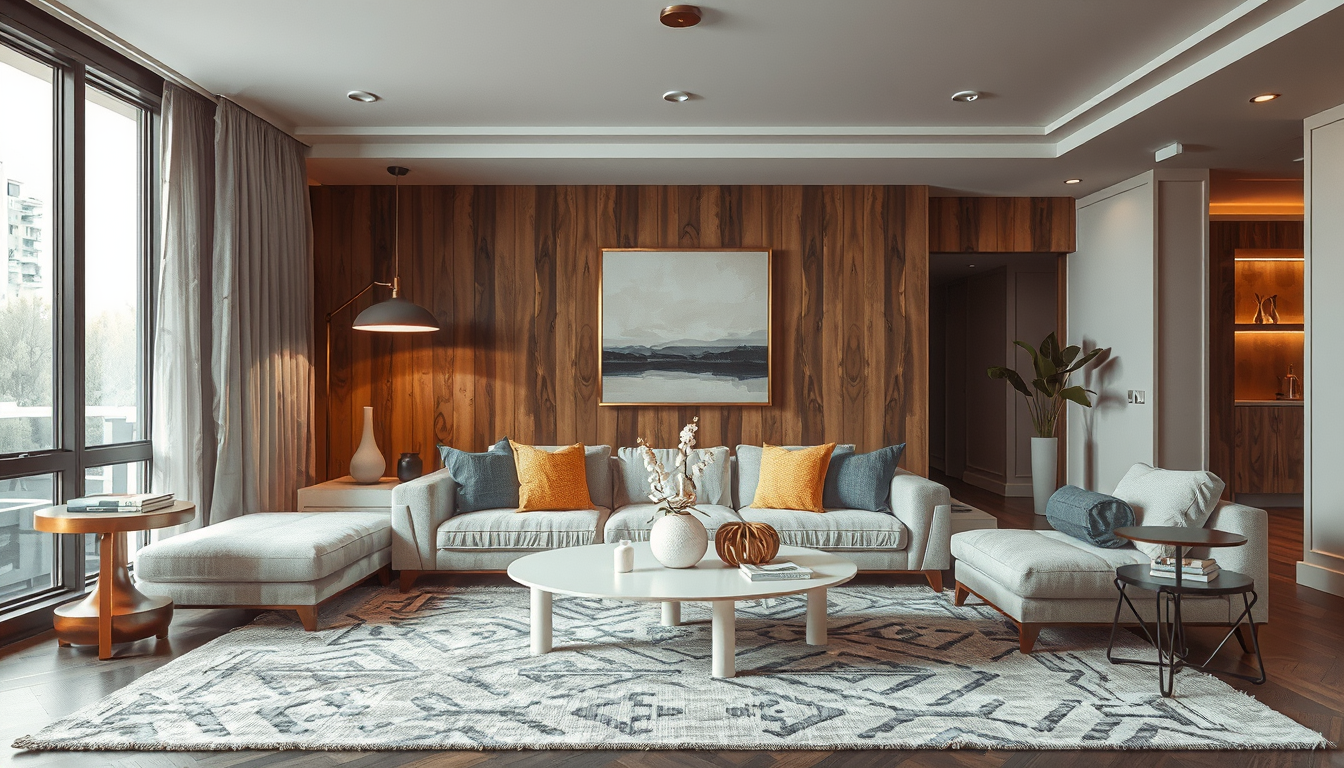
Figuring out how to choose coffee table Canada shoppers will actually love — and use daily — comes down to three decisions most people get wrong: size relative to the sofa, material that survives our climate, and shape that fits the layout. In a country where the average condo hovers around 650–700 square feet , your coffee table isn’t just a surface for remotes. It’s a dining table for two, a laptop desk, and the visual anchor of your most-used room. Get the proportions right and everything else falls into place. Get them wrong and even a beautiful piece will make your living room feel cramped or disconnected.
How to Size a Coffee Table for Your Sofa: The Two-Thirds Rule
The single most common mistake is buying a coffee table that’s too large or too small for the sofa it sits in front of. The fix is simple math.
Length: Your coffee table should be roughly two-thirds the length of your sofa. A standard 84-inch sofa pairs with a table around 48–56 inches long. A compact condo loveseat at 60 inches calls for something closer to 36–40 inches.
Height: Standard coffee table height runs 40–50 cm (16–20 inches), and it should sit level with or just slightly below your sofa’s seat cushion — no more than 5 cm lower. Too low and you’re hunching to grab your drink; too high and it blocks sightlines in open-concept layouts.
Clearance: Leave 35–45 cm (14–18 inches) between the table edge and the sofa, and at least the same on walkway sides. In tight Toronto condos, this clearance number is the one that usually gets sacrificed — resist the urge, or you’ll bruise your shins every morning.
| Sofa Length | Ideal Table Length | Ideal Table Height | Min. Clearance (All Sides) |
|---|---|---|---|
| 60 in (loveseat) | 36–40 in | 40–50 cm | 35 cm |
| 72 in (apartment sofa) | 44–48 in | 40–50 cm | 35 cm |
| 84 in (standard 3-seat) | 48–56 in | 40–50 cm | 40 cm |
| 96 in+ (sectional) | 54–60 in or nesting pair | 40–50 cm | 45 cm |
For sectionals, consider two smaller tables or a nesting set instead of one oversized piece — it keeps traffic flowing and gives you flexibility to rearrange. If your living room doubles as a workspace, check out our guide to living room storage ideas that pair well with multi-functional tables.
Best Coffee Table Materials for Canadian Climates and Condos
Source Scaled-Right Living Room Pieces
Start with apartment-scale sofas, nesting tables, and layered lighting that fit Toronto floor plans without overwhelming them.
Toronto Interior Designer may earn a commission if you shop through these links at no extra cost to you.
Once you’ve nailed the dimensions, material is the decision that determines whether your coffee table still looks good in year five or starts peeling by year two. Canadian homes cycle between bone-dry winter heating and humid summers, with indoor relative humidity swinging between 20% and 60% depending on the season. That range punishes certain materials and rewards others.
Solid hardwood (walnut, oak, maple) handles humidity swings well because it expands and contracts evenly. It develops character over time and can be refinished when scratches accumulate. Budget roughly $800–$2,500 CAD for a quality piece.
Stone and concrete (marble, travertine, cast concrete) are virtually immune to humidity and hold up against hot mugs and cold glasses. They’re heavy, though — a real consideration if you’re on the 30th floor and rearrange seasonally. Expect $1,000–$3,000 CAD.
Metal and glass combinations are low-maintenance and visually light, making them strong choices for small spaces where you want the floor to read as continuous. Budget $400–$1,500 CAD.
Veneer and laminate are the budget-friendly options ($200–$700 CAD), but be cautious. Cheaper veneers can delaminate or bubble when humidity shifts. If you go this route, look for sealed edges and high-pressure laminate rather than paper-thin finishes.
A coffee table earns its place in a Canadian home not by how it looks in the showroom, but by how it performs through four seasons of salt-tracked boots, humid summers, and dry radiator heat.
Avoid: Untreated reclaimed wood (warps fast without kiln drying), cheap MDF with exposed edges, and any table where the finish feels plasticky to the touch — it won’t age well in our climate.
5 Coffee Table Shapes That Fit Toronto Condos and Canadian Homes
With size and material sorted, shape is where personal style enters the equation. But shape isn’t just aesthetic — it determines traffic flow, seating capacity, and how your room feels day to day.
- Rectangular — The default for good reason. Mirrors the sofa line, offers maximum surface area, works in most layouts. Best for rooms wider than 10 feet.
- Round — Trending hard for 2025–2026 as the “soft living” movement gains traction . Eliminates sharp corners (a real benefit for families with toddlers), improves flow in open-concept condos, and pairs beautifully with sectionals.
- Oval and organic — The middle ground between round and rectangular. An oval table reads as contemporary without sacrificing surface area. Organic, sculptural shapes — think live-edge walnut or moulded concrete — add personality to minimalist rooms.
- Square — Works best with shorter sofas or L-shaped seating. Be careful in narrow rooms; a 36-inch square table can choke a tight layout.
- Nesting sets — Two or three tables that tuck together. Pull them apart for entertaining, stack them for space. This is the Toronto Interior Designer team’s top recommendation for condos under 700 square feet because they solve the flexibility problem completely.
For rooms where the coffee table also needs to support work-from-home setups, a lift-top mechanism on a rectangular base gives you desk height when needed and standard height the rest of the time — see our home office budget tips for more ways to make dual-purpose spaces work.
Where to Buy a Coffee Table in Canada: Top Retailers and Local Makers
Knowing what you want is half the battle — knowing where to find it at a fair price is the other half. Canadian-based retailers often undercut comparable American brands by 20–40% once you factor in shipping, duty, and exchange rate. Start here:
- Article (Vancouver) — Mid-century and modern styles, solid wood options from $500–$1,800 CAD. Free shipping over $999.
- EQ3 (Winnipeg) — Clean-lined Canadian designs. Strong customization program for upholstered and wood tables, $600–$2,000 CAD.
- Structube (Montreal) — Budget-friendly with surprisingly good design. $150–$800 CAD. Quality varies, so check materials carefully.
- Bouclair — Accessible price points for trend-driven shapes, $200–$600 CAD.
- Local Toronto makers — Search Etsy and Shopify for Toronto-based woodworkers and metalworkers. Custom sizing solves the condo-proportion problem entirely, and you get a one-of-a-kind piece. Expect $1,200–$4,000 CAD for custom solid wood.
At Toronto Interior Designer, we consistently see clients get the best results when they invest in the table’s material and construction, then save on accessories like trays and styling objects. A well-built coffee table lasts 15–20 years. A cheap one lasts three.
How to Choose Coffee Table Canada: Your Quick-Start Checklist
You’ve got the framework — now put it into action. Here’s your checklist:
- Measure your sofa length and multiply by 0.66 to find your ideal table length.
- Measure your available floor space and confirm you have at least 35 cm clearance on all sides.
- Check your sofa seat height — your table should match it within 5 cm.
- Choose material based on your life, not just your taste: households with kids or pets need rounded edges and durable surfaces; minimal-maintenance seekers should lean toward stone or metal.
- Shop Canadian retailers first for better pricing and simpler returns.
- Consider a nesting set or oval shape if your condo is under 700 square feet.
- Browse our buyer guides for more furniture decision frameworks built for Canadian homes.
The right coffee table quietly makes your living room work harder — as a dining spot, a workspace, and the piece guests notice first. Now that you know how to choose coffee table Canada style, measure your space this weekend and start narrowing your shortlist. Your sofa is waiting for its better half.
Finish the Room With Texture
Layer in rugs, side tables, and decor accents that warm up condo living rooms without adding clutter.
Toronto Interior Designer may earn a commission if you shop through these links at no extra cost to you.
Sources
- Urbanation Toronto Condo Market Survey — https://www.urbanation.ca/
- Architectural Digest Style Forecast — https://www.architecturaldigest.com/
Frequently Asked Questions
What size coffee table do I need for a condo in Canada?
Your coffee table should be roughly two-thirds the length of your sofa. For a typical condo loveseat (60 inches), choose a table 36–40 inches long. Leave at least 35 cm of clearance on all sides to keep walkways open in smaller spaces.
What is the best coffee table material for Canadian winters?
Solid hardwood like walnut, oak, or maple handles Canada’s extreme humidity swings best, expanding and contracting evenly through dry winters and humid summers. Stone and metal are also excellent low-maintenance choices that resist seasonal damage.
Where can I buy a quality coffee table in Canada?
Canadian retailers like Article, EQ3, and Structube offer strong options from $150–$2,000 CAD with simpler shipping and returns. For custom sizing, Toronto-based woodworkers on Etsy and Shopify build one-of-a-kind pieces starting around $1,200 CAD.