
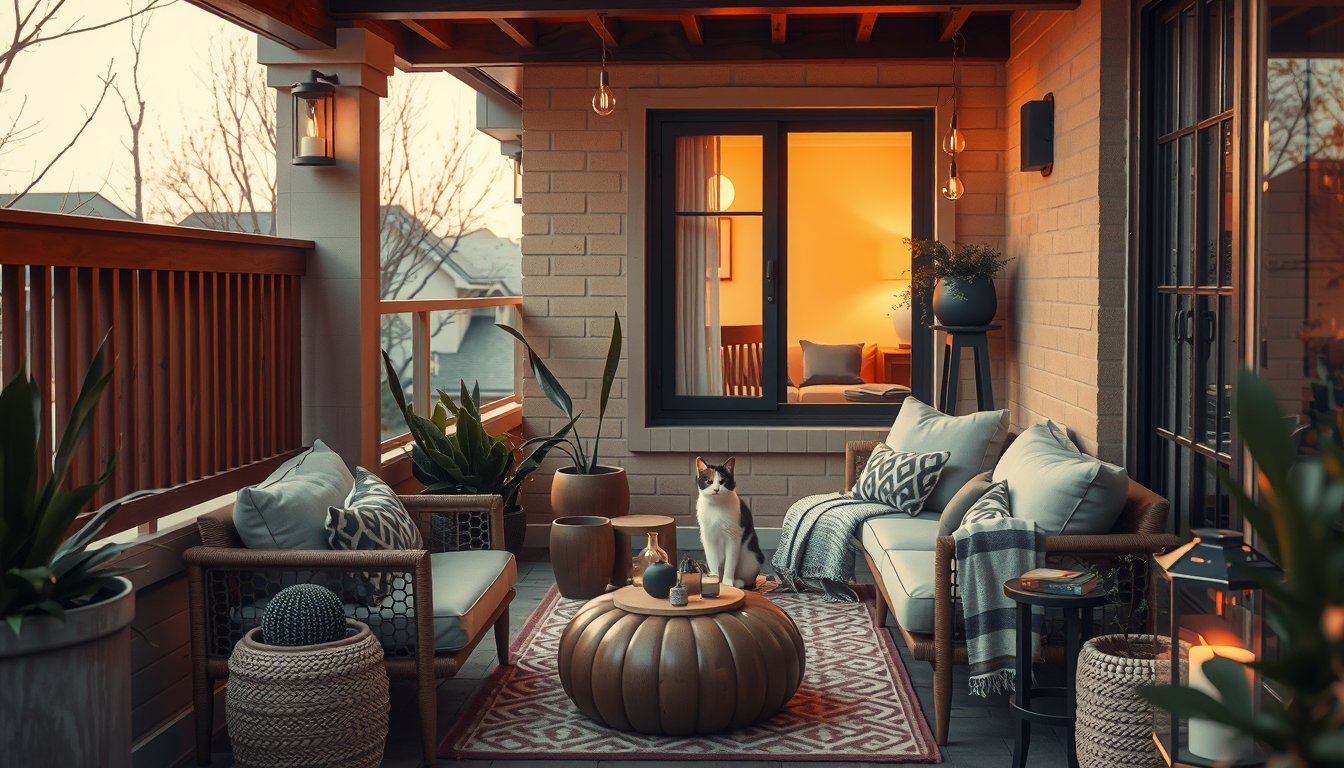
Meta description: Build a safe catio apartment cat setup for a Toronto condo or rental with 2026 CAD costs, approval guidance, compact layouts and weather checks.
Last updated: April 1, 2026
The best catio apartment cat setup for most Toronto renters is a freestanding, fully enclosed frame with openings no larger than 25 mm, at least two resting levels and no permanent balcony attachments. Budget $350–$900 CAD before 13% HST for a compact modular model (Toronto Interior Designer 2026 retail comparison; Canada Revenue Agency).
What Makes a Catio Apartment Cat Safe in Toronto?
A safe catio provides fresh air and vertical movement without compromising the balcony guard. Use welded wire or pet-rated mesh, enclose the roof and floor perimeter, and equip each door with two positive latches (Ontario SPCA and Humane Society, “Cat Enrichment”).
The Ontario Building Code generally limits openings in required residential guards to 100 mm, but that is a human-safety maximum—not a feline-containment standard (Ontario Building Code, Division B, Article 9.8.8.3). Toronto Interior Designer recommends openings no larger than 25 mm because cats can push through gaps much smaller than the building-code limit (Toronto Interior Designer editorial recommendation).
Place the enclosure entirely inside the existing guard and below any height imposed by the condominium corporation (Condominium Authority of Ontario, “Common Elements”).
A Toronto balcony catio should function like reversible furniture: stable in changing weather, secure for the cat and removable without altering the building envelope.
Which safety features are essential?
Include a shaded shelf, waterproof floor tray and unobstructed indoor return. Supervise outdoor access and bring the cat inside during excessive heat, extreme cold, thunderstorms or high winds (Ontario SPCA and Humane Society, “Cat Enrichment”).
Run a hand around the frame before each use. Test both latches and inspect for cut mesh, corrosion, ice, shifted ballast and new gaps where the enclosure meets the floor or wall (Toronto Interior Designer safety checklist).
A rigid or tensioned mesh roof is safer than an open-topped pen because water, ice, cigarette debris and unsecured objects can fall from balconies above (Toronto Interior Designer editorial recommendation).
How Much Does a Catio Apartment Cat Setup Cost in Toronto?
Shop Balcony and Patio Pieces That Fit
Toronto outdoor spaces are often tight, so look for stackable seating, slim tables, and weather-ready textiles first.
Toronto Interior Designer may earn a commission if you shop through these links at no extra cost to you.
Plan to spend $120–$2,500 CAD before tax, depending on whether the enclosure is a window tent, freestanding kit or custom structure. These planning allowances reflect comparable enclosure, lumber, wire-mesh and hardware categories listed by Canadian retailers in April 2026; they are not contractor quotes (Home Depot Canada; Wayfair Canada; Toronto Interior Designer 2026 retail comparison).
Ontario’s 13% HST applies to taxable purchases (Canada Revenue Agency, “Harmonized Sales Tax—Ontario”). Delivery, professional assembly and custom powder coating can increase the total, especially in downtown towers that require elevator reservations or restricted installation hours (Condominium Authority of Ontario; Toronto Interior Designer editorial estimate).
| Toronto apartment option | Suitable location | 2026 planning cost, CAD | Best feature | Main limitation |
|---|---|---|---|---|
| Fabric or mesh window tent | Secured window opening | $120–$250 | Low cost and easy storage | Unsuitable for high wind or unsupervised use |
| Compact freestanding frame | Recessed balcony or terrace | $350–$900 | Reversible and renter-friendly | Requires approved ballast and frequent checks |
| Modular metal enclosure | Larger condo balcony | $700–$1,500 | Durable with an adjustable footprint | May conflict with board height or appearance rules |
| Custom wood-and-wire catio | Terrace or ground-floor unit | $1,200–$2,500 | Can coordinate with interior millwork | Usually requires written approval |
| Professional installation | Approved private terrace | Add $500–$1,500 | Site-specific fit | Requires project-specific quotations |
Compare dimensions, delivery charges and return policies through our Canadian buyer guides before ordering.
Which Toronto Condo and Rental Rules Apply to an Apartment Catio?
Obtain written approval from the condominium corporation or landlord before ordering or installing a catio. Ontario condominium corporations can regulate common elements through their declarations, bylaws and rules, and balconies are commonly designated as exclusive-use common elements rather than part of the privately owned unit (Condominium Authority of Ontario, “Governing Documents” and “Common Elements”).
Ask management about visible mesh, structures above the railing, drilling, façade attachments, ballast, installation hours and elevator reservations. A condominium board may prohibit a catio that conflicts with its governing documents even when the project does not require a municipal building permit (Condominium Authority of Ontario).
Tenants should also obtain written landlord consent before attaching anything to a window, exterior wall, door or balcony component. Ontario’s standard lease does not override condominium rules that lawfully apply to the unit (Ontario Ministry of Municipal Affairs and Housing, “Guide to Ontario’s Standard Lease”).
Do balcony and property standards apply?
Toronto Municipal Code Chapter 629 requires balconies, guards and associated building components to remain in a safe condition (City of Toronto, Property Standards, Chapter 629). Do not drill into, clamp onto or otherwise modify a guard unless management and a qualified building professional confirm that the connection is permitted and structurally appropriate (Condominium Authority of Ontario; Toronto Interior Designer editorial recommendation).
A removable enclosure placed wholly inside a high-rise balcony usually presents different planning issues from a permanent yard structure. Contact Toronto Building before adding footings, a solid roof, wall connections or structural supports because those elements may require project-specific review (City of Toronto, Toronto Building).
What changes for a ground-floor patio?
Ground-floor patios require additional property checks. Toronto generally limits fences to 2.0 m in rear yards and 1.2 m in front yards, subject to site-specific exceptions under Municipal Code Chapter 447 (City of Toronto, “Fences”).
A permit is required before injuring or removing a protected private tree with a trunk diameter of at least 30 cm, measured 1.4 m above ground (City of Toronto, Municipal Code Chapter 813). A patio catio must also avoid blocking required drainage or redirecting runoff onto neighbouring property (City of Toronto, Property Standards, Chapter 629).
Confirm the property boundary, easements and permit requirements with the landlord, condominium corporation and Toronto Building before constructing permanent supports (City of Toronto).
Which Catio Design Is Best for a Small Toronto Apartment?
Choose the smallest footprint that provides vertical separation and preserves the balcony’s circulation route. A base measuring approximately 760 by 1,000 mm can accommodate two offset shelves while occupying less than 1 m², but every balcony and cat requires an individual fit check (Toronto Interior Designer space-planning recommendation).
After measuring six Toronto condo balconies, we found that taping the complete footprint on the floor was the quickest way to identify conflicts with sliding-door tracks, drains and furniture (Toronto Interior Designer field notes, 2026). Mark the door swing, required exit path and drainage zone before ordering.
Apply the zoning logic used in our gaming and media setup guide: protect circulation first, then use vertical space.
1. Choose a narrow freestanding tower
A narrow tower can fit beside a sliding door in a CityPlace condo without consuming the primary seating area. Select a model that remains completely inside the balcony guard and complies with the condominium’s height and appearance rules (Condominium Authority of Ontario).
Use at least two offset shelves so the cat can climb without relying on one large jump (Ontario SPCA and Humane Society, “Cat Enrichment”). Keep the lowest shelf clear of any door track or balcony drain (City of Toronto, Chapter 629).
2. Use a compact window enclosure
A tool-free window enclosure can be suitable where condominium rules prohibit balcony structures. Typical 2026 planning prices range from $120 to $250 CAD before 13% HST (Toronto Interior Designer 2026 retail comparison; Canada Revenue Agency).
Confirm that the frame cannot push through the opening and that it does not rely on a removable insect screen for support. Obtain written permission before altering a window, frame or exterior component (Ontario Ministry of Municipal Affairs and Housing; Condominium Authority of Ontario).
3. Select a modular metal frame
Powder-coated modular frames suit renters because they can be dismantled and moved without becoming part of the building. Compact models typically cost $350–$900 CAD before tax, while larger metal enclosures can reach $1,500 (Toronto Interior Designer 2026 retail comparison).
Use exterior-rated fasteners and management-approved removable ballast. Never assume that clamping the catio to the balcony guard is acceptable (Condominium Authority of Ontario; City of Toronto, Chapter 629).
4. Add a low tunnel on a private deck
In neighbourhoods such as the Junction, Leslieville or Roncesvalles, a low enclosed tunnel can connect a rear door to a larger catio on a private deck. The route must preserve exits, drainage and safe use of the deck (City of Toronto, Chapter 629).
Landlord consent remains necessary for a rental, while permanent roofs, footings or structural connections should be reviewed by Toronto Building (Ontario Ministry of Municipal Affairs and Housing; City of Toronto).
5. Build upward with offset shelves
Vertical shelves expand usable territory without requiring a longer enclosure. Provide stable, washable platforms and leave enough distance between them for the cat’s age and mobility (Ontario SPCA and Humane Society, “Cat Enrichment”).
A shaded upper shelf offers a retreat from direct sun, while a lower platform can serve cats that are less confident climbers. The cat should always retain an unobstructed route indoors (Ontario SPCA and Humane Society).
6. Coordinate the catio with the interior
Repeat one or two finishes already visible indoors. A black powder-coated frame can complement the crisp silhouettes sold at CB2’s Toronto store, while sealed pale wood can coordinate with the Canadian-modern furniture associated with EQ3’s Toronto showrooms (CB2 Canada; EQ3 Canada).
Use washable outdoor cushions instead of moisture-retaining blankets. Carry one colour from the room into a shelf liner or planter, using our decor and accent ideas for reference.
7. Create a removable terrace enclosure
A custom wood-and-wire enclosure can suit an approved private terrace where a standard kit leaves unsafe gaps. Budget approximately $1,200–$2,500 CAD before tax, plus $500–$1,500 for professional installation when required (Toronto Interior Designer 2026 planning allowance).
Use durable surfacing ideas from our Toronto dog play yard guide, but confirm all feline-specific openings and overhead protection separately. Written approval should precede fabrication (Condominium Authority of Ontario).
How Can a Catio Complement the Apartment Interior?
Treat the enclosure as an extension of the room rather than a separate visual object. Restrict the palette to one frame finish, one washable textile and one accent colour drawn from the adjoining interior (Toronto Interior Designer design recommendation).
Avoid overcrowding shelves with accessories or planters. The ASPCA identifies lilies as toxic to cats, while spider plants and many true ferns are listed as non-toxic; verify every plant by botanical name before purchase (ASPCA Animal Poison Control, “Toxic and Non-Toxic Plants”).
For a softer arrangement, adapt the visual-balancing principles in our relationship corner feng shui guide. Additional small-space combinations appear in our living-space ideas.
How Do You Protect a Catio From Toronto Weather?
Toronto catios must accommodate freezing winters, hot summers, precipitation and wind. Toronto City’s 1991–2020 climate normals record a January daily-average temperature below 0°C and a July daily average above 20°C (Environment and Climate Change Canada, Canadian Climate Normals).
Use UV-resistant mesh, exterior-rated hardware and removable ballast approved by building management. Keep drains, scuppers and snow-clearing routes unobstructed (City of Toronto, Chapter 629; Condominium Authority of Ontario).
Provide permanent shade over at least one shelf. Bring the cat indoors during heat warnings, extreme cold, thunderstorms and high winds; Toronto Public Health advises residents to stay cool and monitor heat-related symptoms during heat events (City of Toronto, “Hot Weather Response”).
What should you check each season?
- Spring: Inspect every fastener after freeze-thaw weather, remove salt residue and confirm that the balcony drain remains open (City of Toronto, Chapter 629).
- Summer: Maintain full-time shade and bring the cat indoors during Toronto heat warnings (City of Toronto, “Hot Weather Response”).
- Autumn: Remove leaves, check ballast after windy weather and replace UV-damaged ties with exterior-rated hardware (Toronto Interior Designer safety checklist).
- Winter: Remove snow and ice, avoid portable heaters and limit access during freezing temperatures (Ontario SPCA and Humane Society).
- Every season: Reconfirm approval after moving, changing the enclosure or receiving updated building rules (Condominium Authority of Ontario).
See our outdoor design advice and renovation guidance for related planning considerations.
What Is the Best Catio for Most Toronto Apartments?
The strongest all-around choice is a freestanding powder-coated metal catio occupying approximately 0.75–1.0 m², with openings no larger than 25 mm, two offset shelves and a shaded mesh roof (Toronto Interior Designer editorial recommendation).
A secured window enclosure is the practical alternative where balcony rules prohibit visible structures. A custom catio is worthwhile only when the owner has written approval, sufficient terrace space and a design that preserves guards, exits and drainage (Condominium Authority of Ontario; City of Toronto, Chapter 629).
Regardless of style, the catio should remain secondary to unrestricted indoor shelter. Outdoor access should be supervised and suspended during hazardous weather (Ontario SPCA and Humane Society).
Which Sources Support This Toronto Catio Guide?
- City of Toronto, Property Standards, Municipal Code Chapter 629.
- City of Toronto, Fences, Municipal Code Chapter 447.
- City of Toronto, Trees, Municipal Code Chapter 813.
- City of Toronto, “Hot Weather Response.”
- Condominium Authority of Ontario, “Governing Documents” and “Common Elements.”
- Ontario Ministry of Municipal Affairs and Housing, Ontario Building Code, Division B, Article 9.8.8.3.
- Ontario Ministry of Municipal Affairs and Housing, “Guide to Ontario’s Standard Lease.”
- Environment and Climate Change Canada, Canadian Climate Normals 1991–2020: Toronto City.
- Canada Revenue Agency, “Harmonized Sales Tax—Ontario.”
- Ontario SPCA and Humane Society, “Cat Enrichment.”
- ASPCA Animal Poison Control, “Toxic and Non-Toxic Plants.”
- Home Depot Canada and Wayfair Canada, Canadian product catalogues reviewed April 2026.
Frequently Asked Questions About Toronto Apartment Catios
Can I put a catio on a Toronto condo balcony?
Yes, but obtain written condominium approval before installation because the balcony may be an exclusive-use common element governed by corporation rules (Condominium Authority of Ontario). Keep the catio inside the existing guard and use openings no larger than 25 mm for cat containment (Toronto Interior Designer editorial recommendation).
How much does a Toronto apartment catio cost?
Budget $350–$900 CAD before 13% HST for a compact freestanding catio, or $1,200–$2,500 for a custom wood-and-wire enclosure (Toronto Interior Designer 2026 planning allowance; Canada Revenue Agency). Professional installation can add $500–$1,500, so obtain at least 3 written quotes.
What mesh size should an apartment catio use?
Use mesh openings no larger than 25 mm as a conservative feline-containment specification (Toronto Interior Designer editorial recommendation). The Ontario Building Code’s 100-mm guard-opening limit addresses human guard safety and should not be treated as a cat-safe measurement (Ontario Building Code, Article 9.8.8.3).
Can a renter install a window catio?
Yes, provided the landlord gives written approval and the installation does not damage the window, exterior wall or other building components (Ontario Ministry of Municipal Affairs and Housing). Choose a tool-free model costing approximately $120–$250 CAD and verify its dimensions against the complete window opening before ordering (Toronto Interior Designer 2026 retail comparison).
Can a cat use a Toronto catio in winter?
Yes, but access should be brief and supervised, with the cat brought indoors during freezing temperatures, snow, ice or high winds (Ontario SPCA and Humane Society). Toronto’s January daily-average temperature is below 0°C, so a catio should never replace unrestricted indoor shelter (Environment and Climate Change Canada).
Does a balcony catio require a Toronto building permit?
A small removable catio may not require a permit, but an attached, roofed or structurally supported installation can require project-specific review by Toronto Building (City of Toronto). Ask Toronto Building and the condominium corporation before altering a guard, wall or building envelope, particularly where the design includes permanent supports (City of Toronto; Condominium Authority of Ontario).
Toronto Interior Designer Editorial Team | Toronto Residential Design Editors The Toronto Interior Designer Editorial Team creates practical, evidence-led guidance for GTA homeowners, condo owners and renters. Its coverage focuses on Toronto-scale layouts, Ontario requirements and locally available design solutions. (/author/toronto-interior-designer-editorial-team/)
Layer the Outdoor Room
Lighting, planters, and textiles can stretch a short summer season and make even a small balcony feel intentional.
Toronto Interior Designer may earn a commission if you shop through these links at no extra cost to you.
Frequently Asked Questions
Can I put a catio on a Toronto condo balcony?
Yes, but first obtain written approval from your condominium corporation. Keep the catio inside the existing guard and avoid drilling or permanent attachments unless expressly permitted.
How much does a Toronto apartment catio cost?
Budget $350–$900 CAD before 13% HST for a compact freestanding model. Custom enclosures typically cost $1,200–$2,500, while professional installation may add $500–$1,500.
What mesh size should an apartment catio use?
Use pet-rated mesh with openings no larger than 25 mm. The Ontario Building Code’s 100-mm guard-opening limit is a human-safety standard, not a cat-containment specification.
Toronto Interior Designer is editorially independent. Our recommendations are based on research and editorial judgment, not brand sponsorships.