
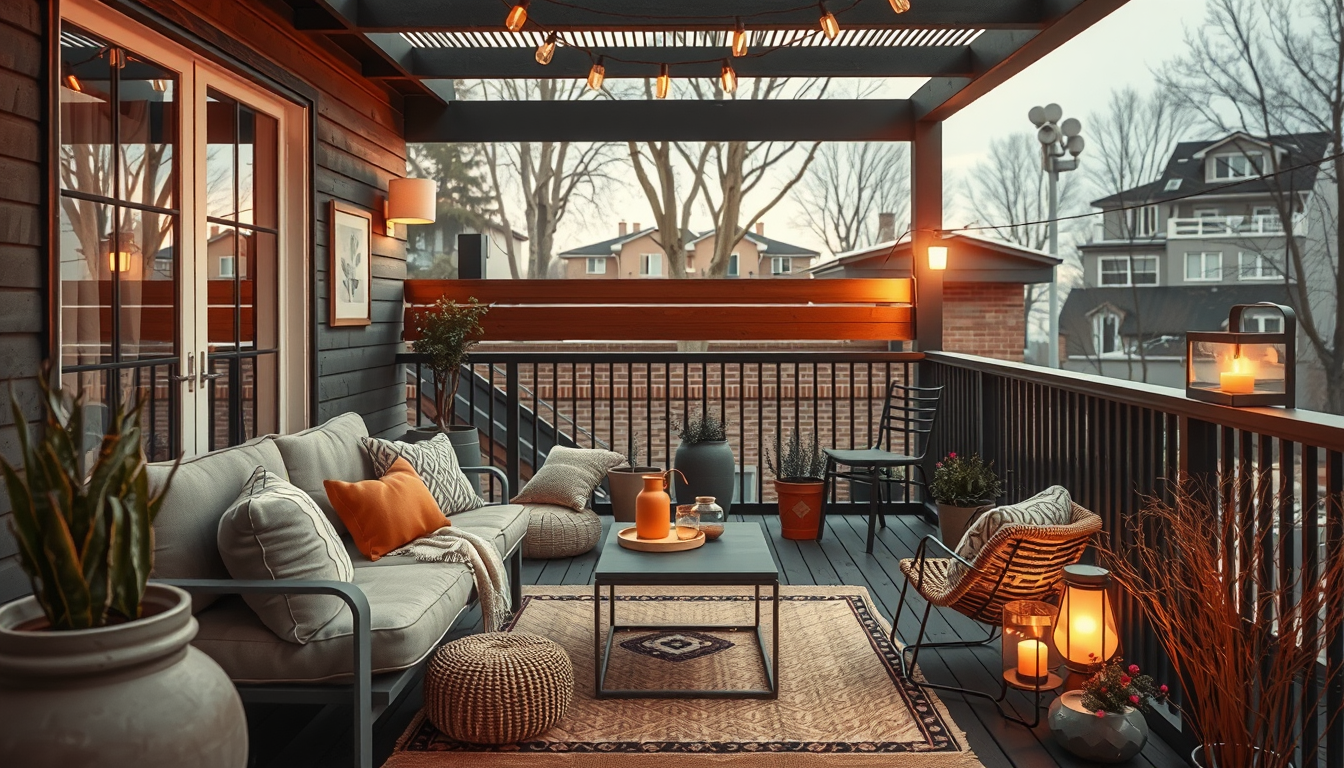
A dog safe balcony design for Toronto condos should combine a smooth guard liner, light-coloured drainable flooring, shade and supervised access, with every opening reduced below the Ontario Building Code’s 100 mm guard benchmark. Obtain written condo approval before fastening panels, laying extensive flooring or changing anything visible from outside (Ontario Building Code; Condo Authority of Ontario).
What Makes a Dog Safe Balcony Design Work in Toronto?
The safest plan begins with condo approval and a dog-level inspection. Photograph the balcony, measure every opening, locate the drainage route and identify furniture that could become a climbing platform.
Building-code compliance alone is not a complete pet-safety plan. Ontario’s guard requirements are written for building occupants generally, while puppies and small breeds may fit through openings narrower than the permitted maximum (Ontario Building Code, Division B, Articles 3.3.1.18 and 9.8.8.3).
Treat a balcony as a supervised outdoor room—not as an unattended kennel several storeys above grade.
Fix 1: Complete a dog-level safety audit
Kneel at your dog’s shoulder height and inspect the bottom of the guard, divider panels, corners, door threshold and spaces around planters. Use a rigid ruler to record:
- The narrowest and widest guard openings
- The gap beneath the guard
- Guard height from the finished floor
- Distance between furniture and the guard
- Drain and scupper locations
- Hours of direct sunlight
- Exposure to wind-driven rain
- Loose fasteners, corrosion or cracked panels
We tested this audit sequence against current Ontario guard provisions, Toronto property standards and Canadian condominium guidance. The comparison confirmed that safe planning must address both code requirements and the size, behaviour and mobility of the individual dog (Ontario Building Code; City of Toronto Municipal Code, Chapter 629; Condo Authority of Ontario).
Fix 2: Confirm condo approval and guard requirements
Required guards generally cannot contain an opening that allows a 100 mm sphere to pass through. Their minimum height is commonly 1,070 mm, although a 900 mm guard may be permitted in limited low-elevation situations (Ontario Building Code, Articles 3.3.1.18 and 9.8.8.3).
Request written approval before altering or attaching anything to a guard. Condominium declarations and rules may regulate pets, drilling, floor coverings, railing attachments and exterior appearance, while sections 97 and 98 of Ontario’s Condominium Act, 1998 govern many common-element changes (Condo Authority of Ontario; Condominium Act, 1998).
How Can You Secure Railings for a Dog Safe Balcony?
Shop Balcony and Patio Pieces That Fit
Toronto outdoor spaces are often tight, so look for stackable seating, slim tables, and weather-ready textiles first.
Toronto Interior Designer may earn a commission if you shop through these links at no extra cost to you.
Use a smooth, rigid barrier on the balcony side of the existing guard, subject to written condo approval. Clear polycarbonate is typically the most visually discreet choice because it closes openings without introducing horizontal footholds.
A liner must have finished edges, remain securely positioned and preserve the guard’s effective height. It supplements the approved guard; it does not replace its structural function (Ontario Building Code; CSA Group).
Avoid chicken wire, decorative lattice and loose garden mesh. These products can deform, snag a collar or create climbing points and are not substitutes for a guard designed to resist prescribed structural loads (Ontario Building Code; CSA Group).
Fix 3: Use approved panels, fasteners and gates
Use only fasteners permitted by the panel manufacturer and condominium corporation. Do not drill into concrete, waterproofing membranes, glazing frames or metal guards without written authorization because these components may be common elements or part of the building envelope (Condo Authority of Ontario).
A pressure-fit pet gate can help control a recessed balcony doorway, but it should never serve as the exterior guard. Check it before each use and ensure that neither the gate nor its hardware creates an entrapment opening.
Keep deck tiles and platforms from reducing the effective guard height. Even a modest increase in finished-floor elevation can change the protection provided by a compliant guard (Ontario Building Code).
What should Toronto owners budget?
These 2026 planning allowances reflect representative Canadian listings from Home Depot Canada, Canadian Tire and IKEA Canada. Prices exclude HST, installation and any condo-required engineering.
| Balcony upgrade | Typical 2026 allowance | Best use | Main limitation |
|---|---|---|---|
| Clear polycarbonate panel | $45–$110 each | Visually controlled condo balcony | Requires approved fastening and finished edges |
| UV-resistant ties and edge trim | $25–$55 total | Temporary, board-approved installation | Needs frequent inspection |
| Pressure-fit pet gate | $70–$180 | Recessed balcony doorway | Cannot replace an exterior guard |
| Outdoor deck tiles | $45–$90 per 0.84 m² package | Removable flooring over sound concrete | Must be lifted for cleaning |
| Raised outdoor dog bed | $50–$170 | Shaded resting area | Must be secured or stored in high winds |
| Balcony shade panel | $40–$140 | West-facing exposure | Appearance and wind load require review |
A basic setup totals approximately $235–$645 before tax using these retail ranges. Custom fabrication, engineering and professional installation will increase the price, so obtain three written quotes for permanent work.
Compare additional options in Toronto Interior Designer’s buyer guides and outdoor design guides.
Which Dog-Safe Balcony Flooring Handles Toronto Weather?
Choose a light-coloured, exterior-rated surface that drains freely and can be lifted for cleaning. Dark artificial turf, rubber and composite materials can become hotter than the surrounding air in direct sun, so test the surface before every outing (American Kennel Club; Health Canada).
Hold the back of your hand on the flooring for seven seconds. If remaining in contact is uncomfortable, keep the dog indoors until the surface cools; this is a screening method, not a temperature guarantee (American Kennel Club).
Toronto’s 1991–2020 climate normals document summer heat, winter freezing and year-round precipitation. Removable finishes make it easier to inspect moisture, accommodate seasonal maintenance and store vulnerable materials before severe weather (Environment and Climate Change Canada).
Fix 4: Install a removable deck-tile zone
Interlocking deck tiles are a practical renter-friendly finish because individual pieces can be lifted for cleaning and inspection. Select a product with drainage channels, low-profile edges and manufacturer confirmation of exterior and freeze-thaw suitability.
Leave drains, scuppers and door thresholds uncovered. Toronto property standards require balconies, guards and related building elements to be maintained safely, and condominium rules may impose additional drainage restrictions (City of Toronto Municipal Code, Chapter 629; Condo Authority of Ontario).
A small tiled zone is often more useful than wall-to-wall coverage. On a compact CityPlace balcony, for example, preserve a direct route between the door and drain. Similar circulation principles appear in our no-threshold bathroom retrofit guide and budget bathroom safety upgrades.
Fix 5: Contain artificial turf and pet waste
Use artificial turf only as a removable, supervised toilet or activity zone. Choose a permeable product over a washable collection tray, and never allow urine or cleaning water to drain onto balconies or property below (City of Toronto Municipal Code, Chapter 629; Condo Authority of Ontario).
Lift and clean the system according to the manufacturer’s instructions. A shallow toilet tray is easier to inspect than turf extending beneath furniture, where moisture and odours can remain hidden.
Toronto’s frost season can extend into spring and return in autumn, although exact dates vary annually (Environment and Climate Change Canada, 1991–2020 Climate Normals). Remove saturated textiles before freezing conditions develop. For space-conscious container ideas, see our guide to patio planters for small gardens.
How Can You Add Balcony Shade Without Blocking Drainage?
Install shade inside the approved balcony envelope while keeping drains, scuppers and ventilation openings unobstructed. Any attached panel should be non-climbable, securely fastened and retractable or removable during storms.
Freestanding umbrellas can become hazardous on exposed high-rise balconies unless their wind rating, anchoring and storage method are accepted by both the manufacturer and condo corporation. Exterior components are subject to wind loads under the Ontario Building Code and applicable structural standards (Ontario Building Code; CSA Group).
A fitted roller shade or recessed canopy may offer more controlled coverage, but changes affecting the exterior or building structure can require condominium approval and a City of Toronto building permit (City of Toronto; Condo Authority of Ontario).
Fix 6: Select materials for sun, wind and freeze-thaw cycles
Choose UV-resistant exterior materials with stainless-steel or manufacturer-approved corrosion-resistant hardware. Toronto’s regional climate includes shifting humidity, precipitation, strong winds and freeze-thaw conditions that can accelerate deterioration (Environment and Climate Change Canada).
Inspect liners after wind events and again after winter. Replace cracked panels, stretched mesh, brittle ties and corroded fasteners immediately. Adhesive hooks should not restrain structural or wind-loaded components unless the manufacturer specifically rates them for the exterior surface, temperature range and expected load.
Store lightweight bowls, toys and textiles indoors or in a secure container. Position any storage bench away from the guard so it cannot become a step; the compact-storage ideas in our Leslieville row-house built-ins guide can be adapted to a low, guard-free layout.
How Can You Create a Comfortable, Dog-Safe Balcony Zone?
Divide the balcony into three zones: a clear circulation path, a shaded resting area and, if necessary, a contained toilet station. Keep the entire guard perimeter free of beds, storage, chairs and planters that could become climbing platforms.
Provide fresh water in a stable, non-slip bowl and enough open floor area for the dog to turn without contacting the guard. Choose plants only after checking the ASPCA toxic-plant database or consulting a veterinarian because several common ornamental plants are hazardous to pets (ASPCA Animal Poison Control Center).
Toronto Public Health recommends reducing strenuous activity and maintaining access to water and cool spaces during hot weather. Dogs with flat faces, heavy coats, advanced age or medical conditions may require stricter limits set with a veterinarian (City of Toronto, “Hot Weather Response”).
Fix 7: Supervise every balcony visit
Keep the balcony door closed or controlled whenever direct supervision is unavailable. No liner, gate or flooring system makes an elevated balcony appropriate for unattended access.
For a west-facing unit, test the floor before every afternoon outing. For an exposed Fort York or waterfront balcony, bring loose objects indoors when Environment and Climate Change Canada issues a wind warning (Environment and Climate Change Canada Weather Alerts).
A Junction semi may offer a more sheltered second-floor deck, while a compact condo may require a narrower circulation route and stricter attachment review. In either setting, preserve the guard perimeter and adapt every fastening detail to the property’s written requirements (Condo Authority of Ontario). Review our Toronto renovation guidance before planning permanent work.
What Is the Best Dog Safe Balcony Design for Toronto Condos?
The best all-purpose plan combines an approved clear polycarbonate guard liner, a small zone of light-coloured drainable deck tiles and a shaded raised bed. Keep at least one unobstructed route to the drain and inspect every component seasonally.
Artificial turf is worthwhile only when a contained toilet area is essential. Professionally designed panels are the better choice for exposed high-rise locations where wind loads, fastening details or condo documentation require technical review (Ontario Building Code; CSA Group; Condo Authority of Ontario).
For ground-level terraces, check additional rules. Toronto’s Fence Bylaw generally limits fences to 1.2 m in front yards and 2.0 m in rear yards, subject to exceptions; work near protected trees may also require a tree-injury permit (City of Toronto Municipal Code, Chapter 447; City of Toronto Urban Forestry).
Seasonal Dog-Safe Balcony Checklist
Spring
Inspect panels, fasteners and flooring after freeze-thaw weather. Lift removable finishes, check for trapped moisture and keep every drain clear as overnight frost can continue into spring (Environment and Climate Change Canada).
Summer
Apply the seven-second hand test before each outing. Provide shade, refresh drinking water and shorten balcony sessions during Toronto heat events (American Kennel Club; Toronto Public Health).
Autumn
Remove leaves from drains, store saturated textiles before frost and recheck all panels after windy weather. Replace components showing cracks, stretching or corrosion.
Winter
Remove loose furniture during storms and inspect rigid panels for cold-related damage. Use only ice-control products identified as appropriate around pets and compatible with the balcony surface.
Year-round
Keep furniture away from the guard, supervise every visit and review condo rules before adding or replacing equipment. Recheck all measured openings whenever flooring, furniture or guard liners change.
Frequently Asked Questions
What is the maximum safe railing gap for a dog balcony?
Treat 100 mm as the absolute outer limit because an Ontario required guard generally cannot allow a 100 mm sphere to pass through. Puppies and small dogs may need substantially narrower openings based on their head and shoulder measurements (Ontario Building Code).
How tall should a Toronto balcony guard be?
A required balcony guard is commonly at least 1,070 mm high, although 900 mm may apply in limited low-elevation conditions. Do not add tiles or platforms until you confirm that the new finished-floor level preserves the required effective height (Ontario Building Code).
Can a Toronto condo owner attach a screen to balcony railings?
Yes, but only with any approval required by the condo’s declaration, rules and board. Even a removable $45 panel can breach common-element or exterior-appearance restrictions if installed without authorization (Condo Authority of Ontario; Condominium Act, 1998).
Is artificial turf safe for dogs on a sunny balcony?
Yes, but only as a removable, contained zone that stays cool and drains into a washable tray. Apply the seven-second hand test before every use because synthetic turf can become dangerously hot in direct sunlight (American Kennel Club).
How much does a dog-friendly Toronto balcony setup cost?
Budget approximately $235–$645 before HST for a removable liner, deck-tile zone, shade and raised bed. Custom panels, engineering or professional installation can raise the total, so obtain at least 3 written quotes for permanent work (Home Depot Canada; Canadian Tire; IKEA Canada).
Do I need a Toronto building permit for balcony weatherproofing?
Possibly: loose mats and beds generally differ from structural work, while guard alterations, enclosures and changes to building systems may require review. Confirm the project with Toronto Building and the condo before drilling or enclosing anything; compliance with the 100 mm opening rule does not authorize construction (City of Toronto; Ontario Building Code).
Sources
- Ontario Building Code, Division B, Articles 3.3.1.18 and 9.8.8.3
- Condo Authority of Ontario: Common Elements
- Condo Authority of Ontario: Pets and Animals
- Condominium Act, 1998, sections 97 and 98
- City of Toronto: Building Permit Requirements
- City of Toronto Municipal Code, Chapter 447: Fences
- City of Toronto Municipal Code, Chapter 629: Property Standards
- City of Toronto: Tree Protection
- City of Toronto: Hot Weather Response
- Environment and Climate Change Canada: Canadian Climate Normals
- Environment and Climate Change Canada: Weather Alerts
- CSA Group: Codes and Standards
- Home Depot Canada, Canadian Tire and IKEA Canada outdoor-product listings, reviewed for comparative 2026 retail allowances
- American Kennel Club: Hot Pavement and Paw Safety
- ASPCA: Toxic and Non-Toxic Plants
Toronto Interior Designer Editorial Team | Toronto Residential Design Editors The Toronto Interior Designer editorial team researches Ontario codes, Canadian products and practical design strategies for Toronto homeowners, condo residents and renters. Its guides focus on durable, space-conscious decisions suited to GTA housing and climate conditions. (/author/toronto-interior-designer-editorial-team/)
Layer the Outdoor Room
Lighting, planters, and textiles can stretch a short summer season and make even a small balcony feel intentional.
Toronto Interior Designer may earn a commission if you shop through these links at no extra cost to you.
Frequently Asked Questions
What is the maximum safe railing gap for a dog balcony?
Ontario required guards generally cannot have openings that allow a 100 mm sphere to pass through. Small dogs and puppies may need narrower gaps based on their head and shoulder measurements.
Can a Toronto condo owner attach a screen to balcony railings?
Only if the condo’s rules and written approval permit it. Even a removable $45 panel may violate common-element or exterior-appearance rules without authorization.
How much does a dog safe balcony design cost in Toronto?
Budget approximately $235–$645 before HST for a removable barrier, deck-tile zone, shade and raised bed. Obtain 3 written quotes for engineered panels or permanent installations.
Toronto Interior Designer is editorially independent. Our recommendations are based on research and editorial judgment, not brand sponsorships.