
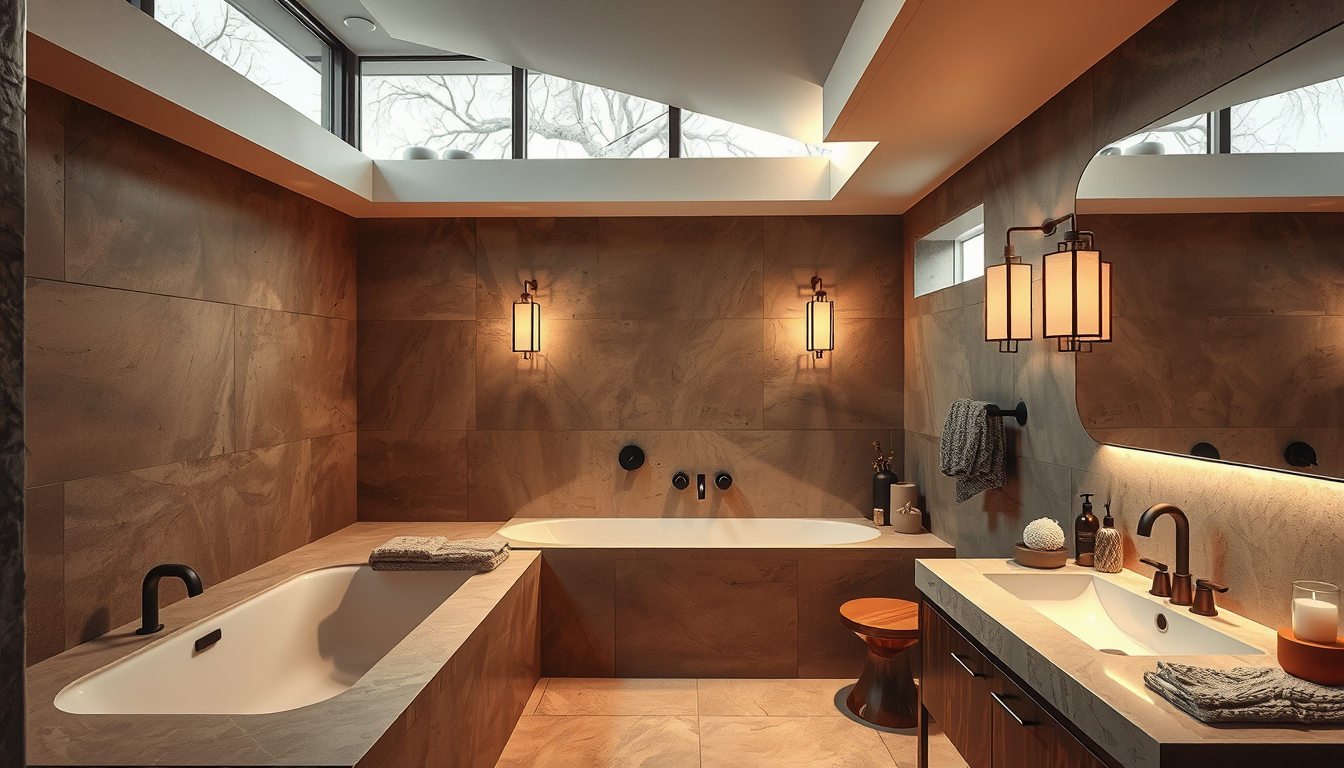
Most ensuite bathroom ideas Canada homeowners search for online come from American or Australian sources — beautiful, sure, but useless when your walls need to handle minus-thirty winters, wild humidity swings, and Ontario Building Code ventilation rules. A luxury ensuite in Toronto is not the same project as one in Austin or Sydney. The real question Canadian homeowners should ask before choosing a freestanding tub or steam shower is not “does it look good?” but “will it hold value in my market?” This guide breaks down which high-end ensuite upgrades actually recoup their cost in the GTA — and which ones are expensive regrets.
Why Canadian Ensuites Need Different Design Rules Than American Bathrooms
Canadian ensuites face constraints that most design magazines ignore. Ontario Building Code requires a minimum ventilation rate of 50 CFM for bathrooms, and undersized exhaust fans remain the most common code violation in ensuite renovations . That matters because our heating season runs seven months, and the temperature differential between a hot shower and a cold exterior wall creates condensation problems that warmer climates never deal with.
Toronto’s housing stock adds another layer. A typical semi-detached ensuite measures 40 to 55 square feet. New-build condos allocate slightly more — around 50 to 70 square feet — but ceiling heights in pre-war century homes often reach nine or ten feet, which complicates steam shower installations. Steam units perform best with ceilings at eight feet or below; anything higher demands a more powerful generator and better vapour sealing, adding $2,000–$4,000 to the project.
Then there is the moisture question. Canadian homes cycle between bone-dry winter air (often below 20% indoor humidity) and summer levels above 60%. Materials that perform well in steady California climates — unsealed natural marble, certain unglazed tiles — can crack, stain, or grow mould here without proper sealing and ventilation. If you are exploring surfaces that stand up to these conditions, our guide to countertop materials covers durability principles that apply to bathroom vanities and shower surrounds as well.
5 Luxury Ensuite Upgrades That Boost Resale Value in Toronto
Upgrade the Details That Change Everything
Lighting, mirrors, and matte hardware can make a modest bathroom renovation feel far more custom.
Toronto Interior Designer may earn a commission if you shop through these links at no extra cost to you.
Not every premium addition earns its money back. According to the Appraisal Institute of Canada, a well-executed ensuite renovation can recoup 50 to 75 percent of its cost at resale in major metro markets like Toronto and Vancouver . The key word is “well-executed.” Here is where the money goes furthest:
| Upgrade | Typical Cost (CAD) | Estimated ROI at Resale | Best Fit |
|---|---|---|---|
| Radiant in-floor heating | $8–$15/sq ft installed | 70–80% | Any ensuite with tile floors |
| Frameless glass walk-in shower | $4,500–$9,000 | 65–75% | Condos and semis under 60 sq ft |
| Heated towel rail + niche storage | $800–$2,500 | 60–70% | All ensuites |
| Quartz or porcelain vanity top | $1,200–$3,500 | 55–70% | Replacing laminate or cultured marble |
| Smart toilet with bidet seat | $1,500–$5,000 | 50–65% | Primary ensuites in homes $800K+ |
Walk-in showers with frameless glass now outsell freestanding tubs three-to-one in new GTA condo developments . That shift matters for resale: buyers under forty increasingly see a large soaker tub as wasted square footage, while a well-tiled walk-in shower reads as both practical and high-end. If you are weighing toilet upgrades specifically, our 2026 toilet buying guide ranks the models Canadian plumbers actually recommend.
The smartest ensuite renovations in Canada are not the ones that photograph best — they are the ones that solve a climate problem while looking like a design choice.
Heated Floors vs Steam Showers vs Freestanding Tubs: Which Ensuite Features Pay Off
Radiant in-floor heating is the clearest winner. At roughly $8 to $15 per square foot installed in Ontario, it is affordable relative to its impact, and it is the single most-requested luxury upgrade among Canadian homeowners . Stepping onto warm tile in January is not a novelty here — it is a quality-of-life upgrade that buyers notice immediately during winter showings. Electric mat systems from Schluter DITRA-HEAT or nVent Nuheat install directly under tile with no added floor height, making them ideal for retrofits in older Toronto homes where subfloor clearance is tight.
Steam showers are trickier. They require a dedicated 240-volt circuit, a properly sloped ceiling to prevent cold drips, and work best in enclosed spaces with eight-foot ceilings. Many Toronto century homes have nine- or ten-foot ceilings in primary bedrooms, which means the ensuite ceiling may need to be lowered — a structural conversation that adds cost and permit complexity. Budget $6,000 to $12,000 for a properly installed steam system. The ROI is strong in high-end homes above $1.5 million, but marginal in the mid-market.
Freestanding tubs remain the most-photographed ensuite feature on Canadian design platforms, yet they are a harder sell in compact Toronto layouts. A 60-inch soaker tub needs a minimum 30 inches of clearance on the access side, which consumes roughly 15 square feet — a significant chunk of a 50-square-foot ensuite. We typically recommend freestanding tubs only when the ensuite exceeds 70 square feet. Below that threshold, the floor space is better used for a larger shower or double vanity.
Best Ensuite Materials That Survive Canadian Humidity and Cold
Material selection in a Canadian ensuite is a durability decision first and an aesthetic decision second. Here are five material principles Toronto Interior Designer editors stand behind:
- Large-format porcelain tile (24×48 or larger) — Fewer grout lines mean fewer places for moisture to penetrate. Rectified edges allow tight joints of 1.5 mm, reducing maintenance dramatically.
- Quartz over marble for vanity tops — Natural marble etches from toothpaste and hard water. Engineered quartz offers the veined look without the upkeep, and it handles humidity cycling without micro-cracking.
- Porcelain slab shower walls — Thin porcelain panels (such as Laminam or Dekton) eliminate grout entirely on large wall surfaces. They resist thermal shock better than natural stone in our freeze-thaw climate.
- Solid brass or stainless steel hardware — Zinc-alloy fixtures pit and corrode within three to five years in high-moisture Canadian bathrooms. Solid brass with a PVD finish lasts decades.
- Waterproof luxury vinyl plank for budget renovations — When tile is not in the budget, LVP rated for wet areas performs well through humidity swings. See our LVP buying guide for waterproof ratings and underlayment tips specific to Canadian homes.
Avoid porous natural stone on shower floors unless you commit to annual professional sealing. Honed Carrara on a shower pan looks stunning for six months, then becomes a cleaning burden through a Toronto winter when hard water deposits accumulate faster than in softer-water regions.
Ensuite Renovation Budget Breakdown for Toronto Homeowners
The average ensuite renovation in the GTA costs between $25,000 and $65,000 depending on scope, with high-end projects reaching $100,000 or more . Here is how that budget typically breaks down:
| Category | % of Total Budget | Mid-Range Example ($45K) |
|---|---|---|
| Labour and installation | 35–40% | $15,750–$18,000 |
| Tile and stone | 15–20% | $6,750–$9,000 |
| Plumbing fixtures | 12–18% | $5,400–$8,100 |
| Vanity and countertop | 10–15% | $4,500–$6,750 |
| Glass enclosure | 8–12% | $3,600–$5,400 |
| Electrical (heated floors, lighting, fan) | 5–8% | $2,250–$3,600 |
| Permits and design fees | 3–5% | $1,350–$2,250 |
The biggest budget mistake we see is under-investing in ventilation and waterproofing while overspending on visible finishes. A $200 exhaust fan upgrade to a Panasonic WhisperGreen or BroanDERA and proper Schluter DITRA membrane installation protect a $45,000 renovation from moisture damage — skip them, and you risk mould behind that beautiful tile within five years.
What to Do Next
If you are planning an ensuite renovation in 2026, these steps will save you time and money:
- Measure your ensuite and ceiling height before falling in love with any fixture. Square footage and ceiling clearance eliminate half the options immediately.
- Get three quotes from licensed Ontario contractors with specific ensuite experience — general contractors often underestimate bathroom waterproofing and ventilation requirements.
- Prioritize radiant floor heating and a frameless walk-in shower if your budget is limited. These two upgrades deliver the strongest resale return in the current GTA market.
- Choose materials rated for humidity cycling, not just wet conditions. Canadian bathrooms need surfaces that handle dry winter air and humid summers equally well.
- Budget 5% of your total project cost for permits and a proper design plan. Code-compliant ventilation and electrical work protect your investment for decades.
The best ensuite bathroom ideas Canada homeowners can invest in are not borrowed from warmer climates — they are built around how we actually live here, through long winters and humid summers, in compact layouts that demand every square foot work harder.
Keep Small Bathrooms Working Hard
Compact storage, simple shelving, and clean-lined accessories are the fastest way to add polish without crowding the room.
Toronto Interior Designer may earn a commission if you shop through these links at no extra cost to you.
Sources
- Ontario Building Code Section 9.32 — https://www.ontario.ca/page/ontarios-building-code
- Appraisal Institute of Canada — https://www.aicanada.ca/
- Urbanation — https://www.urbanation.ca/
- BILD — https://www.bildgta.ca/
- RenoAssistance — https://www.renoassistance.ca/
Frequently Asked Questions
How much does an ensuite bathroom renovation cost in Canada?
The average ensuite renovation in the GTA costs between $25,000 and $65,000 depending on scope. High-end projects with steam showers and premium materials can reach $100,000 or more. Budget roughly 35-40% for labour, 15-20% for tile, and 5% for permits and design fees.
What ensuite upgrades have the best resale value in Canada?
Radiant in-floor heating delivers the strongest return at 70-80% ROI, followed by frameless glass walk-in showers at 65-75%. Heated towel rails and quartz vanity tops also recoup more than half their cost at resale in major Canadian markets like Toronto and Vancouver.
Are freestanding tubs worth it in a Canadian ensuite?
Freestanding tubs only make sense in ensuites larger than 70 square feet. In compact Toronto layouts under 60 square feet, a 60-inch soaker tub consumes roughly 15 square feet of floor space. Most buyers under forty now prefer a spacious walk-in shower, which offers better resale value in the current GTA market.