
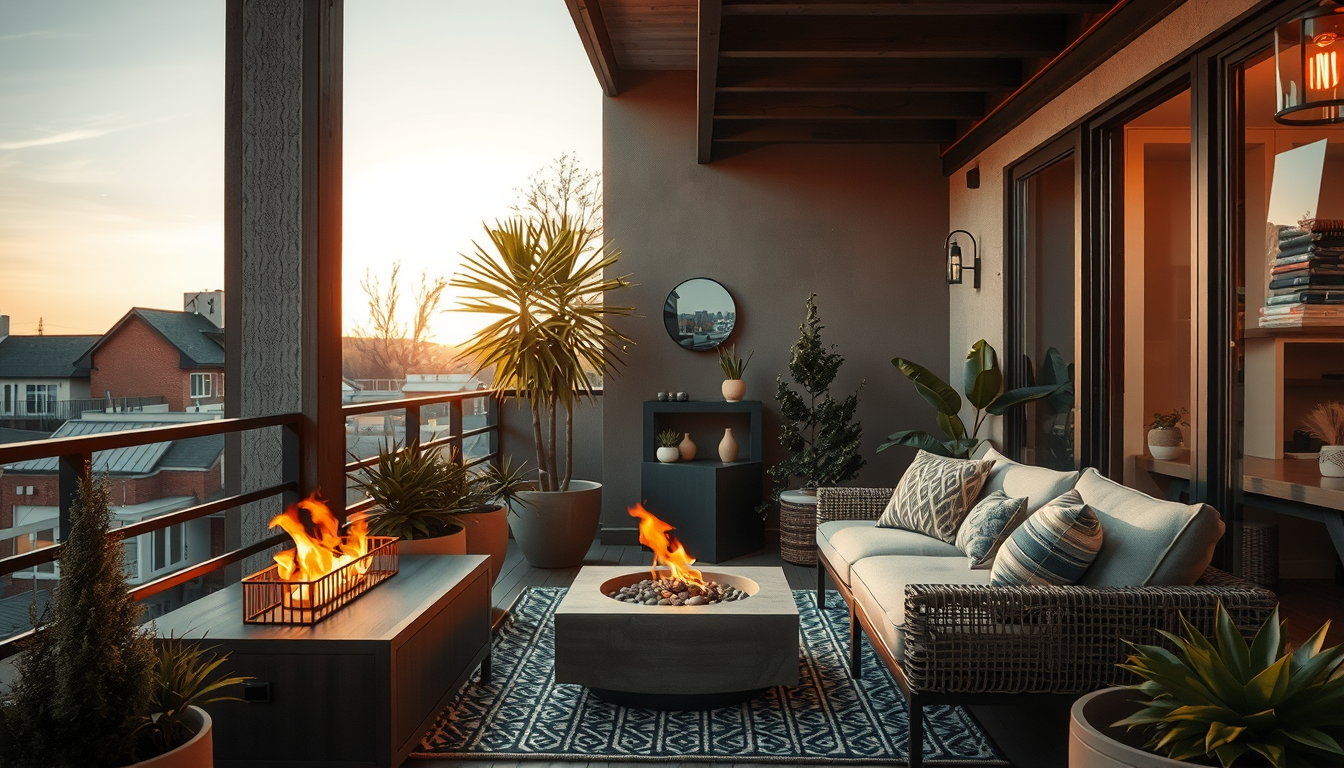
If you’re searching for fire pit ideas Canada homeowners actually use, start with one truth most design blogs skip: what you can legally build depends entirely on your postal code. Municipal bylaws vary wildly from Toronto to Vancouver, fuel-type rules shift by province, and a gorgeous stone fire bowl means nothing if it voids your home insurance. This guide gives you real design options, a city-by-city legality check, fuel comparisons for our climate, and sourcing advice — everything you need to go from Pinterest board to backyard reality. At Toronto Interior Designer, we treat outdoor spaces as rooms with no ceiling, and fire is the anchor that makes them work ten months of the year.
Best Fire Pit Styles and Costs for Canadian Backyards
Choosing a fire pit style isn’t purely aesthetic — it’s a function of your lot size, local setback rules, and how many seasons you plan to use it. Here are the styles that perform best in Canadian conditions.
| Style | Best For | Typical Cost (CAD) | Fuel Options | Maintenance Level |
|---|---|---|---|---|
| Sunken concrete bowl | Modern urban patios, small lots | $2,500–$6,000 installed | Natural gas, propane | Low |
| Dry-stack fieldstone ring | Cottage or rural properties | $800–$2,000 DIY | Wood-burning | Medium |
| Steel fire table | Condo terraces, rooftop decks | $1,200–$4,500 | Propane, natural gas | Low |
| Custom masonry with seating wall | Large suburban yards | $8,000–$18,000 installed | Natural gas, wood | Low–Medium |
| Portable steel fire bowl | Renters, flexible layouts | $150–$600 | Wood-burning, gel fuel | Medium–High |
A few design notes worth flagging. Sunken bowls handle wind better than raised models — a real advantage in prairie cities like Calgary and Winnipeg where gusts regularly top 40 km/h. Steel fire tables suit condo-scale spaces and are often the only legal option in cities that ban open flames. If you’re planning a larger hardscape project, a custom masonry pit with an integrated seating wall gives you the most design flexibility and adds genuine resale value. Landscape Ontario reports that fire features rank among the top three upgrades requested by homeowners investing in backyard renovations .
Fire Pit Bylaws in Canada: Toronto, Vancouver, Calgary & More
Shop Balcony and Patio Pieces That Fit
Toronto outdoor spaces are often tight, so look for stackable seating, slim tables, and weather-ready textiles first.
Toronto Interior Designer may earn a commission if you shop through these links at no extra cost to you.
This is the section no U.S. design publication will write for you. Canadian fire pit regulations are a patchwork of municipal bylaws, provincial fire codes, and fuel-specific permit requirements. Get it wrong and you’re looking at fines, insurance disputes, or both.
- Toronto — Recreational fires allowed in approved fire pits with a spark arrestor screen. Must be at least 2 metres from any structure, fence, or property line. Violations can result in fines under the Ontario Fire Code and Toronto Municipal Code Chapter 423 .
- Vancouver — All open-air burning is banned year-round under Vancouver Fire Bylaw 12469. Only enclosed gas fire tables are legal for residential use .
- Calgary — Recreational fires permitted in a contained pit, maximum 0.5 m diameter and 0.5 m height. Must use clean, dry wood or approved gas .
- Ottawa — Outdoor fires allowed in approved containers with a spark screen, 3-metre setback from structures. Open burning bans may be issued during dry periods .
- Edmonton — Recreational fire pits allowed with a screen, but restricted to backyards and subject to air quality advisories .
- Montréal — Regulations vary by borough. Many boroughs restrict open-air wood burning; gas units are generally permitted with setback compliance .
“The biggest mistake homeowners make isn’t picking the wrong fire pit — it’s assuming their neighbour’s setup is legal on their lot. Always check your specific municipal bylaw before you buy.”
If your project requires gas line work or structural hardscaping, you’ll want a contractor who understands both code and design. Our guide on how to find a contractor in Toronto walks through the vetting process step by step.
Wood-Burning vs. Propane vs. Natural Gas Fire Pits in Canada
Fuel choice affects everything from installation cost to how often you’ll actually light the flame in a Canadian winter. Understanding the tradeoffs helps you match your fuel to your municipality, budget, and lifestyle.
Wood-burning delivers the most atmosphere — the crackle, the smoke, the ritual of building a fire. It’s also the cheapest upfront. The tradeoff: smoke complaints from neighbours, regular ash cleanup, and outright bans in cities like Vancouver. Best for rural properties or municipalities that still permit open flames.
Propane offers portability and instant ignition. A standard 20 lb tank runs roughly 8–10 hours at medium flame. Units under 400,000 BTU are generally exempt from installation permits in Ontario, though they must still meet CSA B149.1 clearance standards . Propane is the go-to workaround for Vancouver homeowners and anyone who rents.
Natural gas is the premium play. No tanks to refill, consistent heat output, and the cleanest burn. Installation requires a licensed TSSA-certified gas fitter in Ontario, and you’re committing to a fixed location. For homeowners who plan to use their fire feature 50+ evenings a year — entirely realistic when fall starts in September and spring doesn’t land until May — natural gas pays for itself in convenience.
Insurance note: Whichever fuel you choose, look for CSA certification markings (CSA 2.17 for gas appliances or CSA P.4.1 for related equipment). Non-certified units can create coverage gaps with your homeowner policy if property damage occurs .
How to Design a Year-Round Fire Pit Lounge for Canadian Winters
A fire pit without a designed space around it is just a flame in a yard. The goal is to create an outdoor room that extends your living space — something we cover regularly in our outdoor design category.
Layout fundamentals: Position seating 60–90 cm from the flame edge. Use an L-shape or U-shape arrangement to block prevailing wind on at least two sides. A low seating wall at 45–50 cm height doubles as structure and wind protection.
Winter-proofing details: Invest in all-weather deep-seating cushions rated for −30°C storage. Layer with outdoor-grade throws — wool-acrylic blends hold up better than pure synthetics in wet snow. Add overhead string lighting or a simple pergola frame to define the “ceiling” of the room. If you’re after that same layered comfort indoors, the principles mirror what works for cozy living room design.
Surface choices: Poured concrete and natural flagstone both handle freeze-thaw cycles well. Avoid standard clay pavers in northern climates — they spall after a few winters unless rated for severe weathering (look for ASTM C902 SX classification).
Lighting and extras: Low-voltage path lights guide guests safely after dark. A built-in wood storage niche beside a wood-burning pit keeps fuel dry and within reach. For gas setups, consider a matching gas-powered patio heater to extend the comfort radius beyond the immediate pit area.
Where to Buy Fire Pits in Canada: Top Retailers and Prices
Fire pits ranked as the number-one most-requested outdoor feature in recent landscape trend studies, with nearly half of completed projects including some form of fire element . That demand means more options than ever for Canadian buyers.
Big-box retailers (Home Depot, Lowe’s, Canadian Tire) stock portable wood-burning and propane models from $150–$800. Good for entry-level or rental-friendly setups. Check for CSA certification before buying — not every imported model carries it.
Specialty outdoor retailers (Napoleon, Barbecues Galore, local hearth shops) carry higher-end gas fire tables in the $1,500–$5,000 range with better materials and longer warranties. Napoleon, based in Barrie, Ontario, is a strong Canadian-made option worth considering.
Custom fabrication through a landscape contractor or masonry specialist runs $5,000–$18,000+ depending on materials and complexity. This is where Toronto Interior Designer clients typically land when the fire pit is part of a larger outdoor room project.
What to Do Next
Whether you’re budgeting for a simple portable bowl or planning a full outdoor lounge, here’s your action checklist for bringing fire pit ideas Canada homeowners trust to life:
- Check your municipal bylaw — call your local fire department or visit the city website before purchasing anything.
- Choose your fuel type based on your city’s regulations, your usage frequency, and whether you want a fixed or portable setup.
- Verify CSA certification on any unit you buy — it protects your insurance coverage.
- Measure your setbacks — distance from structures, fences, and property lines must meet local code.
- Hire a licensed gas fitter (TSSA-certified in Ontario) if installing natural gas or permanent propane lines.
- Design the space around the flame — seating layout, wind protection, lighting, and surface materials matter as much as the pit itself.
- Budget realistically — plan for $150–$600 for portable options, $2,500–$6,000 for mid-range installed features, or $8,000–$18,000 for custom masonry with seating.
Layer the Outdoor Room
Lighting, planters, and textiles can stretch a short summer season and make even a small balcony feel intentional.
Toronto Interior Designer may earn a commission if you shop through these links at no extra cost to you.
Sources
- Landscape Ontario industry survey — https://landscapeontario.com
- Toronto Fire Services — https://www.toronto.ca/community-people/public-safety-alerts/safety-tips-prevention/fire-safety/
- City of Vancouver — https://vancouver.ca/home-property-development/open-burning.aspx
- City of Calgary — https://www.calgary.ca/fire/safety/recreational-fires.html
- Ottawa Fire Services — https://ottawa.ca/en/living-ottawa/fire-services
- City of Edmonton — https://www.edmonton.ca/programs_services/fire_rescue
- Ville de Montréal — https://montreal.ca/en
- TSSA — https://www.tssa.org
- Insurance Bureau of Canada — https://www.ibc.ca
- Houzz Outdoor Trends Study — https://www.houzz.com/magazine/outdoor-trends
Frequently Asked Questions
Are fire pits legal in Toronto?
Yes, recreational fires are legal in Toronto when using an approved fire pit with a spark arrestor screen. The pit must be at least 2 metres from any structure, fence, or property line per the Ontario Fire Code and Toronto Municipal Code Chapter 423.
What is the best fuel type for a fire pit in Canada?
Natural gas is the best long-term choice for Canadian homeowners who plan frequent use. It offers consistent heat, no tank refills, and the cleanest burn. Propane suits renters or cities that ban open flames, while wood-burning works best on rural properties where bylaws permit it.
Do I need CSA certification on a fire pit in Canada?
Yes. Buying a CSA-certified fire pit protects your homeowner insurance coverage. Non-certified units can create coverage gaps if property damage occurs. Look for CSA 2.17 markings on gas appliances before purchasing.