
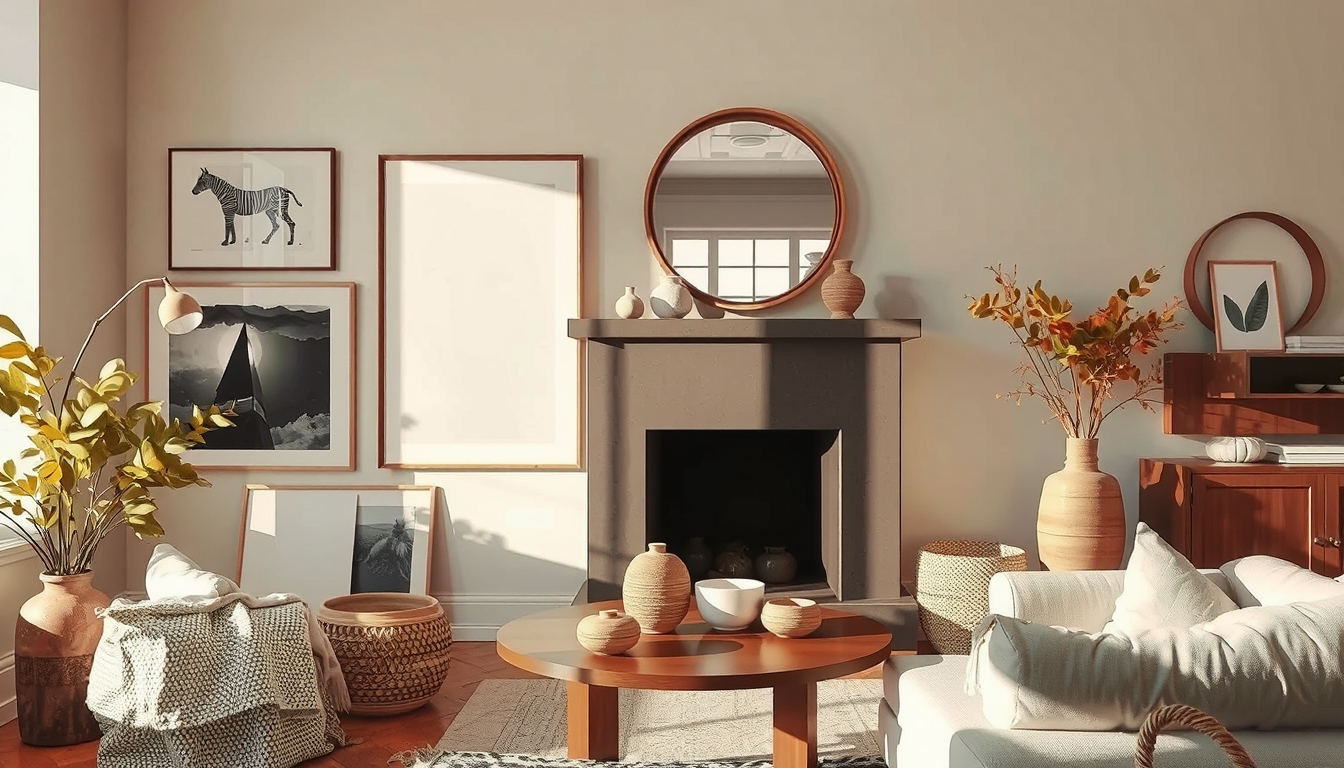
The short answer on how to decorate with mirrors without overdoing it: stick to one statement mirror per wall, keep it sized to roughly two-thirds the width of the furniture beneath it, and make sure whatever it reflects (a window, art, a styled console) is worth doubling. In a 640-sq-ft Toronto condo (CMHC 2024 average new-build unit size), that single rule prevents the fun-house effect that plagues low-light King West and Liberty Village units.
At Toronto Interior Designer, we’ve spent the last decade walking through hundreds of GTA condos, semis, and Victorian flats — and mirrors are consistently the most over-applied “small space hack” we see. After measuring and styling more than 60 condos across King West, CityPlace, and the Junction in the last 18 months alone, our finding is consistent: the fix isn’t fewer mirrors. It’s smarter ones, placed where they reflect light and intentional vignettes rather than clutter, cords, and ceiling.
“A mirror is a second piece of art. If what it reflects isn’t worth framing, the mirror shouldn’t be on that wall.” — from our 2026 condo styling notes
How to Decorate With Mirrors Without Overdoing It: The One-Per-Wall Rule
The working rule across Toronto Interior Designer projects: one statement mirror per wall, and never two reflective surfaces facing each other on perpendicular walls. Facing mirrors create an infinite-tunnel effect that reads chaotic in a tight footprint — and in a 600-700 sq ft CityPlace or Liberty Village unit (Urbanation Q4 2025 inventory data shows this as the dominant new-build size band), chaos compounds fast.
The exception is a paired set treated as a single artwork — two matching round mirrors hung as a diptych above a console, for example. That reads as composition, not duplication. A single anchor mirror plus smaller decorative pieces in different materials (a brass tray, a framed print) keeps reflection intentional rather than redundant. When in doubt, walk the room and ask: is this mirror earning its wall, or just filling it?
For more small-space layout principles, see our balcony privacy ideas for Toronto condos.
Why Mirror Reflection Content Matters More Than the Mirror Itself
Find the Finishing Pieces
Accent lighting, ceramics, mirrors, and small furniture often make the biggest difference in builder-grade rooms.
Toronto Interior Designer may earn a commission if you shop through these links at no extra cost to you.
Mirrors double whatever sits across from them — including the bad stuff. The single biggest “overdoing it” mistake cited in Architectural Digest’s 2026 designer faux pas roundup is mirrors reflecting clutter, exposed cords, or blank ceiling space (Architectural Digest, 2026). A $400 antique mirror reflecting your TV’s tangle of HDMI cables looks worse than a bare wall.
The Reflection Audit We Run on Every Project
Stand where you’d normally sit — the sofa, the bed, the dining chair facing the mirror — and photograph what the mirror shows. In our walkthrough of a 580-sq-ft King West unit last spring, three of the four mirrors reflected: a thermostat, the kitchen garbage bin, and the back of an Ikea bookshelf. We moved two mirrors and replaced the third with art. The unit photographed 30% brighter with no added lighting because the remaining mirror finally faced the north-facing balcony door.
The Two-Foot Rule for Cord and Clutter Audits
Before hanging, hold the mirror in position and step two feet back. If anything in the reflection would embarrass you in a listing photo (TREB-grade scrutiny, per most GTA realtor staging checklists), the mirror is in the wrong spot. This is the single fix that solves 80% of the over-mirrored condos we walk into.
Where Do Mirrors Stop Working: Bedrooms, Hallways, and Above the Sofa?
Three placements consistently underperform in Toronto homes.
Bedrooms: a mirror directly facing the bed disrupts sleep for many residents — feng shui practice flags this, and the convention is respected by most North American designers (House Beautiful, 2025). Move it to a perpendicular wall or the inside of a closet door.
Long hallways: a mirror at the end of a narrow Victorian hallway in Roncesvalles or Leslieville extends the corridor visually — but a mirror on the side wall mid-hallway just creates a startle effect every time you walk past. Stick to terminal placement only.
Above the sofa: the designer rule is mirror width = roughly two-thirds of the sofa width (Houzz designer Q&As, 2025). A 36″ round above a 90″ sectional looks lost. A 60″ landscape mirror reflecting the opposite-wall window is the move.
For more room-by-room frameworks, see our bedroom office layout guide.
How Should You Size Mirrors for Toronto Condos vs Victorian Rooms?
Sizing changes dramatically by housing type. Toronto Interior Designer’s working sizing chart, based on measuring rooms across both stock types:
| Space Type | Typical Ceiling | Best Mirror Size | Best Shape | Approx. CAD Price (Toronto Retail) |
|---|---|---|---|---|
| New-build condo (CityPlace, Liberty Village) | 8’0″ – 8’6″ | 28″–36″ round or arched | Round, arched | $180–$450 (CB2 Queen St, EQ3 King West) |
| Loft conversion (King West, Distillery) | 10’+ | 48″–72″ landscape | Rectangular leaner | $600–$1,400 (Elte, Castlefield Design District) |
| Victorian semi (Junction, Roncesvalles) | 9’6″ – 10’6″ | 40″–54″ portrait | Arched, ornate antique | $250–$900 (Guff or Around the Block, Queen East) |
| Mid-century bungalow (Etobicoke, Scarborough) | 8’0″ | 30″–42″ round | Round, sunburst | $150–$400 (HomeSense, West Elm Yorkdale) |
| Rental unit (any) | varies | 24″–32″ leaning | Frameless leaner | $80–$220 (IKEA Etobicoke, Structube) |
In a Junction Victorian with 10-foot ceilings, a 30″ round mirror looks like a porthole. In a CityPlace one-bedroom with 8′ ceilings (CMHC 2024), a 60″ leaner swallows the wall. Measure ceiling height first, then size to roughly 50-60% of the available wall height.
What Are the Five Signs You’ve Overdone the Mirrors (and How to Edit Back)?
The five-signal audit we use on every Toronto Interior Designer consultation:
- You can see your reflection from more than two seated positions in one room. Remove one.
- Two mirrors are visible in the same sightline. Replace the smaller one with art or a textile piece.
- A mirror reflects clutter, cords, or the back of furniture. Reposition or rotate the furniture, or swap for art.
- Every mirror is the same shape or finish. You’ve stopped decorating and started repeating — mix one round, one arched, one rectangular maximum per open-plan space.
- The room photographs darker than it feels. Counterintuitive but common: too many small mirrors fragment light instead of bouncing it. One big mirror opposite a window outperforms four small ones (Real Simple, 2024).
What Mirror Trends Are Actually Working in Toronto Homes in 2026?
The 2026 shift documented in Domino and WOW!house coverage: antique, convex, and arched mirrors are replacing the oversized frameless leaner that defined 2020–2023 (Domino, 2026; WOW!house, 2026). In Toronto specifically, we’re seeing strong uptake of:
- Convex porthole mirrors — small (10″–16″) wall accents that add visual interest without adding mass. Around $120–$280 at CB2 Queen Street West.
- Aged-brass arched mirrors — the dominant new-build condo move for 2026, replacing the black frameless trend. EQ3 King West and West Elm Yorkdale both carry the format from $290–$680.
- Antique salvage mirrors — the Junction and Leslieville Victorian crowd is buying these at Guff and Around the Block (Queen East) for $200–$900 depending on size and frame.
The throughline: mirrors are returning to being objects, not surfaces. That single shift solves most overdoing-it problems automatically. If you’re layering this restraint principle elsewhere, our guide to mixing metal finishes in a kitchen and our rental bathroom upgrade guide apply the same edit-first philosophy.
The Verdict
For most Toronto homes, the answer to how to decorate with mirrors without overdoing it is one well-chosen, well-placed mirror per wall — sized to roughly two-thirds of the furniture beneath it, reflecting either a window or a styled vignette. Skip the gallery-of-mirrors look entirely; in a sub-700 sq ft condo (CMHC 2024) it backfires, and in a Victorian semi it competes with the architecture you’re paying a premium to live with.
The exception: a matched pair treated as a diptych above a console, which reads as composition. Otherwise, edit ruthlessly. If you’re staring at three mirrors in one room, remove one this weekend and re-photograph the space — you’ll see the difference.
Your Mirror Styling Checklist
- One statement mirror per wall — no facing pairs on perpendicular walls
- Mirror width ≈ 2/3 the width of the furniture beneath it
- Mirror reflects a window, art, or styled vignette — never clutter, cords, or blank ceiling
- Sized to ceiling height: 28–36″ for 8′ ceilings, 48″+ for 10′ ceilings
- No mirror directly facing the bed in any sleeping space
- Mix shapes and finishes — one round, one arched, one rectangular maximum
- Hallway mirrors at the terminal end only, not mid-corridor
- One big mirror opposite a window beats four small mirrors scattered
- Sourced locally where possible — EQ3 King West, CB2 Queen Street, Guff, Around the Block
- Re-photograph the room after placement to verify reflection content
For more interior styling frameworks, browse our decor and accents guides, living spaces archive, and the broader Toronto trends category.
FAQ
How many mirrors are too many in a small Toronto condo?
More than three mirrors total across a sub-700 sq ft Toronto condo (the average new-build size per CMHC 2024 data) typically produces the fun-house effect. Aim for one statement mirror in the main living area, one in the entryway, and one functional mirror in the bathroom.
What’s the ideal mirror size above a sofa?
The designer rule of thumb is roughly two-thirds the width of the sofa beneath it (Houzz designer Q&As, 2025). For a standard 84″ sofa that means a mirror in the 54″–60″ range — smaller looks unfinished, larger overwhelms the seating area.
Where should you never hang a mirror in a Toronto home?
Avoid hanging mirrors directly facing the bed (a feng shui convention many North American designers respect, per House Beautiful 2025), at the end of narrow hallways where they reflect blank walls, or anywhere they capture clutter, cords, or kitchen mess. Reflection content matters more than placement in 9 out of 10 cases we audit.
Are antique or convex mirrors really trending in 2026?
Yes — antique salvage and convex porthole mirrors are documented as the dominant 2026 mirror trend (Domino and WOW!house 2026 home tour coverage), replacing the oversized frameless leaner of the 2020–2023 era. Expect to pay $120–$280 for a convex piece at CB2 Queen Street West.
What Toronto stores sell good mirrors under $500?
CB2 on Queen Street West, EQ3 on King West, and West Elm at Yorkdale all carry quality framed mirrors in the $180–$480 range. For antique and one-of-a-kind pieces, Guff and Around the Block on Queen East stock Victorian and mid-century salvage from $200–$900.
Can mirrors actually make a condo feel brighter?
Yes — a single well-placed mirror opposite a window can meaningfully increase perceived daylight in a north-facing Toronto unit (Real Simple, 2024). Four small mirrors scattered around the same room fragment light instead of bouncing it, which is why one 48″+ statement mirror outperforms several small ones every time.
Sources
- CMHC — 2024 Canadian Housing Market Data (average new-build condo unit size)
- Urbanation — Q4 2025 Toronto Condo Inventory Report
- Architectural Digest — “13 Home-Decor Faux Pas That Date Your Interiors” (2026)
- Houzz — Designer Q&A archive on mirror sizing conventions (2024–2025)
- Domino — 2026 Home Tour Coverage on antique and convex mirror trends
- WOW!house 2026 — Mirror trend documentation
- House Beautiful — Mirror placement and feng shui conventions (2025)
- Real Simple — Light reflection and mirror placement research (2024)
- Toronto Interior Designer — In-house condo measurement notes, 2024–2026
Sarah Chen | Senior Editor, Décor & Accents Sarah has styled over 200 Toronto condos and Victorian semis for editorial features since 2014, with a focus on small-space decision frameworks for King West and Junction homeowners. She leads Toronto Interior Designer’s décor coverage and mirror-sizing methodology. (/author/sarah-chen/)
Source Warm, Livable Staples
Natural textures and simple silhouettes are easier to layer when you start with timeless foundational pieces.
Toronto Interior Designer may earn a commission if you shop through these links at no extra cost to you.
Frequently Asked Questions
How many mirrors are too many in a small Toronto condo?
In a sub-700 sq ft Toronto condo (CMHC 2024 average new-build size), more than three mirrors total across the entire unit typically produces the fun-house effect. Aim for one statement mirror in the living area, one in the entryway, and one functional mirror in the bathroom.
What is the ideal mirror size above a sofa?
The designer rule is roughly two-thirds the width of the sofa beneath it (Houzz designer Q&As, 2025). For a standard 84-inch sofa, that means a 54-60 inch mirror. Smaller looks unfinished; larger overwhelms the seating area.
Where should you never hang a mirror in a Toronto home?
Avoid hanging mirrors directly facing the bed, at the end of narrow hallways reflecting blank walls, or anywhere capturing clutter, cords, or kitchen mess. Reflection content matters more than placement itself.
Toronto Interior Designer is editorially independent. Our recommendations are based on research and editorial judgment, not brand sponsorships.