
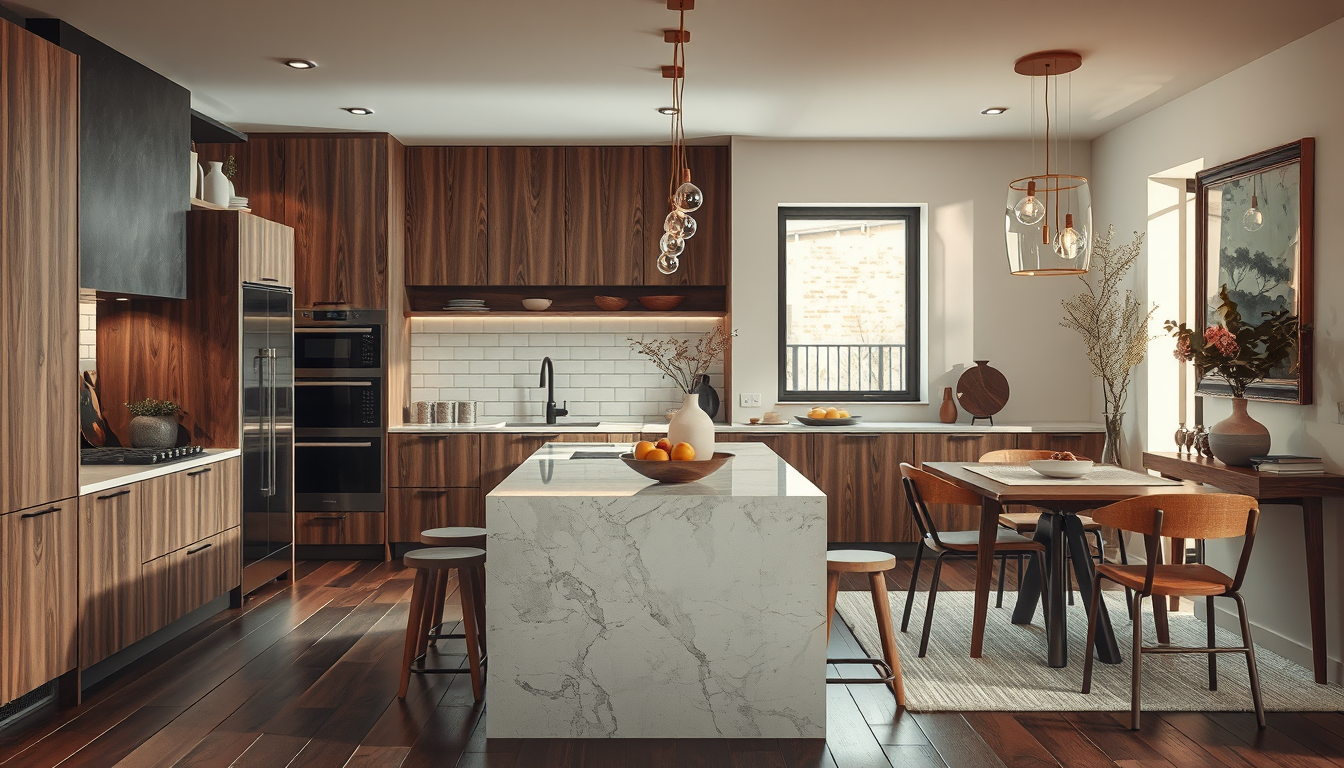
If you’re searching for kitchen island ideas Canada homeowners can actually use, start with one honest question: how big is your kitchen? Most international design coverage showcases sprawling US kitchens with eight-foot islands and double dishwashers. That looks great on a mood board, but it means nothing when you’re standing in a 70-square-foot Toronto condo galley or a 1950s Scarborough bungalow with load-bearing walls in awkward places. The right island for a Canadian home is the one that respects your real footprint, your budget in actual dollars, and the way you cook through a nine-month indoor season. This guide sizes every recommendation to Canadian housing stock, building codes, and suppliers you can actually visit.
Best Kitchen Island Ideas for Small Canadian Condos
Roughly 60 percent of Toronto resale condos built after 2010 have kitchens under 100 square feet . That rules out a fixed island for most units. Instead, think in three tiers:
- Rolling butcher-block carts (under 24 inches wide) — These tuck against a wall when not in use and roll out for prep. IKEA’s BEKVÄM and Boos Block models are widely available in Canada starting around $300–$800 CAD.
- Narrow peninsula extensions — If your condo kitchen has a half-wall or breakfast bar, extending it by 12–18 inches with a waterfall-edge quartz cap gives you island function without blocking the walkway. Ontario Building Code requires a minimum 42-inch (1,070 mm) clearance around islands for safe passage; peninsulas help you meet that while gaining counter space .
- Drop-leaf or fold-down islands — A wall-mounted drop-leaf with a single support leg gives you a 36-by-24-inch work surface that folds flat. Several Toronto millwork shops build these custom for $1,200–$2,500 CAD installed.
The key principle: in a small condo, your island should move or fold. A fixed island that forces you to sidestep around it every morning isn’t clever design — it’s an obstacle. If you’re furnishing a compact condo on multiple fronts, our guide to choosing the best dining table for a small condo applies the same space-first logic.
Full-Size Kitchen Island Layouts for Suburban and Heritage Homes
Shop Dining Pieces for Narrow Layouts
Extendable tables, slim dining chairs, and compact pendants make a bigger impact than oversized statement pieces.
Toronto Interior Designer may earn a commission if you shop through these links at no extra cost to you.
Once your kitchen exceeds 120 square feet — common in postwar bungalows, semi-detached homes, and newer suburban builds — a proper fixed island becomes practical. The 48-inch clearance recommended for two-cook kitchens should be your planning minimum, not the 42-inch code baseline.
Here’s where layout shape matters more than island size:
| Layout Type | Ideal Island Size | Best For | Watch Out For |
|---|---|---|---|
| L-shaped kitchen | 48 × 30 in (1,220 × 760 mm) | Bungalows, side-split kitchens | Keep the island parallel to the long leg for traffic flow |
| U-shaped kitchen | 60 × 36 in (1,525 × 915 mm) | Suburban open-concept | Don’t block the sight line to the family room |
| Galley with one open end | 42 × 24 in peninsula | Victorian rowhouses, narrow lots | A full island rarely fits; extend one counter run instead |
| Open-concept great room | 72 × 42 in or larger | New builds, major renovations | Anchor the island with pendant lighting to define the kitchen zone |
A kitchen island isn’t furniture — it’s infrastructure. Get the clearances right first, then worry about the finish.
For heritage homes with narrow floor plates, Toronto Interior Designer recommends measuring your actual walk paths during a busy dinner prep before committing to any island footprint. Stand in the kitchen with two people, open the oven and dishwasher simultaneously, and see what fits. If you can’t walk comfortably between the island and every open appliance door, the island is too large — regardless of what any layout template suggests.
Kitchen Island Materials and Finishes Trending in Canada for 2026
Once your layout and clearances are settled, the next decision is what your island is made of. The all-white waterfall quartz island isn’t going anywhere, but the leading edge of Canadian kitchen design has moved on. Three material directions are defining 2026:
Paneled and fluted fronts — Flat-slab and Shaker-style island bases are giving way to vertically fluted and paneled cabinet fronts . This “Neo Deco” direction, flagged by Architectural Digest as a top 2026 trend, brings texture and shadow to the island base without adding colour .
Wood-and-metal mixing — Vipp’s V2 Kitchen, widely covered in design media, pairs warm timber drawer fronts with blackened steel framing . In Canada, this translates well to white-oak or walnut island tops paired with matte black or unlacquered brass hardware — materials that feel warm during long winters.
Butcher block and concrete in the mid-market — Waterfall-edge stone still dominates luxury projects, but butcher-block and poured-concrete island tops are gaining share in the $5,000–$10,000 CAD island segment. They’re easier to install in older homes where floor structure may not support a 400-pound stone slab without reinforcement. If you’re coordinating your island finish with the rest of the room, our warm neutral paint colour guide covers the backdrop palettes that pair well with wood and concrete tones.
Kitchen Island Cost in Canada: Real 2026 Pricing in CAD
Knowing what materials you want is one thing; knowing what they cost is another. Budget transparency matters, so here are real ranges in CAD for 2026:
| Island Type | Material | Price Range (CAD) | Includes |
|---|---|---|---|
| Rolling cart (off-the-shelf) | Solid wood / stainless | $300–$900 | Cart only, no install |
| Custom peninsula extension | Quartz top, painted base | $2,500–$6,000 | Fabrication, install, no plumbing |
| Mid-range fixed island | Butcher block or quartz, stock cabinetry | $5,000–$10,000 | Countertop, base cabinets, basic electrical |
| Full custom island | Waterfall quartz or marble, custom millwork | $10,000–$20,000+ | Design, fabrication, plumbing, electrical |
The average Canadian kitchen renovation runs $25,000–$75,000 CAD total, with the island typically accounting for 15–25 percent of that budget . Adding a sink or cooktop to the island pushes costs up by $2,000–$5,000 CAD for plumbing and ventilation rough-ins — a significant factor in condo renovations where you may need strata or condo board approval for plumbing changes.
Where to Source Custom Kitchen Islands in Toronto and Canada
With your budget set, the next step is finding the right supplier. Toronto Interior Designer regularly works with GTA-based fabricators and cabinetmakers. A few sourcing tiers worth exploring:
- Big-box starting points — IKEA’s SEKTION system and Home Depot’s in-stock cabinetry let you build a basic island frame for $800–$2,500 CAD, then add a custom top from a local stone fabricator.
- GTA custom millwork shops — Caesarstone-certified fabricators in Vaughan and Mississauga can produce a full waterfall-edge island top in 2–3 weeks. Budget $3,000–$8,000 CAD for the countertop alone.
- Independent cabinetmakers — For fully bespoke islands with fluted panels, integrated storage, or unusual dimensions, Toronto-area cabinet shops typically quote $6,000–$15,000 CAD for the complete unit.
- Online Canadian retailers — Wayfair.ca and Article carry pre-built kitchen islands in the $500–$2,000 CAD range for buyers who need a fast solution without custom lead times.
Always request quartz and stone samples in person — colours shift dramatically between a screen and your kitchen’s north-facing light. For more ideas on pulling your kitchen and dining area together, browse our kitchen and dining category for layout strategies that extend beyond the island.
What to Do Next
- Measure twice: Record your kitchen dimensions in millimetres and confirm your walkway clearances meet the 42-inch OBC minimum before sketching any island placement.
- Set your island budget at 15–25% of your total kitchen renovation spend and decide early whether you need plumbing or electrical in the island.
- Order material samples from at least two local fabricators — compare quartz, butcher block, and concrete in your actual kitchen light.
- Check condo rules first if you’re in a multi-unit building: plumbing relocations and structural changes require board approval in most Toronto condos.
- Book a design consultation to confirm your layout works before committing to fabrication.
The best kitchen island ideas Canada homeowners invest in aren’t the trendiest — they’re the ones that fit the kitchen you actually have, built with materials you can source locally, at a price that leaves budget for the rest of the renovation.
Start With Functional Basics
For budget-friendly kitchen and dining updates, focus on stools, storage, and lighting before decorative extras.
Toronto Interior Designer may earn a commission if you shop through these links at no extra cost to you.
Sources
- Urbanation condo market data — https://www.urbanation.ca
- Ontario Building Code, Section 9.5 — https://www.ontario.ca/laws
- Homes & Gardens trend report — https://www.homesandgardens.com
- AD 2026 Trends — https://www.architecturaldigest.com
- Design Milk — https://design-milk.com
- HomeStars renovation cost data — https://homestars.com
Frequently Asked Questions
How much does a kitchen island cost in Canada?
Kitchen island costs in Canada range from $300 CAD for a rolling butcher-block cart to $20,000+ CAD for a full custom island with waterfall quartz, plumbing, and electrical. The island typically accounts for 15–25 percent of a total kitchen renovation budget.
What size kitchen island fits a small Canadian condo?
Most Toronto condos built after 2010 have kitchens under 100 square feet, so a fixed island rarely fits. Rolling carts under 24 inches wide, narrow peninsula extensions, or fold-down wall-mounted islands work best while meeting the Ontario Building Code’s 42-inch clearance minimum.
Where can I buy a custom kitchen island in Toronto?
Toronto-area options include IKEA and Home Depot for stock cabinetry bases ($800–$2,500 CAD), Caesarstone-certified fabricators in Vaughan and Mississauga for countertops ($3,000–$8,000 CAD), and independent GTA cabinet shops for fully bespoke islands ($6,000–$15,000 CAD).