
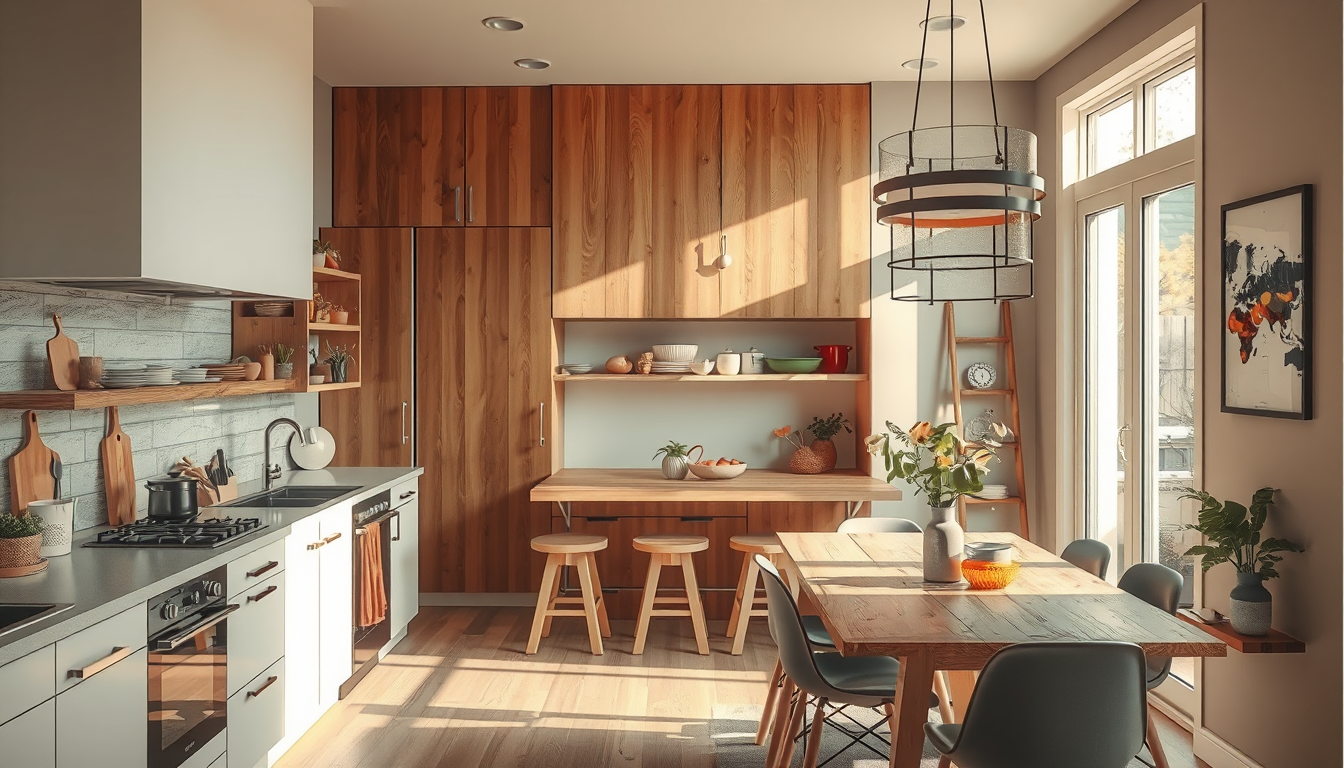
If you’re searching for kitchen pantry ideas Canada homeowners actually use, here’s the headline: the pantry has officially overtaken the island as the most-wanted built-in kitchen feature in 2026 . That shift matters more in Toronto than almost anywhere else. Our kitchens are smaller, our winters demand bulk buying, and our housing stock — from 600-square-foot condos to narrow Victorian-era rowhouses — rarely comes with a dedicated pantry. The good news is that a well-designed pantry retrofit can cost a fraction of a full renovation and transform how your kitchen functions through every Canadian season.
Kitchen Pantry Ideas Canada: Walk-In, Reach-In, or Cabinet Layout
Before you pin a single inspiration photo, match your pantry type to your actual floor plan. Toronto kitchens fall into three broad categories, and each one points toward a different solution.
| Pantry Type | Footprint Needed | Best For | Budget Range (CAD) | Key Advantage |
|---|---|---|---|---|
| Walk-in pantry | 25–50 sq ft minimum | Suburban open-concept kitchens | $3,000–$5,000+ | Maximum capacity, countertop space inside |
| Reach-in pantry | 6–12 sq ft (closet depth) | Century homes with hallway or adjacent room | $1,500–$3,000 | Retrofits into existing closets or nooks |
| Cabinet pantry (floor-to-ceiling) | 2–4 linear feet of wall | Condos and galley kitchens | $1,200–$2,500 | No structural work, highest density per square foot |
| Pull-out pantry tower | 12–18 inches wide | Ultra-tight galley or one-wall layouts | $800–$1,500 | Fits where nothing else will |
Walk-ins get the most attention on social media, but for most Toronto homeowners a floor-to-ceiling cabinet pantry or a reach-in closet conversion delivers more impact per dollar. If your kitchen sits in a pre-1940 home — and roughly 30 percent of dwellings in old Toronto fall into that category — chances are you have a former butler’s pantry, back hallway, or undersized coat closet within arm’s reach of the kitchen that’s begging for a second life .
Small-Space Pantry Solutions for Toronto Condos and Century Homes
Shop Dining Pieces for Narrow Layouts
Extendable tables, slim dining chairs, and compact pendants make a bigger impact than oversized statement pieces.
Toronto Interior Designer may earn a commission if you shop through these links at no extra cost to you.
The average Toronto condo kitchen measures roughly 70 to 100 square feet, which means every inch of pantry storage has to be earned. These five strategies work in tight footprints:
- Reclaim the broom closet. A standard 24-inch-deep closet near the kitchen can hold pull-out drawers, door-mounted racks, and adjustable shelving — enough to store a week’s worth of dry goods plus small appliances.
- Go vertical with floor-to-ceiling cabinetry. Toronto condos typically have 8- to 9-foot ceilings. A single 30-inch-wide cabinet run from floor to ceiling provides roughly 30 cubic feet of storage without stealing any floor space.
- Use the dead zone above the fridge. A custom cabinet that extends to the ceiling turns wasted space into canned-goods or baking-supply storage. Add a pull-down shelf mechanism for easy access.
- Convert a galley-kitchen end wall. In narrow Victorian kitchens, the short wall at one end often holds nothing but a clock. A shallow 12-inch-deep open pantry shelving unit fits here without blocking the walkway.
- Build a hidden pantry behind pocket doors. If you have an adjacent dining nook or hallway, pocket doors let you close off a reach-in pantry completely — keeping the open-concept sightline clean when you’re entertaining.
“The best pantry isn’t the biggest one — it’s the one you can reach while cooking without leaving your workstation. In a Toronto condo, that usually means a cabinet pantry within the kitchen triangle, not a walk-in down the hall.”
For more ideas on making compact rooms work harder, explore our kitchen and dining design guides.
Pantry Organization Systems You Can Source in Canada
Once you’ve settled on a layout, the next step is choosing interior hardware — and this is where US-focused pantry content falls short. Half the recommended products ship to Canadian addresses slowly, expensively, or not at all. Here are organization systems you can actually get here.
Richelieu Hardware (headquartered in Montreal) is North America’s largest specialty hardware distributor, and their pantry pull-out systems — including soft-close wire baskets, spice rack inserts, and blind-corner pull-outs — are available through most Canadian kitchen dealers and online . Browse their catalogue before committing to a cabinetry brand.
IKEA Canada offers the BOAXEL and JONAXEL shelving systems, which work well inside closet-conversion pantries. The PAX wardrobe system, while designed for bedrooms, can be configured as a freestanding pantry with interior fittings for a fraction of custom cabinetry cost.
Canadian-made cabinetry from manufacturers like DERA (Ontario) and Miralis (Quebec) lets you spec custom pantry interiors — adjustable shelving, built-in dividers, integrated lighting — with shorter lead times and no cross-border duties. If your renovation budget sits in the $12,000 to $15,000 mid-range for the full kitchen, allocating $1,500 to $3,000 toward a dedicated pantry is one of the highest-return moves you can make .
We consistently recommend that clients finalize pantry hardware selections before locking in cabinet dimensions — the interior fittings should drive the box size, not the other way around.
Cold-Climate Pantry Storage for Canadian Bulk Buying and Preserves
This is where Canadian pantry planning diverges sharply from American design magazines. Two realities shape our storage needs.
Bulk-buying culture. Canada has among the highest Costco membership penetration rates globally, and Toronto households routinely stock up on oversized dry goods, canned items, and freezer packs. Your pantry needs shelf depths of at least 14 to 16 inches — versus the 12 inches common in US builder-grade pantries — and reinforced shelving rated for heavier loads.
Seasonal preservation. Canning, pickling, and fermenting have surged in popularity, especially among homeowners with even modest garden space. A well-designed Toronto pantry includes a cool, dark lower section — ideally positioned away from the stove and dishwasher heat — where preserves can sit at a stable temperature through winter. Adjustable shelving spaced to fit both standard Mason jars and taller European-style preserving jars saves headaches later.
Consider adding a small countertop surface inside or immediately beside the pantry for decanting, labelling, and meal-prep staging. Even a 24-by-18-inch pull-out shelf gives you a functional workspace without permanently claiming counter space in the main kitchen. If you’re also rethinking how your living areas connect to the kitchen, our guide to cozy textures and layering covers how to keep adjacent spaces feeling warm through Canadian winters.
Toronto Designer-Approved Pantry Styles: Modern to Traditional
Style matters because your pantry is increasingly visible. Open-concept layouts and glass-front cabinet doors mean the pantry interior is part of your kitchen’s design story.
Modern minimalist. Flat-panel doors in matte white or warm greige, integrated finger-pull hardware, and uniform storage containers on every shelf. This approach works especially well in newer condos where clean lines match the existing cabinetry.
Warm traditional. Shaker-profile doors in sage green or navy, brass Richelieu cup pulls, and open shelving for cookbooks and ceramics. This suits century homes and complements the moulding details already present in older Toronto kitchens.
Working farmhouse. Open wood shelving, woven baskets for root vegetables, and a butcher-block countertop inside the pantry. Pair this with the deeper shelving mentioned above for bulk storage, and it becomes as functional as it is photogenic.
Choose a style that matches or complements your existing kitchen cabinetry rather than treating the pantry as a standalone design moment — consistency reads as intentional, not an afterthought. For broader renovation planning, browse our renovation tips for more project guidance.
What to Do Next
- Measure your kitchen and adjacent spaces. Identify closets, dead walls, and underused nooks within five steps of your main prep area.
- Choose your pantry type using the comparison table above — match it to your actual footprint, not your Pinterest board.
- Set a realistic budget. A retrofit pantry in the $1,500–$3,000 range delivers outsized impact without requiring a full kitchen gut.
- Source hardware first. Browse Richelieu, IKEA Canada, or a local kitchen dealer for pull-out systems and interior fittings before you finalize cabinet dimensions.
- Consider climate-specific needs. Plan for bulk-buying depth, preserve-friendly shelf spacing, and a cool lower zone away from heat sources.
- Consult a local designer. A Toronto-based kitchen designer understands our housing stock, sourcing channels, and permit requirements — context that generic online guides can’t provide.
Kitchen pantry ideas Canada homeowners can actually execute start with honest space assessment and local sourcing — not a US-sized dream closet. The pantry you’ll love most is the one built for the way you really cook, shop, and store through a full Canadian year.
Start With Functional Basics
For budget-friendly kitchen and dining updates, focus on stools, storage, and lighting before decorative extras.
Toronto Interior Designer may earn a commission if you shop through these links at no extra cost to you.
Sources
- Houzz 2026 Kitchen Trends Study — https://www.houzz.com/magazine/kitchen-trends-study
- City of Toronto housing stock data — https://www.toronto.ca/city-government/data-research-maps/research-reports/housing-and-homelessness-research-and-reports/
- Richelieu Hardware — https://www.richelieu.com/
- HomeStars kitchen renovation cost guide — https://homestars.com/cost-guides/kitchen-renovation
Frequently Asked Questions
How much does a pantry retrofit cost in Canada?
A pantry retrofit in Canada typically costs between $800 and $5,000 CAD depending on the type. Cabinet pantries run $1,200–$2,500, reach-in closet conversions cost $1,500–$3,000, and full walk-in pantries start at $3,000 and up. Sourcing hardware from Canadian suppliers like Richelieu or IKEA Canada helps keep costs down.
What is the best pantry type for a Toronto condo?
A floor-to-ceiling cabinet pantry is the best option for most Toronto condos. A single 30-inch-wide unit running from floor to ceiling provides roughly 30 cubic feet of storage without stealing floor space, making it ideal for kitchens under 100 square feet.
Where can I buy pantry organization systems in Canada?
Richelieu Hardware, headquartered in Montreal, offers pull-out systems and pantry inserts through most Canadian kitchen dealers. IKEA Canada’s BOAXEL and JONAXEL shelving systems work well for closet conversions. Canadian cabinet makers likeDERA in Ontario and Miralis in Quebec also offer custom pantry interiors with no cross-border duties.