
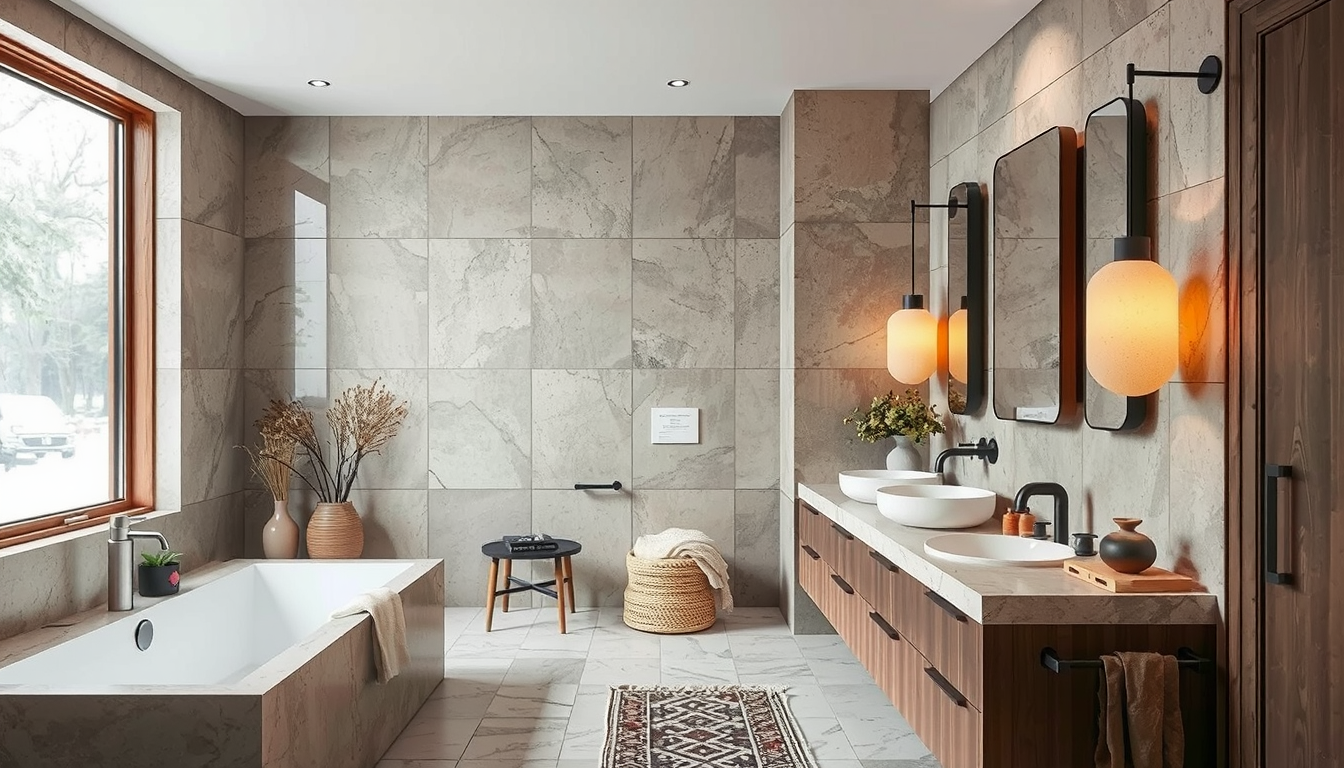
Last updated: April 1, 2026
Meta description: Learn how marble bathroom climate planning addresses Toronto humidity, hard water and cold walls, with local costs, waterproofing advice and maintenance tips.
For Toronto homes, the best marble bathroom climate strategy combines honed stone in wet zones, a complete waterproofing assembly and mechanical exhaust sized to the applicable 25 L/s requirement (Ontario Building Code, Division B, Table 9.32.3.5). Toronto tap water averages approximately 124 mg/L of hardness, making regular wipe-downs equally important (City of Toronto).
Marble remains a practical bathroom material when its limitations guide the design. In our editorial review, we compared Toronto water data, Ontario ventilation requirements and natural-stone guidance across seven decisions: finish, placement, waterproofing, ventilation, heating, sealing and cleaning (City of Toronto; Natural Stone Institute; TTMAC).
How Does Toronto’s Climate Affect a Marble Bathroom?
Toronto’s heating season increases condensation risk where warm, humid bathroom air meets cold walls or windows (CMHC). Health Canada recommends maintaining indoor relative humidity between 30% and 50%, while CMHC advises reducing humidity whenever condensation appears on cold surfaces (Health Canada; CMHC).
Building type matters. A Junction semi may have cold masonry or interrupted insulation, while a CityPlace condo may combine concrete construction with centralized ventilation and corporation-specific renovation rules. Both conditions require careful substrate assessment before marble is installed (Natural Resources Canada; Condominium Authority of Ontario).
Toronto water also affects appearance. At approximately 124 mg/L of hardness as calcium carbonate, evaporating droplets can leave pale mineral deposits on dark or polished marble (City of Toronto).
What Should Toronto Homeowners Budget for Marble?
Upgrade the Details That Change Everything
Lighting, mirrors, and matte hardware can make a modest bathroom renovation feel far more custom.
Toronto Interior Designer may earn a commission if you shop through these links at no extra cost to you.
The following figures are Toronto planning allowances rather than quotations. Material grade, tile size, demolition, access and substrate repairs can change the installed cost substantially (HomeStars Canada 2026).
| Upgrade | Toronto Cost Range (CAD) | Typical Timeline | Permit or Approval? |
|---|---|---|---|
| Marble tile supply | $15–$60 per sq. ft. | 1–4 weeks | No municipal permit |
| Marble installation labour | $15–$35 per sq. ft. | 3–7 days | No municipal permit |
| Shower waterproofing assembly | $1,500–$4,000 | 2–4 days | Usually no |
| Electric radiant floor | $2,500–$5,000 | 2–4 days | ESA notification |
| Exhaust-fan upgrade | $700–$1,800 | About 1 day | Approval may apply |
| Professional cleaning and sealing | $350–$900 | About 1 day | No |
These allowances synthesize Canadian retail pricing and published renovation-cost guidance (HomeStars Canada 2026). Compare them with our radiant bathroom floor guide and broader Toronto renovation advice.
When Does a Marble Bathroom Require a Permit?
Replacing tile or fixtures in their existing locations generally does not require a City of Toronto building permit. Structural alterations, new openings and some plumbing-layout changes may require municipal review (City of Toronto).
Electric floor warming must be installed under an Electrical Safety Authority notification by a licensed electrical contractor (Electrical Safety Authority). An exhaust upgrade may also require building or condominium approval when it changes common elements, exterior penetrations or shared ventilation systems (City of Toronto; Condominium Authority of Ontario).
Permit status and condo approval are separate questions. A project may need corporation approval even when no municipal building permit is required (Condominium Authority of Ontario).
Which Marble Bathroom Finishes Perform Best in Wet Areas?
Honed marble is our preferred finish for Toronto showers and frequently used family bathrooms. Its low sheen makes minor etching, mineral residue and wear less conspicuous than a reflective polish, although honing does not make marble acid-resistant (Natural Stone Institute).
Polished marble works best on low-contact walls, backsplashes and decorative vanity details. Dark polished stones, including Nero Marquina, tend to make pale mineral deposits and dull etched areas more visible (Natural Stone Institute).
Floor tile should be selected using manufacturer-provided wet dynamic coefficient of friction data. A honed label alone does not guarantee adequate slip resistance (Tile Council of North America).
| Location | Recommended Finish | Practical Reason |
|---|---|---|
| Shower floor | Honed mosaic | More grout joints provide additional traction |
| Shower wall | Honed marble | Water marks and etching appear softer |
| Vanity top | Honed or polished | Honed disguises wear; polished wipes easily |
| Dry feature wall | Polished marble | Lower exposure to standing water |
| Main bathroom floor | Honed tile | Lower sheen is more forgiving |
Explore additional combinations in our bathroom design archive.
Where Should Marble Be Used in a Toronto Bathroom?
Use marble where water can drain freely and surfaces are easy to dry. Shower walls, vanity splashes and main floors are generally more manageable than flat niche shelves, curb tops or ledges that hold standing water (Natural Stone Institute; TTMAC).
Small-format mosaics are preferable on many shower floors because additional grout joints improve foot traction and help tile follow the required slope toward the drain (Tile Council of North America; TTMAC). Grout joints do not, however, make a shower waterproof (TTMAC).
For lower maintenance, use porcelain on the shower floor and reserve marble for vertical surfaces. This keeps natural stone at eye level while reducing exposure in the bathroom’s hardest-working wet zone.
How Should a Toronto Marble Bathroom Be Waterproofed?
Marble, grout and penetrating sealer are not waterproofing materials. A shower requires a continuous, manufacturer-approved waterproofing system behind or directly beneath the tile (TTMAC).
Corners, drains, curbs, niches and plumbing penetrations must be detailed as parts of that system. Mixing unapproved components can compromise manufacturer requirements, so membranes, drains and accessories should be selected as a coordinated assembly (TTMAC).
Before tiling a cold exterior wall, confirm that the substrate is sound and that insulation and air-control layers are continuous. Air leakage and thermal bridging can create cold interior surfaces where bathroom moisture condenses during Toronto’s heating season (Natural Resources Canada).
How Should a Marble Bathroom Be Ventilated and Heated?
Ontario’s Building Code prescribes a supplementary bathroom exhaust capacity of 25 L/s, or approximately 53 cubic feet per minute, under Division B, Table 9.32.3.5 (Ontario Building Code). Actual fan selection must account for duct length, elbows and rated performance (Ontario Building Code; manufacturer specifications).
Run the fan while bathing and afterward until excess moisture clears. Indoor relative humidity should generally remain between 30% and 50%, with lower levels used when condensation appears on windows or exterior walls (Health Canada; CMHC).
Radiant flooring improves comfort but does not replace insulation, exhaust or waterproofing. Marble thickness, heating cable, thermostat location and floor buildup should be coordinated before installation begins (Electrical Safety Authority). See our radiant bathroom floor recommendations.
What Changes When Renovating a Toronto Condo?
Toronto condo owners should obtain written approval before demolition or ordering non-refundable stone when required by the corporation’s declaration, rules or renovation agreement (Condominium Authority of Ontario). Building-specific requirements commonly address work hours, elevator bookings, contractor insurance, debris removal and plumbing shutoffs (Condominium Authority of Ontario).
Wet-over-dry rules may prevent a bathroom from expanding above a neighbouring bedroom or living area. Corporation approval under the Condominium Act remains separate from City permit review (Condominium Authority of Ontario).
Large slabs require logistical planning as well. Ask the fabricator to confirm service-elevator dimensions, loading limits and the complete delivery route before approving slab sizes. Similar drainage principles appear in our Toronto pet-grooming nook guide.
How Can You Prevent Etching, Stains and Hard-Water Marks?
Etching, staining and mineral deposits are different problems. Etching is a chemical reaction between acid and marble’s calcite; staining is absorbed discolouration; hard-water marks are residue left after water evaporates (Natural Stone Institute).
A penetrating sealer can slow absorption and reduce staining risk, but it cannot prevent acidic etching. Vinegar, lemon juice and acidic bathroom cleaners can dull sealed marble (Natural Stone Institute).
Toronto’s approximately 124 mg/L water hardness makes drying especially useful around shower controls, niches and faucet bases (City of Toronto). Use a squeegee and soft microfibre cloth instead of an acidic descaler.
For a less restrictive vanity material, consider our guide to solid-surface countertops.
Which Fixtures Reduce Visible Mineral Buildup?
Brushed nickel and stainless-look finishes generally disguise dried droplets better than glossy black or mirror-polished finishes. Performance still depends on the manufacturer’s coating and cleaning instructions.
Choose fixtures with accessible aerators and replacement cartridges, and avoid placing shower controls in the direct spray path. Plumbing fittings sold in Canada should carry the applicable CSA compliance information, although CSA B125.1 does not make decorative finishes resistant to mineral deposits (CSA Group).
Toronto showrooms, including CB2 on Queen Street West and EQ3 on King Street East, can help establish a finish palette; confirm current locations and availability before visiting. Purchase plumbing through suppliers that provide written care instructions, CSA information and replacement-part support. Our buyer guides offer further fixture comparisons.
What Maintenance Schedule Does a Toronto Marble Bathroom Need?
Marble performs best when water is removed promptly, surfaces are cleaned weekly and vulnerable joints are inspected every three months (Natural Stone Institute; TTMAC). This routine limits mineral residue without exposing the stone to harsh cleaners.
What Should Be Done After Every Shower?
Squeegee shower walls and wipe ledges, niches and faucet bases with a soft microfibre cloth. A roughly two-minute wipe-down reduces the evaporation that leaves visible residue from Toronto’s approximately 124 mg/L hard water (City of Toronto).
Run the exhaust fan during bathing and afterward until excess humidity has cleared. The applicable Ontario bathroom capacity is 25 L/s, subject to the building and system design (Ontario Building Code).
What Should Be Done Weekly?
Clean marble with a soft cloth or non-abrasive pad and a pH-neutral product specifically labelled for natural stone. Acidic cleaners and abrasive powders can etch, dull or scratch marble (Natural Stone Institute).
Check flat surfaces for standing water and remove residue before it accumulates. Never use vinegar as a “natural” descaler on marble because acid reacts with calcite (Natural Stone Institute).
What Should Be Inspected Seasonally?
Every three months, inspect silicone joints, grout, fan grilles and transitions around the tub, curb and vanity. Failed surface sealant should be repaired promptly, although silicone and grout do not replace the underlying waterproofing assembly (TTMAC).
During Toronto’s heating season, watch for condensation on windows and exterior walls. Keep relative humidity within the recommended 30%–50% range and reduce it when the building envelope shows condensation (Health Canada; CMHC).
How Often Should Marble Be Resealed?
Test the stone instead of resealing automatically every year. Place a small amount of water on the surface and watch for darkening that indicates absorption, following the sealer manufacturer’s procedure (Natural Stone Institute).
Depending on the marble, sealer and level of use, a practical interval may be approximately one to three years. The test result and product instructions should determine timing rather than the calendar alone (Natural Stone Institute).
Sealer addresses absorption, not surface chemistry. Even newly sealed marble can etch when exposed to an acidic cleaner or personal-care product (Natural Stone Institute).
What Is Our Recommendation for Toronto Bathrooms?
Choose honed marble for shower walls and bathroom floors, then reserve polished marble for dry or low-contact features. Use porcelain on the shower floor when traction, maintenance or household cleaning habits make natural stone impractical.
Specify a complete waterproofing assembly, verify 25 L/s ventilation where the Ontario provision applies and plan for Toronto’s approximately 124 mg/L water hardness (Ontario Building Code; City of Toronto). In condos, secure written corporation approval before ordering stone (Condominium Authority of Ontario).
Obtain at least three itemized GTA contractor quotations because demolition, access, substrate repairs and slab handling can materially affect the installed price (HomeStars Canada 2026). Find more local inspiration in our Toronto design trends.
What Should Your Bathroom Renovation Checklist Include?
- Confirm condo wet-over-dry rules, construction hours and elevator requirements in writing (Condominium Authority of Ontario).
- Verify whether structural or plumbing changes require a City building permit (City of Toronto).
- Budget $15–$60 per sq. ft. for tile and $15–$35 per sq. ft. for installation (HomeStars Canada 2026).
- Specify a complete waterproofing assembly rather than relying on grout or sealer (TTMAC).
- Confirm the applicable 25 L/s bathroom exhaust requirement (Ontario Building Code).
- Obtain an ESA notification for electric floor warming (Electrical Safety Authority).
- Select wet-floor tile using manufacturer-provided DCOF information (Tile Council of North America).
- Keep pH-neutral cleaner, a squeegee and a microfibre cloth nearby (Natural Stone Institute).
- Include a contingency for concealed substrate repairs (HomeStars Canada 2026).
Frequently Asked Questions About Marble Bathrooms
Is marble suitable for a Toronto shower?
Yes, marble can work in a Toronto shower when installed over a complete waterproofing assembly and cleaned with pH-neutral products (TTMAC; Natural Stone Institute). Provide the applicable 25 L/s exhaust capacity and dry vulnerable surfaces after use (Ontario Building Code).
How often should bathroom marble be sealed?
Reseal marble when a water test shows absorption, rather than automatically every 12 months (Natural Stone Institute). Many installations may need treatment approximately every one to three years, depending on use, stone and sealer instructions (Natural Stone Institute).
Does sealing prevent marble from etching?
No, sealer does not prevent acidic etching because it cannot stop acid from reacting with marble’s calcite (Natural Stone Institute). Even recently sealed stone may etch within one exposure to vinegar, lemon juice or acidic cleaner.
Is Toronto water hard enough to mark marble?
Yes, Toronto water averages approximately 124 mg/L of hardness as calcium carbonate and can leave mineral residue as droplets evaporate (City of Toronto). Dark and polished marble usually makes pale deposits more noticeable.
Does a Toronto marble bathroom need a building permit?
Not usually for replacing tile and fixtures in their existing locations, but structural work and some plumbing changes require City review (City of Toronto). Condo owners may need corporation approval for 1 project even when no municipal permit is required (Condominium Authority of Ontario).
How much does marble bathroom tile cost in Toronto?
Budget approximately $15–$60 per sq. ft. for marble tile and $15–$35 per sq. ft. for installation (HomeStars Canada 2026). Waterproofing, demolition and substrate repairs are additional, so compare at least 3 itemized GTA quotations.
Sources
- City of Toronto, Drinking Water Analysis and Water Hardness: https://www.toronto.ca/services-payments/water-environment/tap-water-in-toronto/
- City of Toronto, When Is a Building Permit Required?: https://www.toronto.ca/services-payments/building-construction/apply-for-a-building-permit/
- Ontario Ministry of Municipal Affairs and Housing, Ontario Building Code, Division B, Table 9.32.3.5.
- Electrical Safety Authority, Renovation and Electrical Work: https://esasafe.com/
- Health Canada, Moisture and Mould: https://www.canada.ca/en/health-canada/services/air-quality/moisture-mould.html
- Canada Mortgage and Housing Corporation, Measuring Humidity in Your Home: https://www.cmhc-schl.gc.ca/
- Natural Resources Canada, Keeping the Heat In: https://natural-resources.canada.ca/energy-efficiency/homes
- Natural Stone Institute, Care and Cleaning of Natural Stone: https://www.naturalstoneinstitute.org/
- Terrazzo, Tile and Marble Association of Canada, installation resources: https://www.ttmac.com/
- Condominium Authority of Ontario, Condo Renovations: https://www.condoauthorityontario.ca/
- CSA Group, CSA B125.1 Plumbing Supply Fittings: https://www.csagroup.org/
- HomeStars Canada, Bathroom Renovation Cost Guide: https://homestars.com/cost-guides/bathroom-renovation-cost/
- Tile Council of North America, DCOF and Wet-Area Tile Guidance: https://tcnatile.com/
Toronto Interior Designer Editorial Team | Canadian Residential Design Editors The Toronto Interior Designer Editorial Team researches residential materials, renovation requirements and practical design decisions for homeowners, condo owners and renters across the GTA. Its coverage emphasizes Canadian standards, Toronto building conditions and transparent sourcing. (/author/editorial-team/)
Keep Small Bathrooms Working Hard
Compact storage, simple shelving, and clean-lined accessories are the fastest way to add polish without crowding the room.
Toronto Interior Designer may earn a commission if you shop through these links at no extra cost to you.
Frequently Asked Questions
Is marble suitable for Toronto bathrooms?
Yes. Marble works in Toronto bathrooms when installed over complete waterproofing, supported by code-compliant ventilation and cleaned with pH-neutral products.
Does sealing prevent marble from etching?
No. Sealer slows stain absorption but cannot stop acidic substances such as vinegar, lemon juice or acidic cleaners from etching marble.
How much does marble bathroom tile cost in Toronto?
Budget approximately $15–$60 per square foot for marble tile and $15–$35 per square foot for installation. Waterproofing, demolition and substrate repairs cost extra, so obtain three GTA contractor quotes.
Toronto Interior Designer is editorially independent. Our recommendations are based on research and editorial judgment, not brand sponsorships.