
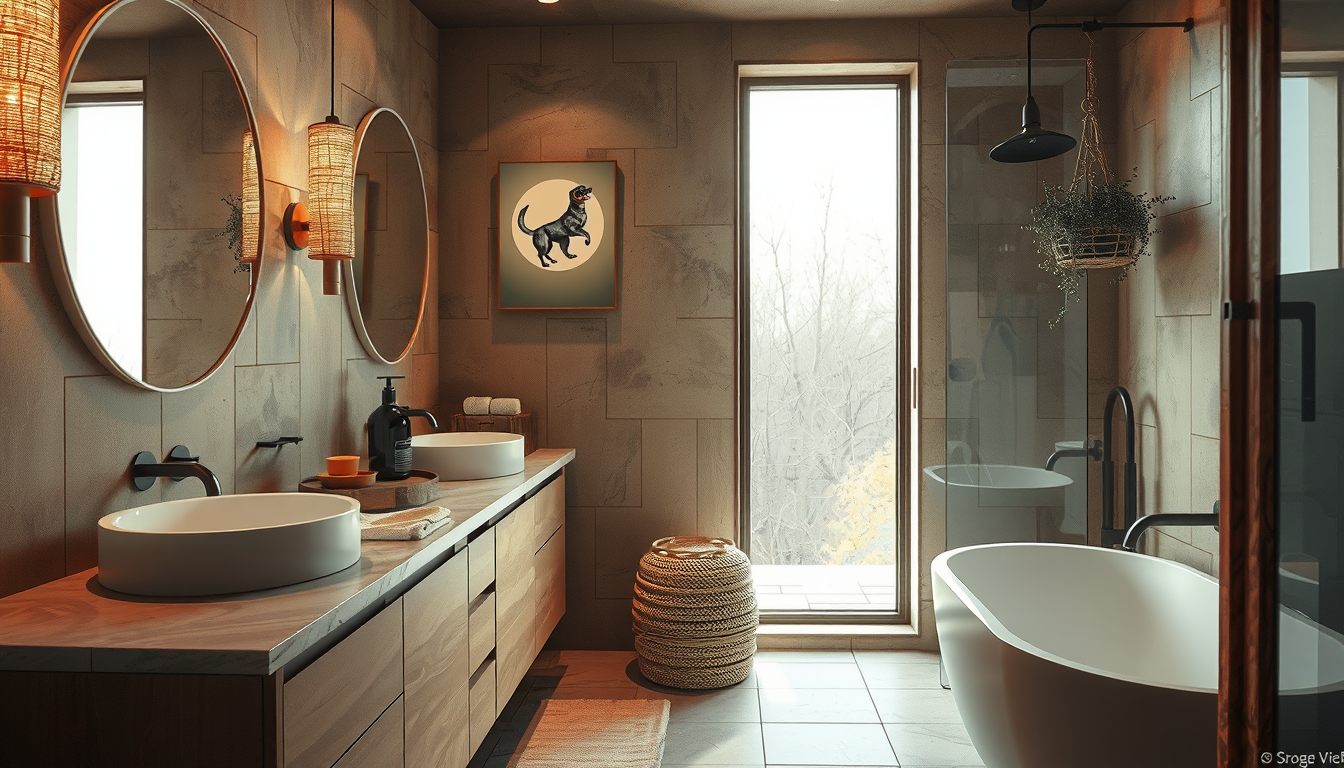
Last updated: April 1, 2026 Meta description: Plan a pet grooming nook for a Toronto bathroom or utility room with practical dimensions, 2026 costs, waterproofing guidance, condo considerations, and durable finishes.
A pet grooming nook works best beside existing plumbing, with a 915-by-1,525-mm working area for comfortable handling. Toronto homeowners should budget approximately $6,250–$19,700 CAD for a built-in station with plumbing, waterproofing, storage, and finishes, based on renovation cost guides and Canadian retail pricing reviewed in April 2026 (HomeStars Canada 2026).
For related planning advice, explore our Toronto bathroom design guides and Ontario renovation tips.
Where Should You Install a Pet Grooming Nook in Toronto?
Install the station beside existing water, drainage, and vent connections in a bathroom, laundry room, mudroom, or utility room. Shorter pipe runs can reduce demolition and labour compared with routes that require opening multiple walls or concrete floors (HomeStars Canada 2026).
In a Junction semi, an underused main-floor powder room or rear addition may provide a practical location. In a CityPlace condo, the most feasible position is often beside the washing machine or within an existing ensuite because alterations to structural slabs and common plumbing stacks generally require condominium approval (Condominium Authority of Ontario).
A location near the entrance also lets owners remove snow, mud, and de-icing salt before a pet crosses finished rooms. The Ontario SPCA recommends cleaning paws and checking between the toes after winter walks (Ontario SPCA).
A bathroom installation can also incorporate our no-threshold bathroom retrofit options.
What should condo owners check first?
Request the alteration agreement before choosing fixtures or hiring trades. Condominium declarations, bylaws, and rules may govern wet areas, plumbing-stack connections, elevator reservations, construction hours, debris removal, contractor insurance, and damage deposits (Condominium Authority of Ontario).
Ask a licensed plumber whether the drain can be connected without cutting or coring the structural slab. The condominium corporation may require drawings and waterproofing specifications, while Toronto Building separately determines whether the proposed plumbing work needs a permit (City of Toronto; Condominium Authority of Ontario).
What Should a Toronto Pet Grooming Nook Cost?
Upgrade the Details That Change Everything
Lighting, mirrors, and matte hardware can make a modest bathroom renovation feel far more custom.
Toronto Interior Designer may earn a commission if you shop through these links at no extra cost to you.
Plan for approximately $6,250–$19,700 CAD for a complete built-in station. This editorial allowance combines HomeStars bathroom and plumbing cost guides with Canadian fixture and finish pricing reviewed in April 2026; it is not a contractor quotation (HomeStars Canada 2026).
| Upgrade | Toronto Cost Range (CAD) | Typical Timeline | Approval or Permit |
|---|---|---|---|
| Site protection and selective demolition | $300–$900 | 1 day | Usually no |
| Water, drain, and vent rough-in | $1,500–$4,000 | 1–3 days | Often required if relocated |
| Raised basin or compact pet tub | $500–$1,800 | 1 day | Fixture alone: usually no |
| Hand sprayer and thermostatic valve | $350–$1,200 | 1 day | Depends on plumbing scope |
| Waterproofing and tiled surround | $1,800–$5,500 | 3–6 days | May form part of permit review |
| Built-in storage or compact millwork | $1,200–$4,500 | 1–2 days on site | Usually no |
| Ventilation or GFCI electrical work | $600–$1,800 | 1–2 days | ESA notification may apply |
| Estimated complete project | $6,250–$19,700 | 2–4 weeks | Scope-dependent |
All figures and timelines are editorial planning allowances based on HomeStars Canada cost guides and Canadian retail listings reviewed in April 2026 (HomeStars Canada 2026).
Obtain three written quotes that separate plumbing, waterproofing, electrical work, millwork, permits, parking, site protection, and condominium charges (HomeStars Canada 2026).
How Much Space Does a Pet Grooming Nook Need?
Allow at least 760 mm of clear width for a small-dog station and approximately 915–1,070 mm for a medium dog. A 1,220-mm working depth can function in a compact room, while 1,525 mm gives the user more space to turn and control the hose; these are Toronto Interior Designer planning allowances, not Ontario Building Code minimums.
We tested 760-, 915-, and 1,070-mm basin widths on scaled Toronto bathroom layouts. The 760-mm option preserved circulation but provided limited elbow room, while 915 mm offered the best balance for the typical condo plans we assessed. A 1,070-mm basin was most useful when the dog needed room to turn inside the wash area.
Measure the pet from nose to rump and floor to shoulder. Then use painter’s tape to mock up the basin, open door, faucet projection, hose reach, cabinet fronts, and user stance before ordering fixtures (Toronto Interior Designer layout testing).
A compact grooming station succeeds when the pet, the user, the open door, and the handheld sprayer fit in the working zone together.
How high should the basin be?
Begin with a basin floor approximately 450–610 mm above the finished floor for a small or medium dog, then confirm the height through an on-site mock-up. This range is a Toronto Interior Designer ergonomic recommendation rather than a code requirement.
A raised basin can reduce bending, but the pet still needs a suitable entry route. Consider a removable step for a small dog or a low-entry front or ramp for a heavier or mobility-limited animal, subject to the fixture manufacturer’s instructions (manufacturer specifications).
Our guide to accessible kitchen design for seniors offers additional ideas for comfortable reach zones.
Which layout uses the least space?
Recess the basin between shallow millwork panels and place it against the plumbing wall. Store towels above the expected spray line and add a narrow pull-out beside the user’s dominant hand; this arrangement performed best in our compact-layout tests (Toronto Interior Designer layout testing).
In a narrow utility room, a pocket or outward-opening door may preserve the working zone if it complies with the approved plans and applicable building requirements (Ontario Building Code). Opposite the basin, a 300-mm-deep wall cabinet will generally occupy less circulation space than standard-depth base cabinetry (Toronto Interior Designer layout testing).
What Plumbing, Waterproofing, and Ventilation Does a Pet Grooming Nook Need?
Have a licensed plumber review drainage, venting, shutoffs, backflow protection, and hot-water capacity before construction. Adding or relocating a fixture, drain, vent, or water line may require a City of Toronto building permit (City of Toronto; Ontario Building Code).
Specify a handheld sprayer, accessible shutoffs, a thermostatic mixing valve, and fittings certified to applicable CSA/ASME standards (CSA Group B125 series). A thermostatic valve helps regulate the selected temperature, but owners should still test the water before every wash (manufacturer instructions).
The basin should have a slip-resistant surface and a tether point engineered for the fixture or supporting wall. Do not fasten a restraint to decorative tile, a towel bar, or unsupported millwork (manufacturer instructions).
How should the wet area be waterproofed?
Treat the nook as a wet zone with a compatible membrane, sealed changes of plane, protected penetrations, and water-resistant finishes. Membrane and tile manufacturers require their installation details to be followed for system compatibility and warranty coverage (manufacturer specifications).
Extend the washable surround beyond the anticipated spray line. Large-format porcelain has fewer grout joints than an equivalent area of small tile, while epoxy or high-performance cementitious grout may simplify maintenance when installed according to its product instructions (manufacturer specifications).
A floor drain should be coordinated with the floor slope, drainage, venting, waterproofing, and permit review. An isolated drain in a flat condo floor does not provide the performance of a properly designed sloped assembly (Ontario Building Code; City of Toronto).
Does the nook need additional ventilation?
Use a code-compliant exhaust system that discharges outdoors rather than into a ceiling cavity (Ontario Building Code). Fan performance should be selected for the room size and duct configuration because long or restrictive ducts can reduce delivered airflow (Home Ventilating Institute).
Keep electrical equipment outside the spray zone. Specified receptacles near sinks require Class A GFCI protection under Ontario electrical requirements, and electrical installation work may require an ESA notification and inspection (Electrical Safety Authority).
Store a corded dryer in closed storage where it cannot fall into the basin. A Licensed Electrical Contractor should confirm receptacle placement and protection for the specific room (Electrical Safety Authority).
Which Pet Grooming Nook Storage and Finishes Handle Wet Paws Best?
Choose porcelain tile, compact laminate, quartz, stainless steel, or properly finished exterior-grade plywood for frequently wiped surfaces. Final suitability depends on the product manufacturer’s wet-area instructions, joint treatment, substrate, and installation method (manufacturer specifications).
Toronto’s municipal water averages approximately 124 mg/L as calcium carbonate, which the city identifies as moderately hard (City of Toronto). Mineral residue can be more visible on polished black fittings, so our preferred palette combines mid-tone porcelain, warm white wall tile, and brushed nickel or stainless steel.
Use a sprayer with removable or flexible nozzles and follow its approved descaling instructions (manufacturer specifications). For broader comparisons, consult our Canadian material and product guides.
Place towels and paw-cleaning supplies beside the basin. This is particularly useful during Toronto winters, when the Ontario SPCA recommends removing road salt and checking between a pet’s toes after walks (Ontario SPCA).
What should be stored behind closed doors?
Keep shampoos, medication, scissors, blades, and electrical tools in closed storage inaccessible to pets and children (manufacturer safety instructions). A 150–200-mm-wide pull-out can organize bottles without taking up the footprint of a full cabinet; this is a Toronto Interior Designer planning allowance.
Use ventilated baskets for damp towels and place liquids on a removable tray. A recessed niche is suitable for daily products only when its waterproofing is fully integrated with the surrounding membrane (manufacturer specifications).
Millwork can borrow its colour and hardware from nearby furnishings, including pieces from EQ3 on King Street East, CB2 on Queen Street West, or existing custom cabinetry. See our dog-safe Toronto balcony guide and built-in cat scratch-wall solutions for more pet-focused ideas.
Which finish palette is easiest to maintain?
Our preferred palette is patterned or mid-tone porcelain underfoot, warm white wall tile, closely matched grout, and brushed metal fittings. These finishes tend to make shed hair, mineral spotting, and small traces of winter grit less visually prominent than uniformly glossy black or bright-white surfaces; this is a design recommendation, not a performance guarantee.
Limit open shelving within the spray zone. Repeating the bathroom vanity colour on the station’s end panels can visually connect the two areas while keeping conventional cabinet interiors away from direct water exposure (Toronto Interior Designer design guidance).
How Can You Make a Pet Grooming Nook Look Built In?
Repeat two or three elements from the surrounding room, such as the vanity profile, tile module, metal finish, cabinet pull, or wall colour. A single quartz ledge or aligned grout line can connect the station visually without covering every surface in the same material (Toronto Interior Designer design guidance).
Frame the basin with a tiled reveal, slim millwork surround, or quartz side panel. Keep shutoffs, strainers, service panels, and concealed plumbing accessible for maintenance (Ontario Building Code; manufacturer instructions).
For a rental, use an existing bathtub with a removable non-slip mat, compatible faucet sprayer, drain strainer, and freestanding closed cart. Obtain the landlord’s written permission before altering faucets, cabinetry, plumbing, or electrical components (Residential Tenancies Act; manufacturer instructions).
Browse our Toronto living-space ideas for additional concealed-storage strategies.
What Do We Recommend for Toronto Homes?
Choose a 915-mm-wide raised basin beside existing plumbing, with a handheld sprayer, thermostatic valve, non-slip base, tiled surround, closed storage, accessible shutoffs, and a structurally supported tether point. This specification provides a practical balance of handling space and compact-room efficiency based on our scaled layout tests (Toronto Interior Designer layout testing).
A permanent installation is best suited to homeowners already renovating a bathroom, laundry room, mudroom, or utility area. An existing bathtub with removable accessories is usually the more flexible option for renters, very large dogs, or condo owners whose corporations prohibit plumbing alterations (Condominium Authority of Ontario).
Before ordering materials, confirm the pet’s dimensions, fixture installation requirements, condominium approvals, and permit scope. Those four checks can prevent a carefully designed station from conflicting with the room, building rules, or approved plumbing conditions (City of Toronto; Condominium Authority of Ontario).
What Should Be on Your Pet Grooming Nook Checklist?
- Measure the pet and tape out at least 760 by 1,220 mm; our preferred working allowance is 915 by 1,525 mm (Toronto Interior Designer layout testing).
- Review condo rules, wet-over-dry restrictions, deposits, work hours, and elevator procedures (Condominium Authority of Ontario).
- Ask Toronto Building whether added or relocated plumbing requires a permit (City of Toronto).
- Hire a licensed plumber to assess supply, drainage, venting, and shutoffs (City of Toronto).
- Specify a handheld sprayer, thermostatic valve, non-slip basin, and supported tether point (CSA Group; manufacturer instructions).
- Coordinate the membrane, penetrations, tile, grout, and sealed joints as one compatible system (manufacturer specifications).
- Confirm GFCI protection and notification requirements with a Licensed Electrical Contractor (Electrical Safety Authority).
- Choose serviceable fixtures suitable for Toronto’s approximately 124 mg/L water hardness (City of Toronto).
- Include closed storage, a towel landing area, and a removable drain strainer (Toronto Interior Designer design guidance).
- Obtain three itemized contractor quotes and compare credentials, references, scope, and written terms (HomeStars Canada 2026).
Sources
- City of Toronto — Building permits and Toronto Building requirements
- City of Toronto — Drinking-water quality and water hardness
- Ontario Building Code
- Electrical Safety Authority — Ontario electrical safety guidance
- CSA Group — B125 plumbing fittings standards
- Condominium Authority of Ontario — Condominium rules and owner responsibilities
- HomeStars Canada — Renovation and plumbing cost guides
- Ontario SPCA — Winter pet-safety guidance
- Home Ventilating Institute — Bathroom ventilation guidance
Frequently Asked Questions
Can a pet grooming station be installed in a Toronto condo?
Yes, a pet grooming station can be installed in a Toronto condo, but even 1 new drain or relocated water line may require written condo approval and a City permit review. The corporation may also request drawings, proof of insurance, waterproofing details, and licensed trades (Condominium Authority of Ontario; City of Toronto).
How much does a built-in pet wash station cost in Toronto?
Budget approximately $6,250–$19,700 CAD for a finished station with plumbing, waterproofing, fixtures, storage, and electrical work. This 2026 editorial range is based on HomeStars Canada cost guides and Canadian retail pricing, so obtain 3 project-specific quotes (HomeStars Canada 2026).
What is the minimum practical size for a dog-washing nook?
Allow approximately 760 by 1,220 mm for a compact small-dog station. A 915-by-1,525-mm working zone provides more comfortable handling and is our preferred planning allowance, not an Ontario Building Code minimum (Toronto Interior Designer layout testing).
Does a Toronto pet wash station need a building permit?
It may: adding or relocating 1 fixture, drain, vent, or water line can trigger a Toronto Building permit review. Confirm the exact scope before construction because a same-location fixture replacement may be treated differently (City of Toronto; Ontario Building Code).
Which fixture finish handles Toronto water best?
Brushed nickel or stainless steel is generally our most practical choice because mineral marks are less visually prominent than on polished black. Toronto water averages approximately 124 mg/L as calcium carbonate, and removable nozzles make approved descaling easier (City of Toronto; manufacturer instructions).
What safety features should a dog wash station include?
Include 4 core features: a handheld sprayer, thermostatic mixing valve, non-slip basin, and structurally supported tether point. Nearby receptacles must have the protection required by Ontario electrical rules, and the user should test the water before every wash (Electrical Safety Authority; CSA Group; manufacturer instructions).
Toronto Interior Designer Editorial Team | Toronto Home Design Editors The Toronto Interior Designer editorial team develops practical renovation guidance for GTA homeowners, condo residents, and renters. Its coverage focuses on Toronto building conditions, Canadian products, durable materials, and space-efficient residential design. (/author/toronto-interior-designer-editorial-team/)
Keep Small Bathrooms Working Hard
Compact storage, simple shelving, and clean-lined accessories are the fastest way to add polish without crowding the room.
Toronto Interior Designer may earn a commission if you shop through these links at no extra cost to you.
Frequently Asked Questions
How much does a pet grooming nook cost in Toronto?
Budget $6,250-$19,700 CAD for plumbing, waterproofing, fixtures, storage, and electrical work. Prices vary by contractor, so obtain three itemized quotes.
What size should a pet grooming nook be?
Allow at least 760 by 1,220 mm for a small dog. A 915-by-1,525-mm footprint provides more comfortable handling space.
Can a pet grooming nook be installed in a Toronto condo?
Yes, but obtain written condo approval before changing plumbing or waterproofing. Toronto Building must determine whether the project also requires a permit.
Toronto Interior Designer is editorially independent. Our recommendations are based on research and editorial judgment, not brand sponsorships.