
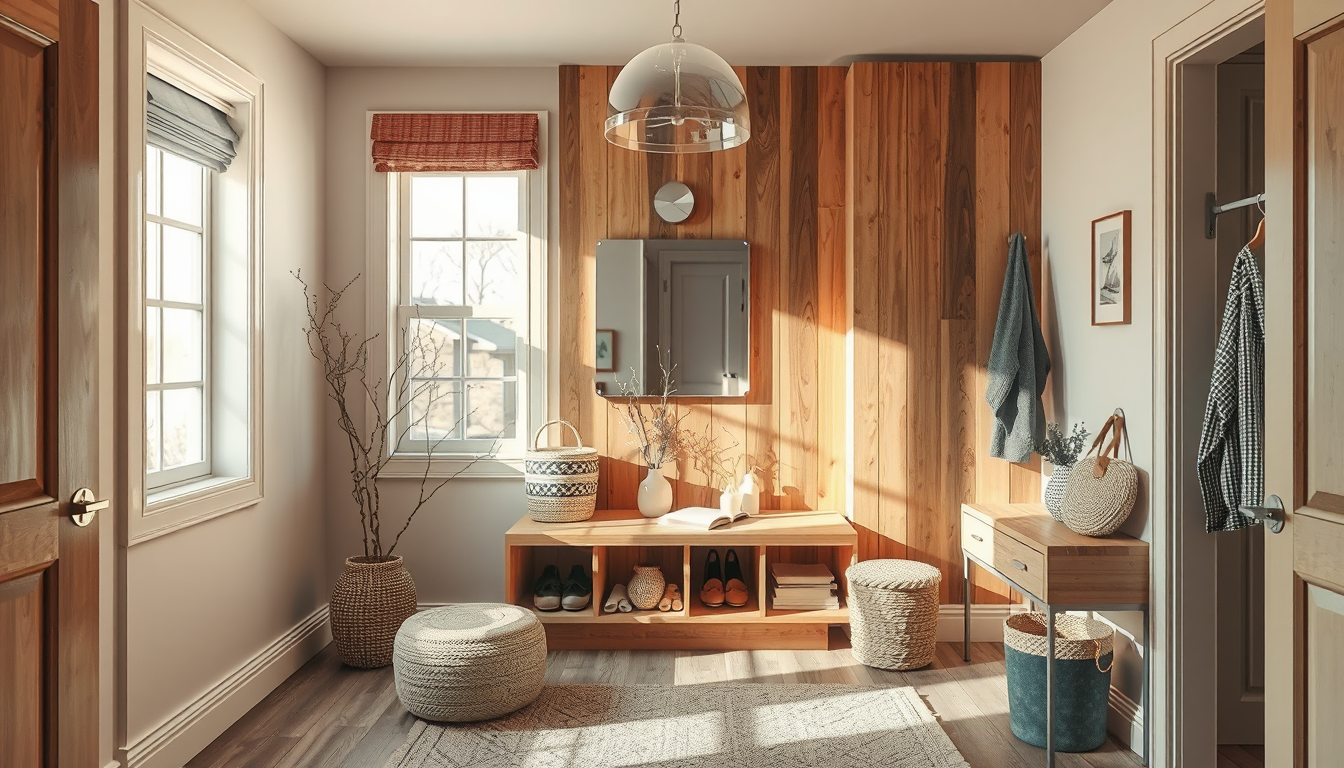
If you’ve ever tracked slush across hardwood floors in January, you already know why mudroom ideas Canada homeowners search for are fundamentally different from anything in a US design magazine. Toronto averages roughly 133 days at or below 0°C each year , which means your entryway isn’t just a style moment — it’s a frontline defence system. A well-planned mudroom keeps salt off your floors, wet parkas off your dining chairs, and moisture out of your walls. This guide covers layouts, materials, storage, and real costs so you can build one that actually works.
Mudroom Renovation Costs in Toronto: 2026 Pricing Guide
Before you sketch a single hook placement, understand the numbers. Mudroom projects in Ontario range widely depending on scope, but here’s what Toronto contractors are quoting in 2026:
| Upgrade | Typical Toronto Cost (CAD) | Best For | Notes |
|---|---|---|---|
| Closet-to-mudroom conversion | $8,000–$12,000 | Semis and bungalows with a front hall closet | Lowest disruption; keeps existing footprint |
| Built-in bench + cubbies + hooks | $3,500–$7,000 | Any home with a dedicated entry wall | Custom millwork runs higher than flat-pack |
| Rear entry bump-out (40–60 sq ft) | $18,000–$25,000 | Detached homes needing a full transition zone | Requires permit; check OBC Section 9.10 for vestibule insulation |
| In-floor radiant heat (electric mat) | $1,500–$3,000 | Any mudroom with tile or LVP flooring | Cuts drying time and reduces mould risk |
| Heated boot tray + drip pan system | $150–$400 | Renters or budget-conscious homeowners | Plug-and-play; no renovation needed |
A well-designed mudroom can recoup 50–70% of its renovation cost at resale in Canadian markets , making it one of the better-returning utility upgrades available. For more guidance on stretching a renovation budget, see our home office budget tips — the planning principles transfer directly.
Best Mudroom Layouts for Toronto Semis, Bungalows, and New Builds
Price Out the High-Impact Pieces First
Before committing to a renovation mood board, benchmark the furniture, lighting, and storage pieces that set the tone.
Toronto Interior Designer may earn a commission if you shop through these links at no extra cost to you.
Toronto’s housing stock presents three distinct mudroom challenges, each demanding a different layout strategy.
Victorian and Edwardian semis rarely have a dedicated entry. The front door opens straight into the living room, and the side door — if it exists — leads to a narrow hallway beside the kitchen. The best approach is a galley-style mudroom along that side hall: a slim bench on one wall, hooks and a shelf above, and a boot tray below. Keep the depth to 18 inches or less so you don’t block the path.
Post-war bungalows often have a side or rear entry off the kitchen with enough room for a 5×7-foot mudroom. This is the sweet spot for a full built-in: bench seating with shoe storage underneath, upper cubbies for each family member, and a countertop for dumping mail and keys. If you’re adding a bump-out, orient the door so it doesn’t swing into the kitchen workflow.
New-build townhomes typically include a mudroom nook near the garage entry, but they’re often undersized — 3×4 feet of tile and a single hook. Upgrade by adding floor-to-ceiling cabinetry with pull-out drawers for boots and a cabinet-top shelf for out-of-season gear. The bones are there; the storage just needs to be smarter.
A mudroom doesn’t need to be a room at all. In tight Toronto homes, a well-organized 24-inch-deep wall system does the same job as a walk-in — you just have to plan every square inch.
Canadian Winter-Proof Materials: Flooring, Finishes, and Hardware
This is where most generic mudroom advice falls apart. Materials that perform fine in Atlanta or San Diego will crack, warp, or stain within two Canadian winters.
Flooring: Porcelain tile and luxury vinyl plank (LVP) rated above 0.50 coefficient of friction are your two reliable options. Both resist road salt, snowmelt, and freeze-thaw cycling. Natural stone looks beautiful but etches from calcium chloride, and hardwood swells and cups from repeated moisture exposure. At Toronto Interior Designer, we consistently specify large-format porcelain (12×24 or larger) with a dark grout — fewer grout lines means less salt buildup to scrub.
Wall finishes: Use semi-gloss or satin paint from the baseboard to at least 48 inches up. Flat finishes stain permanently from wet jacket contact. Beadboard or shiplap panelling also works well — it’s easy to wipe down and hides scuff marks from boots and bags.
Hardware: Opt for stainless steel or powder-coated hooks and pulls. Chrome pits in humid conditions, and brushed nickel shows water spots. Double hooks mounted at two heights — 48 inches for adults, 30 inches for kids — are far more functional than single coat hooks.
If you’re exploring smart storage approaches in other rooms, the same durability-first principle applies.
Smart Mudroom Storage for Boots, Parkas, and Four-Season Gear
A Canadian family of four cycles through snow boots, rain boots, sandals, winter parkas, spring jackets, rain shells, toques, mitts, scarves, and hockey bags — often within the same month. Your mudroom storage has to handle both volume and rotation.
Boot storage: Open cubbies below a bench are the most practical option. Each cubby should be at least 14 inches tall to fit winter boots upright and 12 inches wide per person. Add a removable drip tray — stainless or heavy-duty rubber — inside each cubby to catch snowmelt. Heated boot trays are worth the investment: Health Canada identifies residential dampness as a leading indoor air quality hazard , and drying footwear quickly is the simplest way to control moisture levels.
Outerwear: A mix of hooks and one short hanging section works better than a full closet rod. Hooks handle 80% of daily grab-and-go needs. Reserve 24 inches of hanging rod for longer coats and garment bags, installed at 60 inches — low enough to reach without a step stool, high enough to clear boot tops below.
Seasonal rotation: Add one upper cabinet with doors per person. Off-season gear goes up top and out of sight. Label the interior shelves or use colour-coded bins so the spring-to-winter swap takes 20 minutes, not an afternoon.
A word of caution: Don’t over-build closed cabinetry. Solid doors look clean in photos but create a barrier to daily use — nobody opens a cabinet door every single time they come home. Open hooks, open cubbies, and one or two closed cabinets for overflow is the formula that actually gets used. Toronto Interior Designer projects that prioritize open access over concealment see far fewer “coat pile on the floor” complaints six months post-renovation.
Mudroom Ideas Canada Homeowners Can Start This Weekend
You don’t need a full renovation to improve your entry. Small upgrades compound quickly.
Quick wins under $500: A wall-mounted hook rail, a rubber boot tray, a narrow console table, and a basket for mitts and toques will transform a bare hallway in a single afternoon. Add a washable runner rated for high traffic and you’ve handled 70% of the problem.
Mid-range upgrades ($3,000–$7,000): A custom built-in bench with cubbies, tile or LVP flooring in the entry zone, and proper lighting — a flush-mount LED fixture rated for damp locations makes a significant difference in both safety and aesthetics.
Full build ($15,000–$25,000): Bump-out or closet conversion with in-floor radiant heat, full millwork, and electrical for a heated boot tray. If your project qualifies as a major renovation, confirm vestibule requirements under Ontario Building Code Section 9.10 for climate zone 6 — your contractor or designer should flag this, but it’s worth knowing yourself .
What to Do Next
- Measure your entry. Note the width, depth, and ceiling height of your current front or side entry. Even 24 inches of depth can support a functional mudroom wall.
- Count your users and their gear. List every person in the household and the outerwear, footwear, and accessories they cycle through across all four seasons.
- Set a realistic budget. Use the cost table above as a starting point and get three contractor quotes if your scope involves structural work or electrical.
- Choose your flooring first. It’s the hardest-working surface in the room and dictates everything else — get a porcelain or LVP sample and test it with salt and water before committing.
- Browse more renovation tips for guidance on permits, contractor selection, and project sequencing.
The best mudroom ideas Canada designers recommend all share one trait: they’re built for how your family actually lives through winter, not how a mudroom looks on a mood board. At Toronto Interior Designer, that’s always the starting point.
Balance Budget and Finish Quality
Mix accessible basics with a few standout pieces so the room feels layered rather than one-note.
Toronto Interior Designer may earn a commission if you shop through these links at no extra cost to you.
Sources
- Environment Canada Climate Normals — https://climate.weather.gc.ca/climate_normals/
- HomeStars contractor estimates — https://homestars.com/
- Remodeling Magazine Cost vs. Value — https://www.remodeling.hw.net/cost-vs-value/
- Health Canada Indoor Air Quality guidelines — https://www.canada.ca/en/health-canada/services/air-quality.html
- Ontario Building Code — https://www.ontario.ca/laws/regulation/120332
Frequently Asked Questions
How much does a mudroom renovation cost in Canada?
Mudroom renovations in Toronto range from $3,500 for a built-in bench with cubbies to $25,000 for a full bump-out addition with radiant heat. A simple closet-to-mudroom conversion typically costs $8,000–$12,000 CAD.
What is the best mudroom flooring for Canadian winters?
Porcelain tile and luxury vinyl plank rated above 0.50 coefficient of friction are the most durable options. Both resist road salt, snowmelt, and freeze-thaw cycling — unlike hardwood or natural stone, which warp or etch from calcium chloride.
Do I need a permit to build a mudroom in Ontario?
If your mudroom involves a bump-out addition or structural changes, you will likely need a building permit. Projects in climate zone 6 must also meet vestibule insulation requirements under Ontario Building Code Section 9.10.