
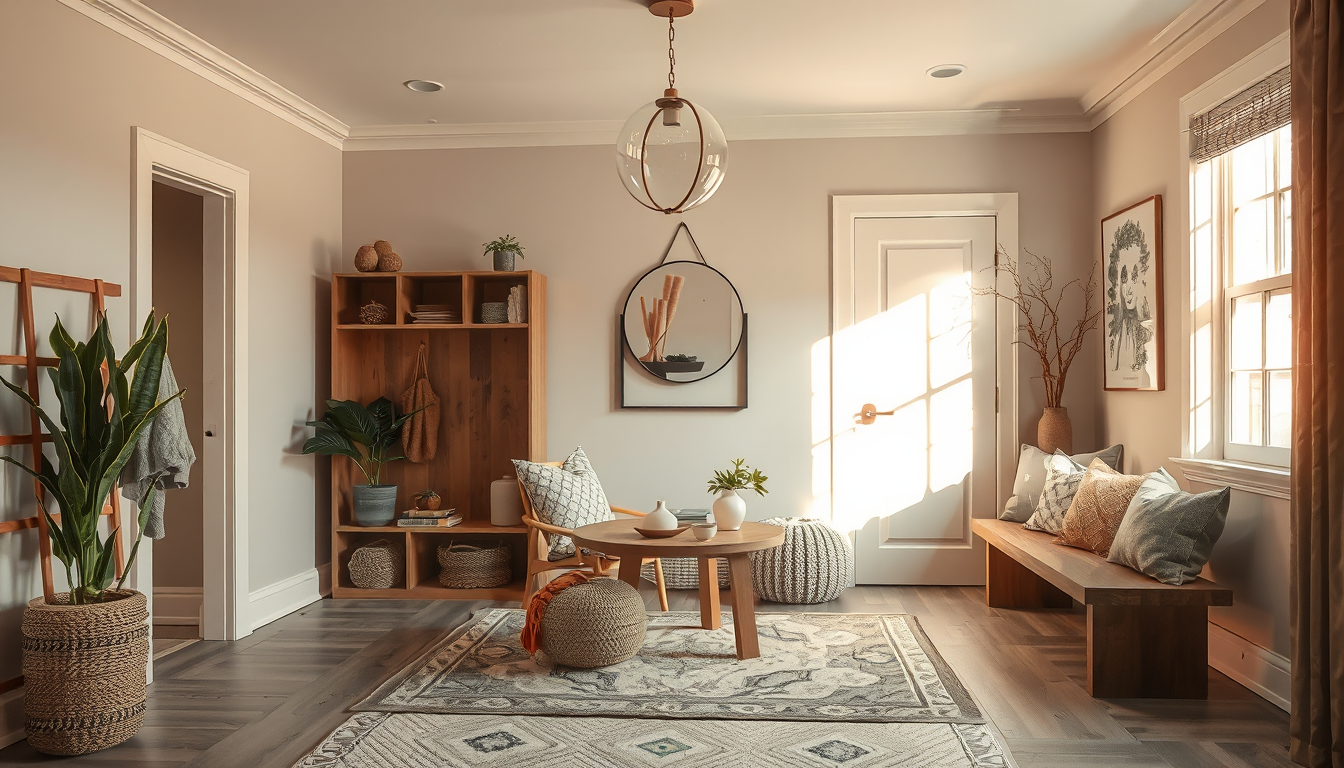
If you’re searching for mudroom ideas Canada homeowners can rely on through every season, here’s the truth: your entry space needs to be engineered for climate first and styled second. Toronto and much of Canada experience roughly 105 days below 0°C each year, meaning heavy boots, salt-crusted jackets, and dripping snow gear occupy your front door for a third of the year. A well-designed mudroom isn’t a luxury — it’s the hardest-working room in a Canadian home. Done right, it protects your floors, organizes your family, and still looks sharp when guests arrive.
Why Every Canadian Home Needs a Dedicated Mudroom
Most mudroom advice online comes from mild-climate markets where a bench and a few hooks solve the problem. That doesn’t cut it here. The average Canadian household tracks in an estimated 10–15 kg of salt, sand, and moisture through their main entry every winter . Without a buffer zone, that grit migrates into hallways, scratches hardwood, and stains grout within a single season.
A proper mudroom does three things no hallway can: it contains mess, cycles seasonal gear efficiently, and creates a psychological threshold between outside chaos and indoor calm. In the Toronto resale market, buyers consistently rank entry storage as a top-five must-have, and mudroom additions return an estimated 70–80% of renovation cost . At Toronto Interior Designer, we treat the mudroom as a design-worthy room — not an afterthought.
Here’s what a functional Canadian mudroom renovation typically costs:
| Upgrade | Typical Toronto Cost (CAD) | Best For | Notes |
|---|---|---|---|
| Built-in bench with cubbies | $1,500–$4,000 | Families with kids | Allow 18″ depth minimum per seat |
| Porcelain tile flooring (installed) | $12–$20/sq ft | High-traffic entries | Choose textured finish for grip |
| In-floor radiant heating | $8–$15/sq ft | Freeze-thaw zones | Eliminates pooling meltwater |
| Custom cabinetry with closed uppers | $3,000–$8,000 | Condo or townhome retrofits | Hides off-season gear cleanly |
| Wall-mounted drying rack system | $200–$600 | Ski and snowboard families | Folds flat when not in use |
The average mudroom renovation ranges from $5,000–$15,000 for a retrofit and $15,000–$40,000+ for a new build-out, depending on scope and finishes .
Avoid This Mistake
Don’t skip waterproofing the subfloor. Toronto’s freeze-thaw cycles mean meltwater pools daily from November through March. We’ve seen homeowners install beautiful tile directly over plywood with no membrane — only to face warping and mould within two seasons. Budget $2–$4 per square foot for a proper waterproof membrane beneath your finished floor. It’s invisible and non-negotiable.
Mudroom Layout Solutions From Condo Closets to Full Builds
Price Out the High-Impact Pieces First
Before committing to a renovation mood board, benchmark the furniture, lighting, and storage pieces that set the tone.
Toronto Interior Designer may earn a commission if you shop through these links at no extra cost to you.
Not every home has space for a dedicated mudroom, but every home can carve out entry storage that works. Here’s how we approach it by size:
Under 20 square feet (condo or apartment entry). Replace a standard closet door with an open shelving unit. Add a slim bench with shoe storage underneath, wall hooks at two heights (adult and child), and a drip tray. This setup handles two people’s winter gear in about 15 square feet.
20–40 square feet (townhome or semi-detached). This is the sweet spot. A built-in bench, overhead cabinets, and a vertical locker section per family member keep everything contained. If the space connects to a laundry or utility area, consider a pocket door to let wet gear air out without cluttering sight lines.
40+ square feet (detached home). You have room for a true transition zone: a boot bench, full-height lockers, a utility sink for rinsing muddy gear, and even a pet wash station. Separate the wet zone (closest to the door) from the dry zone (closest to the house) with a floor material change or a slight step up.
A mudroom should work like an airlock — everything dirty stops here, and only clean, dry people pass through to the rest of the house.
Best Mudroom Materials That Survive Canadian Salt and Slush
Material selection makes or breaks a Canadian mudroom. Two flooring options dominate for good reason:
Porcelain tile is the gold standard. It handles freeze-thaw cycles, resists salt stains, and cleans up with a mop. Choose a textured or matte finish rated for wet areas — polished porcelain becomes dangerously slippery with meltwater. Large-format tiles (12×24 or bigger) mean fewer grout lines to trap salt residue.
Luxury vinyl tile (LVT) is the budget-friendly alternative that still performs. Modern LVT is waterproof, warmer underfoot than porcelain, and available in convincing wood and stone patterns. It won’t crack if a heavy boot drops on it. The tradeoff: LVT can discolour under sustained UV if your entry gets direct sun, and it won’t last as many decades as porcelain.
For walls, skip standard drywall paint below the 48-inch line. Use a semi-gloss or satin finish that handles regular wiping, or install beadboard or shiplap panelling that disguises scuffs. This mirrors the practical material thinking we cover in our guide to quartz vs granite countertops — choose for durability in the conditions you actually live with.
In-floor radiant heat deserves special mention. At roughly $8–$15 per square foot installed in Ontario, it solves the single biggest mudroom annoyance: standing water from melting snow . It dries boots faster, keeps the room comfortable, and prevents the ice-patch hazard that forms on cold tile.
Smart Four-Season Storage Systems for Canadian Mudrooms
Canadian storage needs shift dramatically through the year. A well-planned mudroom accommodates the rotation without a complete overhaul each season:
Winter (November–March): Heavy parkas, snow pants, insulated boots, scarves, tuques, and gloves for every family member. This is peak volume. You need deep hooks (not shallow ones that let puffy jackets slide off), a boot tray with raised ridges for drainage, and a high shelf for helmets and ski gear.
Spring and fall (April–May, September–October): Rain jackets, lighter boots, umbrellas, and transitional layers. Swap heavy parkas to an upper closed cabinet or off-site storage.
Summer (June–August): Minimal entry needs — sunscreen, hats, sandals, dog leashes. This is when your mudroom should feel open and airy.
The system that handles this best combines open hooks for daily-use items, closed upper cabinets for off-season storage, and a boot bench with pull-out trays. Label each family member’s zone. Add a small mirror and a catch-all tray for keys and wallets — this is where function meets the kind of thoughtful living-space design that makes a home feel intentional.
What to Do Next
Mudroom ideas Canada families can actually execute start with an honest look at your entry and a realistic budget. Here’s the checklist Toronto Interior Designer recommends before you call a contractor or pick up a single tile sample:
- Measure your entry space and photograph it from every angle, including ceiling height and any adjacent closets that could be incorporated.
- Count the users. How many people use this entry daily? Include pets. Each person needs roughly 24–30 inches of linear wall space.
- List your gear by season. Pull out everything that lives near your front door — winter, spring, summer, fall — and measure the bulkiest items (ski boots, strollers, hockey bags).
- Set your budget tier. Retrofit ($5K–$15K) or new build ($15K–$40K+)? Decide before you start browsing Pinterest.
- Prioritize waterproofing and drainage over aesthetics. A beautiful mudroom that can’t handle meltwater fails at its only job.
- Get three quotes from Toronto-area contractors who have completed mudroom projects. Ask to see winter-season photos of their finished work — a mudroom photographed in July tells you nothing.
Your mudroom is the first room you touch every day and the last one before you leave. In a country with our climate, it deserves real design thinking — not just a mat and a prayer.
Balance Budget and Finish Quality
Mix accessible basics with a few standout pieces so the room feels layered rather than one-note.
Toronto Interior Designer may earn a commission if you shop through these links at no extra cost to you.
Sources
- Canadian home maintenance data
- Canadian real estate renovation data
- Ontario contractor estimates
- Ontario contractor pricing
Frequently Asked Questions
How much does a mudroom renovation cost in Canada?
A mudroom retrofit in Canada typically costs $5,000–$15,000 CAD, while a full new build ranges from $15,000–$40,000+ depending on scope, materials, and finishes. Key cost drivers include built-in cabinetry, heated flooring, and waterproofing.
What is the best flooring for a Canadian mudroom?
Porcelain tile with a textured or matte finish is the gold standard for Canadian mudrooms because it handles freeze-thaw cycles, resists salt stains, and cleans easily. Luxury vinyl tile is a strong budget-friendly alternative that is waterproof and warmer underfoot.
Do you need a mudroom in a condo or small home?
Yes. Even in a condo, you can create an effective entry zone in under 20 square feet by replacing a closet door with open shelving, adding a slim bench with shoe storage, wall hooks at two heights, and a drip tray for wet boots.