
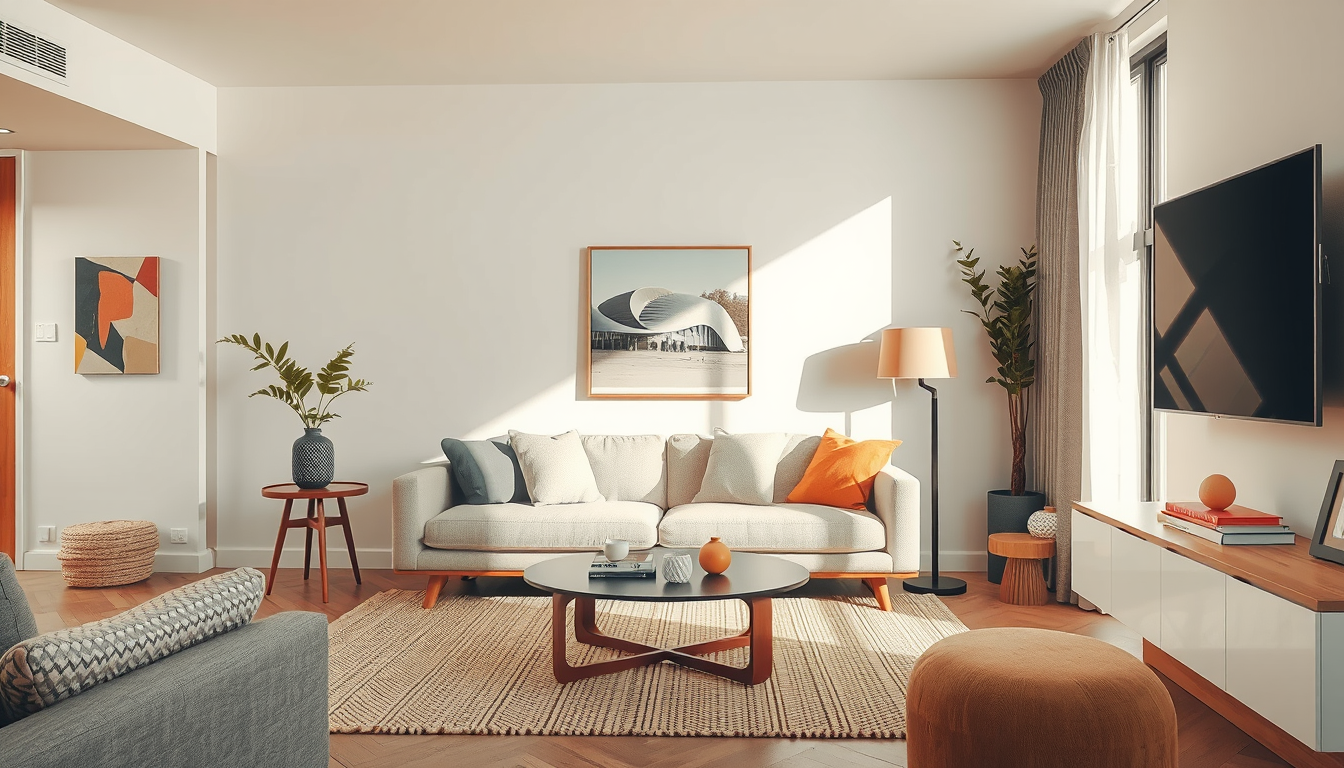
A no construction apartment makeover should begin with a layout test, then add freestanding storage, plug-in lighting and removable finishes within a practical $500–$2,000 CAD budget. Current Canadian retail listings show that these reversible upgrades can improve circulation, storage and lighting without permanent construction (IKEA Canada; Home Depot Canada; CB2 Canada; EQ3 Canada, accessed April 1, 2026).
Last updated: April 1, 2026 Meta description: Plan a no construction apartment makeover with Toronto layout tips, reversible storage, real CAD prices and condo-rule checks. Affiliate disclosure: Toronto Interior Designer does not receive commissions from the products referenced in this article.
Toronto’s average one-bedroom asking rent was $2,375 per month in early 2025 (Rentals.ca and Urbanation, February 2025 National Rent Report). Units in new GTA condominium launches averaged approximately 640 square feet across all unit types in 2024, illustrating the pressure on contemporary floor plans even though individual one-bedroom sizes vary considerably (Urbanation, 2024 year-end GTA condominium report).
How Do You Plan a No Construction Apartment Makeover?
Identify the apartment’s biggest functional problem before buying accessories. In a narrow CityPlace one-bedroom, that may be an obstructed route between the entrance and balcony. In a Junction walk-up, it could be inadequate closed storage or a single dim ceiling fixture.
A no construction apartment makeover should begin with a layout test, then add freestanding storage, plug-in lighting and removable finishes within a practical $500–$2,000 CAD budget.
Measure every wall, doorway, window, door swing and existing furniture piece. Then use painter’s tape to mark proposed furniture footprints on the floor for at least 24 hours. This inexpensive test helps reveal tight passages and awkward clearances before delivery day.
We tested this method in a 3.0-by-5.5-metre living and dining room. Replacing a 91-centimetre-deep sofa with an 84-centimetre model restored a continuous walking route without reducing the room’s seating capacity (Toronto Interior Designer field test).
What should you check before making changes?
Review the lease and, in a condominium, the declaration, bylaws and rules. Section 98 of Ontario’s Condominium Act, 1998 can require board approval when an alteration affects common elements (Condominium Authority of Ontario).
Renters may also be responsible for undue damage beyond normal wear, so obtain written permission before painting, drilling or attaching hardware (Ontario Landlord and Tenant Board). Even removable products should be tested in a concealed area because adhesive performance varies with paint condition and wall texture (WallPops; 3M Canada).
What Should You Budget for a No Construction Makeover?
Source Scaled-Right Living Room Pieces
Start with apartment-scale sofas, nesting tables, and layered lighting that fit Toronto floor plans without overwhelming them.
Toronto Interior Designer may earn a commission if you shop through these links at no extra cost to you.
The following figures are planning allowances rather than contractor quotations. Prices, delivery fees and stock can change, so confirm the current total before ordering.
| Upgrade | 2026 planning allowance | Toronto apartment application |
|---|---|---|
| Painter’s tape and floor-plan test | $10–$18 | Test circulation before moving furniture (Home Depot Canada) |
| 77-by-147-cm freestanding shelf | $129–$179 | Divide an entry or living area without building a wall (IKEA Canada) |
| 65-by-150-cm floor mirror | $80–$130 | Reflect daylight or an open view (IKEA Canada) |
| Two plug-in wall or clamp lamps | $70–$160 | Add task lighting without changing wiring (IKEA Canada; Home Depot Canada) |
| Removable wallpaper for one small wall | $120–$300 | Define an entry or sleeping zone (Home Depot Canada; WallPops) |
| Removable picture-hanging strips | $15–$45 | Display lightweight art where permitted (3M Canada) |
| Apartment-sized side table | $150–$500 | Replace a bulky coffee table (CB2 Canada; EQ3 Canada) |
A focused package using the lower allowances totals approximately $574 CAD before tax. A larger refresh with upgraded lighting, wallpaper and furniture can approach $2,000 CAD based on the listed allowances (IKEA Canada; Home Depot Canada; CB2 Canada; EQ3 Canada).
Compare these options with our renter-friendly décor upgrades and renovation-planning guidance.
How Can You Improve an Apartment Layout Without Construction?
Prioritize the longest uninterrupted sightline. A deep media console, shelf or chair placed across that line can make a compact room feel congested. Relocate tall pieces to perimeter walls and keep the route from the entrance to the primary window visually open.
Toronto’s harmonized zoning process removed the former general minimum dwelling-unit floor-area standards, making careful space planning especially relevant in newer compact units (City of Toronto, Zoning By-law 569-2013 records).
Aim for a main walking route of approximately 76–91 centimetres where the room permits. Treat that range as a design target rather than an accessibility guarantee; barrier-free requirements are governed separately by the Ontario Building Code (Ontario Building Code, Division B, Section 3.8).
Which furniture arrangements work in narrow rooms?
Place the largest item—the sofa or bed—first. In a narrow living room, position the sofa parallel to the longest wall and add one compact chair that can turn toward the television, dining table or guests.
A 60-centimetre round pedestal table can serve as dining space, a laptop station or an extra preparation surface, provided its dimensions and stability suit the intended uses. Nesting tables offer more flexibility than one oversized coffee table, while a storage ottoman can combine a footrest, occasional seat and concealed storage.
Furniture with visible legs keeps more flooring in view, but not every item should be visually open. Use closed cabinetry for cables, paperwork and cleaning supplies. Our small-apartment media nook guide explains how to size viewing zones without letting a large screen dominate the room.
How Can a No Construction Makeover Brighten a Toronto Apartment?
Use three light sources at different heights before changing the paint. Start with the existing ceiling fixture, then add a plug-in floor lamp and a table, clamp or plug-in wall lamp.
Compare bulbs by lumens, which measure light output, instead of relying on watts, which measure energy use (ENERGY STAR Canada). A colour temperature of approximately 2,700–3,000 K creates a warm residential appearance; higher Kelvin values look cooler (Natural Resources Canada; ENERGY STAR Canada).
Use matching colour temperatures within one open room so finishes appear consistent after dark. Toronto receives substantially fewer daylight hours in winter than in summer, increasing the value of adjustable artificial lighting during the colder months (Environment and Climate Change Canada).
Where should a mirror go?
Place a mirror where it reflects daylight or an uncluttered area—not automatically opposite a window. A mirror facing an open doorway, pale wall or attractive lamp can extend a useful view, while one facing a crowded coat rack duplicates visual clutter.
Check the reflection from both seated and standing positions before installation. Secure a large floor mirror according to its manufacturer’s anti-tip instructions, particularly in homes with children or pets (Health Canada).
Keep window coverings visually light where privacy permits. Do not alter condo windows, frames or exterior-facing coverings until management confirms the building’s rules, which may regulate unit modifications and exterior appearance (Condominium Authority of Ontario). Find complementary pieces in our décor and accent guides.
How Can You Add Apartment Storage Without Built-In Cabinetry?
Choose storage that can move with you. A freestanding cabinet, bookcase or wardrobe adds capacity without opening a wall, while matching bins keep open shelves visually controlled.
In a compact GTA condo, storage should generally follow vertical surfaces rather than consume the centre of the floor. The approximately 640-square-foot average for units in new 2024 GTA condominium launches provides context, but it covers multiple unit types and should not replace measurements of the actual apartment (Urbanation, 2024 year-end GTA condominium report).
Anchor tall furniture according to the manufacturer’s instructions and only with the property owner’s or condo corporation’s approval (Health Canada; Condominium Authority of Ontario).
Where should storage go first?
Begin at the entrance. A cabinet approximately 30–35 centimetres deep can hold shoes, bags and winter accessories without projecting as far into a narrow hall as a standard wardrobe.
Measure with every door fully open. Storage must not obstruct an exit, electrical panel, smoke alarm, sprinkler or other life-safety equipment (Ontario Building Code; Toronto Fire Services).
If drilling is prohibited, consider a desk with an integrated hutch, an over-door organizer or a tension-supported system. Follow the manufacturer’s installation instructions and rated load for the complete system. Closed storage should hold irregular or unattractive objects; open shelving works best with a smaller, edited collection.
For more planning approaches, see our bagua-based layout guide and living-spaces archive.
Which No Construction Finishes and Furniture Make the Biggest Impact?
Choose one dominant colour move, one lighting improvement and one correctly scaled furniture replacement. This keeps the room visually coherent and directs the budget toward its most persistent problems.
Removable wallpaper can define an entry or sleeping zone, but it requires a clean, smooth and properly prepared surface. Performance can vary on textured, damaged or freshly painted walls, so follow the manufacturer’s curing and installation instructions (WallPops).
Painting is inexpensive relative to construction, but renters should obtain written permission when required by their lease or building policies. Ontario tenants remain responsible for repairing or paying for undue damage beyond normal wear (Ontario standard lease; Ontario Landlord and Tenant Board).
When should you replace furniture?
Replace furniture when an oversized sofa, table or media unit restricts circulation. Compare width, depth and height before colour or upholstery, and include clearance for drawers, reclining mechanisms and doors.
Toronto shoppers can test seat depth and table height at retailers such as CB2 on Queen Street West or EQ3 on King Street East; confirm current locations, hours and inventory before visiting (CB2 Canada; EQ3 Canada).
For most apartments, our recommendation is a $500–$1,000 layout-first refresh combining one freestanding storage piece, two plug-in lights and a strategically placed mirror. Choose removable wallpaper when colour is the main problem; replace furniture when circulation is the priority. Review our Canadian furniture and product guides before ordering.
What Should You Know About a No Construction Apartment Makeover?
A cosmetic makeover may avoid major permits, but it does not override lease terms, condo rules or product-safety instructions. Furniture, paint and removable finishes generally do not require a Toronto building permit, while structural, plumbing and some mechanical work may require one (City of Toronto).
A manufactured plug-in light connected to an existing receptacle normally avoids permanent wiring, but it should display a recognized Canadian certification mark (Electrical Safety Authority). Adding or relocating permanent wiring is a different scope and must comply with Ontario notification and inspection requirements (Electrical Safety Authority).
Condominiums may also regulate construction hours, elevator bookings, deliveries and changes affecting common elements (Condominium Authority of Ontario). Confirm those requirements before scheduling a large furniture delivery.
Room refresh checklist
- Measure walls, windows, door swings and existing furniture.
- Mark proposed furniture footprints with painter’s tape for 24 hours.
- Preserve one clear route from the entrance to the main window.
- Review the lease, condo declaration, bylaws and rules.
- Obtain written permission before painting, drilling or attaching hardware.
- Use at least three light sources at different heights.
- Position mirrors to reflect daylight or an uncluttered view.
- Assign cables, paperwork and utility items to closed storage.
- Anchor tall furniture according to manufacturer and building requirements.
- Keep receipts and retain original fixtures for move-out.
Frequently Asked Questions
How much does a no-construction apartment refresh cost in Toronto?
A practical Toronto budget is $500–$2,000 CAD for freestanding storage, plug-in lighting, a mirror and removable finishes (IKEA Canada; Home Depot Canada; CB2 Canada; EQ3 Canada). Confirm taxes, delivery charges and current inventory before ordering.
Can a Toronto renter paint an apartment?
Yes, a Toronto renter can paint when the lease and building policies permit it, but written approval is advisable before purchasing even 1 can of paint. Tenants may be charged for undue damage or required restoration beyond normal wear (Ontario Landlord and Tenant Board).
How do you make a 500-square-foot apartment look larger?
Keep 1 long sightline open, use correctly scaled furniture and provide at least three light sources at different heights. Position a mirror to reflect daylight or an uncluttered view instead of automatically hanging it opposite a window.
Do plug-in sconces require an electrical permit in Toronto?
A manufactured plug-in sconce connected to 1 existing receptacle normally does not involve permanent electrical wiring, but it should carry a recognized Canadian certification mark (Electrical Safety Authority). Adding or relocating wiring is different and may require notification and inspection.
Does a cosmetic apartment makeover require a building permit?
No, furniture, paint and removable cosmetic finishes generally do not require a Toronto building permit, although 1 structural, plumbing or mechanical alteration may change the permit requirements (City of Toronto). Condo approval can still be necessary even when no municipal permit is required (Condominium Authority of Ontario).
What is a useful storage depth for a narrow Toronto entry?
A cabinet approximately 30–35 centimetres deep is a practical starting point for a narrow entry. Measure with all doors fully open and ensure the cabinet does not obstruct an exit, electrical panel or life-safety equipment (Ontario Building Code; Toronto Fire Services).
Sources
- City of Toronto, Zoning By-law 569-2013 and building-permit guidance.
- Condominium Authority of Ontario, guidance on governing documents, common elements and Section 98 agreements.
- Electrical Safety Authority, Ontario electrical-product and notification guidance.
- ENERGY STAR Canada and Natural Resources Canada, residential lighting guidance.
- Environment and Climate Change Canada, Toronto weather and daylight data.
- Health Canada, furniture tip-over safety guidance.
- Ontario Building Code, Division B.
- Ontario Landlord and Tenant Board, tenant-damage and maintenance guidance.
- Ontario Ministry of Municipal Affairs and Housing, Ontario standard lease.
- Rentals.ca and Urbanation, February 2025 National Rent Report.
- Urbanation, 2024 year-end GTA condominium market reporting.
- IKEA Canada, Home Depot Canada, 3M Canada, WallPops, CB2 Canada and EQ3 Canada product or store listings, accessed April 1, 2026.
Toronto Interior Designer Editorial Team | Toronto Home Design Research Team
The Toronto Interior Designer Editorial Team researches practical residential design for GTA renters, condo owners and homeowners. Its work focuses on Toronto-scale floor plans, Ontario requirements and products available through Canadian retailers.
(/author/toronto-interior-designer-editorial-team/)
Finish the Room With Texture
Layer in rugs, side tables, and decor accents that warm up condo living rooms without adding clutter.
Toronto Interior Designer may earn a commission if you shop through these links at no extra cost to you.
Frequently Asked Questions
How much does a no-construction apartment makeover cost in Toronto?
Budget $500–$2,000 CAD for freestanding storage, plug-in lighting, mirrors and removable finishes. Prices vary by retailer and delivery fees, so confirm current costs before ordering.
Can Toronto renters paint or drill into apartment walls?
Get written permission if your lease or building rules restrict painting, drilling or attached hardware. Ontario renters may be responsible for undue damage beyond normal wear.
How can you make a 500-square-foot apartment feel larger?
Preserve one long sightline, choose correctly scaled furniture and use at least 3 light sources at different heights. Place a mirror where it reflects daylight or an uncluttered view.
Toronto Interior Designer is editorially independent. Our recommendations are based on research and editorial judgment, not brand sponsorships.