
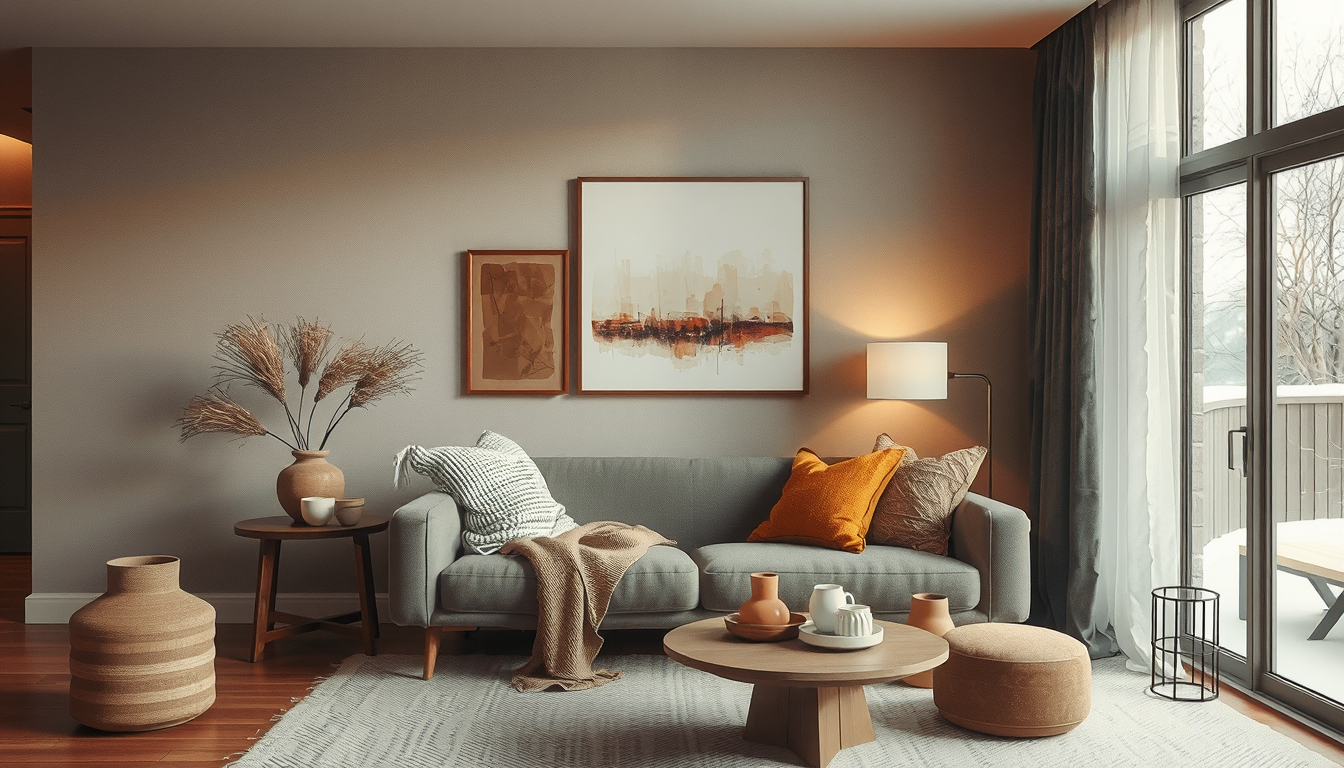
A removable accent wall rental looks most built-in when full-height removable wallpaper is framed with lightweight, colour-matched edge battens. On smooth, fully cured drywall, this is our top choice; first test a 10 × 10 cm sample for at least 48 hours and obtain written landlord approval before covering a full wall.
Last updated: April 1, 2026 Affiliate disclosure: Toronto Interior Designer does not receive commissions from the products or retailers referenced in this guide.
What Makes a Removable Accent Wall Rental Look Built-In?
The most convincing temporary accent walls follow a clear architectural rhythm. Full-height panels, balanced spacing and deliberate transitions at ceilings, baseboards and corners resemble millwork; scattered feature strips tend to look applied.
In a CityPlace condo, that could mean three equal fabric panels behind a sofa. In a Junction semi, removable wallpaper framed like traditional panelling may better suit the existing architecture.
Wall preparation is equally important. WallPops specifies smooth, clean and dry surfaces and requires newly painted walls to cure for four weeks before installation (WallPops).
A temporary wall looks built-in when its scale, edges and alignment relate to the room—not simply because the adhesive is strong.
For additional low-impact finishes, see our no-paint wall makeover guide.
Why do repeated panels look more permanent?
Repeated modules create the order associated with built-in cabinetry and applied moulding. Align panel divisions with a sofa, bed, desk or window mullion so the feature appears connected to the room’s layout.
A full-height finish also avoids the conspicuous uncovered strip that can make temporary wallpaper look unfinished. At an uneven corner, use a narrow painted backer or a 6–10 mm shadow gap instead of forcing trim into a visibly crooked joint.
Which Removable Accent Wall Rental Ideas Work Best in Toronto Homes?
Find the Finishing Pieces
Accent lighting, ceramics, mirrors, and small furniture often make the biggest difference in builder-grade rooms.
Toronto Interior Designer may earn a commission if you shop through these links at no extra cost to you.
Choose the treatment according to the wall surface, room size and storage available after removal. Peel-and-stick wallpaper suits smooth drywall, while fabric frames and freestanding screens reduce contact with fragile paint or older plaster (WallPops).
For additional material ideas, browse our décor and accents guides.
Which seven treatments create the strongest built-in effect?
- Full-height removable wallpaper: Run the pattern from baseboard to ceiling and finish it at an inside corner.
- Framed wallpaper panels: Apply wallpaper to lightweight backer boards and outline them with painted removable battens.
- Fabric scenic flats: Stretch upholstery fabric over shallow frames for a tailored bedroom or dining-room feature.
- Prefinished plywood sheets: Match the grain across adjacent sheets and use narrow shadow gaps to suggest custom cabinetry.
- Temporary picture-frame moulding: Assemble complete rectangles on removable backer panels instead of adhering each strip directly to drywall.
- Freestanding slat walls: Use a stable floor-supported system where concrete or condo rules prevent drilling. Compare options in our freestanding room-divider guide.
- Magnetic textile panels: Mount these on a suitable freestanding steel backer because ordinary drywall is not magnetic.
These treatments can also define a compact work area without constructing a permanent partition. Our Toronto home-office ideas provide additional layout context.
Which option suits questionable paint?
Fabric-wrapped scenic flats are generally safer for flat, chalky or poorly bonded paint because the decorative surface does not cover most of the wall. A lightweight frame can stand behind a bed or console while adding colour and some acoustic softness.
Prefinished plywood or MDF flats create greater architectural depth, but they require stable anti-tip planning and enough storage space after removal. Tall furniture and freestanding panels should be secured using a method appropriate to their dimensions, weight and the landlord’s fastening restrictions.
What Should You Budget for a Removable Accent Wall in Toronto?
Use these figures as planning allowances, not fixed quotations. Canadian prices vary by dimensions, pattern, colour and inventory, while delivery and HST increase the checkout total (The Home Depot Canada; RONA; IKEA Canada; Spoonflower).
| Removable treatment | Approximate Canadian material budget | Best Toronto application | Main limitation |
|---|---|---|---|
| Peel-and-stick wallpaper | $55–$110 per roll | Smooth condo drywall | Misaligned seams remain visible |
| Removable vinyl mural | $180–$450 per wall | Bedroom or office backdrop | Custom sizes may be final sale |
| Fabric-wrapped frames | $150–$400 per 2.4 m wall | Uneven plaster or concrete | Uses several centimetres of floor space |
| Prefinished plywood panels | $250–$650 per 2.4 m wall | Loft or den feature wall | Requires storage after removal |
| Temporary MDF battens | $120–$300 per 2.4 m wall | Faux architectural panelling | Adhesive can lift weak paint |
| Freestanding slat screen | $350–$1,200 | Concrete-wall condo | Higher cost and deeper footprint |
| Painted scenic flats | $200–$500 per wall | Long-term rental | Requires assembly and storage |
We reviewed representative Canadian listings from The Home Depot Canada, RONA, IKEA Canada and Spoonflower for these ranges. Obtain three local quotations when custom carpentry or professional wallpaper installation is required.
How Do You Choose a Removable Accent Wall System for Your Surface?
Choose by substrate before choosing by pattern. Smooth, fully cured eggshell or satin drywall is the strongest candidate for removable wallpaper; texture, porous flat paint and loose coatings can reduce adhesion or increase the risk of paint release (WallPops).
What does the wall-surface checklist recommend?
| Existing surface | Preferred system | Test requirement | Avoid |
|---|---|---|---|
| Smooth eggshell or satin paint | Peel-and-stick wallpaper | Hidden 10 × 10 cm sample for at least 48 hours | Installing before paint cures |
| Flat or chalky paint | Freestanding fabric frame | Rub test with a clean white cloth | Large adhesive sheets |
| Textured drywall | Panel or scenic flat | Check floor and ceiling clearance | Thin vinyl that reveals texture |
| Poured concrete | Freestanding slat or fabric wall | Confirm anti-tip stability | Unapproved drilling |
| Older plaster | Lightweight framed panels | Inspect for loose paint | High-tack adhesive |
| Humid exterior wall | Ventilated freestanding panel | Monitor for condensation | Sealed panels placed tightly against the wall |
A 48-hour sample is a practical screening step, not a guarantee. Leave the sample longer when the wall receives direct sun or experiences significant humidity changes, and photograph the surface before installation.
What works on Toronto condo concrete?
For poured concrete in a CityPlace condo, use a freestanding frame, tension-supported system or furniture-supported backdrop unless both the landlord and condominium corporation approve drilling. Condo declarations, bylaws and rules can regulate alterations, deliveries, elevator use and construction hours (Condominium Authority of Ontario).
Measure the elevator, corridor turns and suite doorway before ordering a 2.4 m sheet. Reserve the service elevator when required and confirm whether management needs contractor insurance or a renovation deposit (Condominium Authority of Ontario).
What works on older Toronto plaster?
In Cabbagetown and Junction rentals, older plaster may have previous repairs or several layers of paint. A removable adhesive can detach a poorly bonded coating, making lightweight fabric frames or backer-mounted panels the lower-contact choice.
Inspect for loose paint before installation and stop if a clean white cloth lifts powder from the surface. Obtain professional advice where staining, persistent moisture or substantial cracking suggests a problem beyond cosmetic decoration.
How Should Toronto Light and Climate Affect the Design?
Toronto experiences warm, humid summers and cold winters, while Health Canada recommends maintaining indoor relative humidity between 30% and 50% (Environment and Climate Change Canada; Health Canada). Indoor fluctuations can affect wallpaper seams, fabric tension and movement in wood-based panels.
Which colours work in different exposures?
Toronto’s lower winter sun and shorter winter days can make undertones more apparent, so examine samples in morning, afternoon and electric light before ordering a full wall (National Research Council Canada).
North-facing rooms often suit warmer whites, clay shades and red-based woods. Strong south- or west-facing rooms can usually accommodate cooler grey, blue or green finishes, although adjacent flooring, lamps and furnishings will change how the colour reads.
In our editorial sample-board review, we place each finish beside the existing baseboard, flooring and evening lamp rather than evaluating it only against a white screen. This reveals colour interactions that a standalone online swatch cannot show.
Which finish hides seams best?
Matte paper and woven fabric diffuse reflected light and generally make minor seams or wall ripples less conspicuous. Glossy vinyl reflects more directional light, which can emphasize uneven drywall and imperfect panel alignment.
Toronto shoppers can compare contemporary fabrics and finish samples at retailers such as EQ3 and CB2, but should confirm current showroom hours and sample availability directly with each store (EQ3; CB2).
Which Installation Tricks Make a Removable Accent Wall Look Permanent?
Begin with a measured elevation instead of relying on the room’s nominal width. Establish one level or plumb reference line and work outward because later wallpaper drops follow the alignment of the first one (York Wallcoverings).
Where should seams and edges go?
Place seams where the room already provides a visual break: behind a headboard edge, beside a bookcase or at a deliberate panel joint. Avoid stopping wallpaper 2–5 cm before a corner because the narrow exposed strip makes the application appear incomplete.
Repeat dimensions already visible in the room. Align panel divisions with furniture, windows or architectural lines, while preserving access to receptacles, switches and electrical equipment (Electrical Safety Authority).
Deep freestanding panels can reduce circulation space. Review our wheelchair turn-radius planning guide before adding a screen to a compact bedroom, hallway or home office.
How do you make temporary battens resemble millwork?
Build complete, repeatable rectangles rather than attaching isolated strips. Cut and finish battens on a protected work surface, then mount them to removable backer panels.
Use one paint colour across the battens, panel faces and visible frame edges. Where panels meet a baseboard, either stop every panel at the same height or scribe each removable backer consistently around the trim.
A 6–10 mm perimeter shadow gap can absorb uneven corners more cleanly than tight-fitting trim. Before installation, dry-fit the complete arrangement and confirm that doors, vents and window coverings still operate.
How Can You Remove a Rental Accent Wall Without Losing Your Deposit?
Remove the installation slowly, document its condition and complete only repairs authorized by the landlord. Ontario tenants can be responsible for undue damage caused wilfully or negligently, while ordinary wear is treated differently under the Residential Tenancies Act (Government of Ontario).
Which removal method protects the paint?
Follow the adhesive manufacturer’s instructions rather than pulling material directly away from the wall. Command strips are designed to release by slowly stretching the tab downward instead of pulling it outward (3M Canada).
Peel removable wallpaper back at a low angle and stop if the coating begins to lift. Remove panels before the final inspection so there is time to discuss any repair, and confirm the approved paint colour, sheen and scope before patching or repainting.
For other reversible changes, consult our renovation tips for Toronto homes.
What should you document?
Photograph the complete wall, every edge and all pre-existing marks before installation. Keep the landlord’s written approval, product instructions, receipts and the backing card identifying the adhesive.
During removal, photograph any paint release before attempting a repair. Condo renters should retain both landlord consent and management approval because Ontario’s standard lease does not replace condominium declarations, bylaws or rules (Government of Ontario; Condominium Authority of Ontario).
What is our recommendation?
For smooth, fully cured Toronto rental walls, use removable wallpaper framed with lightweight, colour-matched edge battens. This provides the strongest balance of architectural finish, moderate cost and reversibility.
Choose a freestanding fabric-wrapped frame when paint or plaster is weak. Use plywood scenic flats when deeper architectural relief matters and you have sufficient delivery access and post-removal storage.
What Should You Know Before Starting a Removable Accent Wall Rental?
Ontario’s standard lease distinguishes ordinary decorative items from other alterations that require landlord consent. Obtain written approval before installing battens, anchors, large adhesive areas or any treatment that could materially alter the unit (Government of Ontario).
Cosmetic decorating generally does not require a Toronto building permit, but structural work and alterations affecting regulated building systems may require approval (City of Toronto). Confirm unusual assemblies with Toronto Building before construction.
Styling checklist
- Test a hidden 10 × 10 cm adhesive sample for at least 48 hours.
- Obtain written landlord and, where applicable, condo-management approval.
- Follow the manufacturer’s paint-curing period; WallPops specifies four weeks.
- Measure the wall, baseboards, outlets, elevator and delivery route.
- View samples in morning, afternoon and evening light.
- Align panels with furniture, windows or architectural lines.
- Keep panels clear of electrical equipment, vents and heat sources.
- Photograph the wall before installation and during removal.
- Reserve approximately 10% extra material for pattern matching and installation errors.
- Retain product instructions and adhesive identification until move-out.
Sources
- Government of Ontario — Guide to Ontario’s standard lease
- Government of Ontario — Residential Tenancies Act
- City of Toronto — When is a building permit required?
- Condominium Authority of Ontario — Governing documents
- Electrical Safety Authority — Home electrical safety
- Environment and Climate Change Canada — Canadian climate normals
- Health Canada — Residential indoor air quality
- National Research Council Canada — Research and resources
- WallPops — Frequently asked questions
- York Wallcoverings — How to hang wallpaper
- 3M Canada — Command products
- The Home Depot Canada — Wallpaper
- RONA — Wall panels and mouldings
- IKEA Canada — Fabrics and window treatments
- Spoonflower — Canadian marketplace
- EQ3 — Stores
- CB2 — Stores
Frequently Asked Questions
Can peel-and-stick wallpaper damage rental walls?
Yes. Peel-and-stick wallpaper can lift weak, porous or uncured paint, so test a hidden 10 × 10 cm area for at least 48 hours and follow the manufacturer’s removal directions (WallPops).
Do Ontario renters need permission for an accent wall?
Yes, when the project goes beyond ordinary decorative items or could materially alter the unit. Obtain written landlord consent before installing anchors, battens or a full wall of adhesive, and check condo rules if the home is one of Ontario’s more than 900,000 condominium units (Government of Ontario; Condominium Authority of Ontario).
How long should paint cure before removable wallpaper is installed?
Wait for the period specified by the wallpaper manufacturer. WallPops requires newly painted walls to cure for four weeks, even when the coating feels dry after 24 hours (WallPops).
What is the safest accent-wall option for flat paint?
A freestanding fabric-wrapped frame is usually the safest option because it avoids broad adhesive contact. Keep a ventilation gap of approximately 2–5 cm and use an anti-tip method appropriate to the frame’s height and weight.
How much does a removable accent wall cost in Toronto?
Budget approximately $55–$110 per wallpaper roll, $150–$400 for fabric-wrapped frames or $250–$650 for a 2.4 m-wide plywood feature. These Canadian planning ranges exclude 13% HST, delivery and professional installation (The Home Depot Canada; RONA; IKEA Canada; Spoonflower).
Does a cosmetic accent wall require a Toronto building permit?
Usually not. A 1-wall surface treatment generally falls within cosmetic decorating, but Toronto Building should review any design that affects structure, fire-safety assemblies or regulated building systems (City of Toronto).
Toronto Interior Designer Editorial Team | Toronto Design Research and Interiors Editors The Toronto Interior Designer Editorial Team researches practical materials, rental constraints and space-planning strategies for homeowners and renters across the GTA. Its guides emphasize Canadian product information, Ontario requirements and Toronto-specific housing conditions. (/author/toronto-interior-designer-editorial-team/)
Source Warm, Livable Staples
Natural textures and simple silhouettes are easier to layer when you start with timeless foundational pieces.
Toronto Interior Designer may earn a commission if you shop through these links at no extra cost to you.
Frequently Asked Questions
Can peel-and-stick wallpaper damage rental walls?
Yes, it can lift weak or uncured paint. Test a hidden 10 × 10 cm area for at least 48 hours and follow the manufacturer’s removal instructions.
Do Ontario renters need permission for a removable accent wall?
Get written landlord consent if the project goes beyond ordinary decoration or could alter the unit. Toronto condo renters may also need approval from condo management.
How much does a removable accent wall cost in Toronto?
Budget $55–$110 per wallpaper roll, $150–$400 for fabric-wrapped frames or $250–$650 for a 2.4 m plywood-panel wall. Prices exclude HST, delivery and professional installation.
Toronto Interior Designer is editorially independent. Our recommendations are based on research and editorial judgment, not brand sponsorships.