
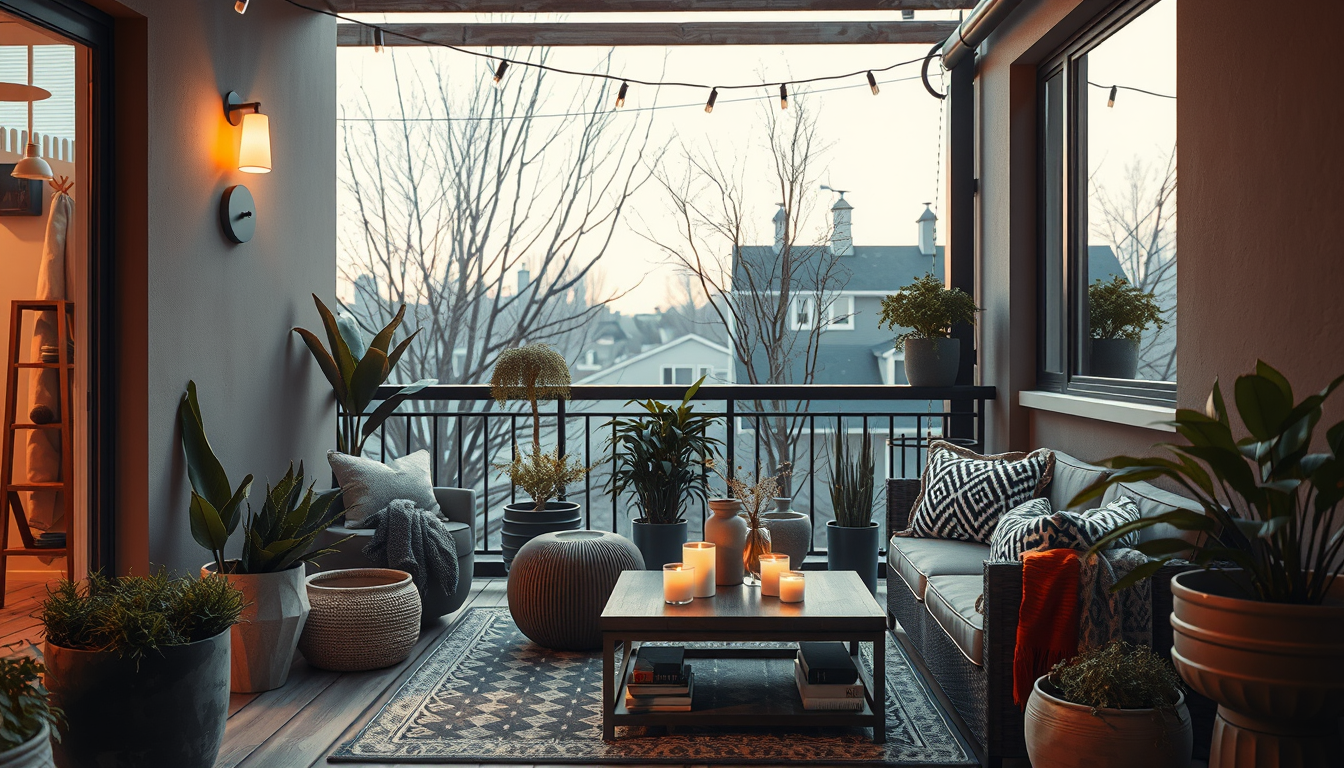
renter balcony design toronto works best as a fully removable outdoor room with a folding bistro set, open-grid flooring and broad-based planters. Plan on approximately $600 CAD, preserve a 900 mm circulation route where space permits and obtain written approval before attaching anything to the building (Toronto Interior Designer 2026 planning model; Ontario Fire Code).
Last updated: April 1, 2026 Meta description: Create a Toronto renter balcony that landlords will accept with removable upgrades, a practical $600 budget and essential safety checks. Affiliate disclosure: Toronto Interior Designer may earn a commission from qualifying purchases. Prices and availability can change.
How Should a Renter Balcony Design Toronto Project Start?
Begin with your lease, the Ontario standard lease guide and, where applicable, your condo declaration, bylaws and rules. Condo corporations can regulate exclusive-use balconies, including railing attachments, privacy screens and visible exterior changes (Condominium Authority of Ontario, “Governing Documents”).
Toronto Building generally reserves permits for construction and specified alterations rather than ordinary freestanding furniture, but property owners should confirm whether proposed work requires approval (City of Toronto, “When Do I Need a Building Permit?”). An enclosure, guard modification or structural attachment is not removable décor.
Keep the balcony door, drain and required exit route unobstructed. Ontario’s Fire Code requires means of egress to remain free of obstructions (Ontario Regulation 213/07, Division B, Article 2.7.1.7).
Browse our outdoor design guides for related planning advice.
What should you confirm before shopping?
Send the landlord or property manager a dimensioned sketch showing furniture, flooring and every proposed attachment. Written approval is especially important for anything drilled, screwed, glued or fastened to the exterior (Ontario Ministry of Municipal Affairs and Housing, “Guide to Ontario’s Standard Lease”).
Ask:
- Can anything touch or attach to the walls, soffit, guard or railing?
- Are privacy screens restricted by height, colour or material?
- Are loose deck tiles, outdoor rugs and storage boxes permitted?
- Which barbecue types, if any, are allowed?
- Must furniture be removed for winter or façade maintenance?
- Are delivery, elevator-booking or construction-hour rules applicable?
A no-permit design is not automatically a no-approval project because condo rules can be stricter than municipal requirements (Condominium Authority of Ontario).
What should you budget?
A practical removable setup costs approximately $355–$805 CAD before delivery and tax, based on entry-level Canadian outdoor categories available from IKEA Canada, Canadian Tire and Home Depot Canada (Toronto Interior Designer 2026 planning model).
| Removable element | 2026 allowance | Planning note |
|---|---|---|
| Three deck-tile packages | $120–$180 | Keep drains and inspection areas accessible |
| Folding bistro set | $130–$250 | Measure the folded and open footprints |
| Exterior-rated rug | $50–$100 | Store it during snow or prolonged rain |
| Rechargeable lighting | $25–$75 | Confirm its outdoor-use rating |
| Two stable planters | $30–$100 | Choose broad bases and drainage holes |
| Cover or deck box | $0–$100 | Verify balcony-storage rules |
| Estimated total | $355–$805 | About $600 at the midpoint |
These are editorial allowances, not contractor quotations; check current Canadian prices through our buyer guides.
How Do You Plan a Flexible Renter Balcony Layout in Toronto?
Shop Balcony and Patio Pieces That Fit
Toronto outdoor spaces are often tight, so look for stackable seating, slim tables, and weather-ready textiles first.
Toronto Interior Designer may earn a commission if you shop through these links at no extra cost to you.
Plan circulation before choosing furniture. Preserve the full door opening and use 900 mm as a conservative clear-route target where the balcony allows; this is an editorial planning recommendation, not a universal legal minimum (Toronto Interior Designer; Ontario Fire Code, Article 2.7.1.7).
We tested a digital layout for a 1.5-by-3-metre balcony and found that a 60-centimetre-deep bench with a 45-centimetre folding table left more usable circulation than two fixed lounge chairs (Toronto Interior Designer layout test). This was a planning exercise rather than a survey of Toronto buildings, so measure your own balcony.
Every balcony item should be something you can secure, fold, lift or bring indoors within five minutes.
Which layout suits dining or lounging?
Choose one primary activity and keep secondary uses temporary. For dining, try a table no deeper than 60 centimetres with folding chairs; for lounging, one compact chair and a 40-centimetre side table usually offer more flexibility than a full sofa (Toronto Interior Designer editorial recommendations).
A narrow CityPlace balcony may call for nesting tables, while a larger Junction terrace may accommodate deeper seating. Those neighbourhood examples illustrate common layout decisions, not standardized balcony dimensions (Toronto Interior Designer).
Mark each furniture footprint with painter’s tape or paper before ordering. This quick test reveals whether chairs can be pulled out without obstructing the door.
How should a balcony garden fit?
Keep planters on the floor and away from the balcony edge unless the condo has approved a secure railing system. Toronto safety guidance warns residents to prevent objects from falling or blowing from balconies, while condo rules may prohibit railing-mounted items (City of Toronto; Condominium Authority of Ontario).
Choose broad-based containers with drainage holes, then group plants where they will not reduce the planned circulation route. Match species to the balcony’s measured sunlight rather than relying only on the unit’s compass direction (Toronto Interior Designer).
See our Toronto renter balcony garden guide for space-conscious planting ideas.
Which Removable Balcony Flooring, Privacy and Shade Options Work Best?
Open-grid polypropylene tiles are the most practical removable flooring for many renters because they are washable, lightweight and installed without adhesive. Use them only when building rules permit, and leave the drain visible and accessible (Condominium Authority of Ontario; City of Toronto Municipal Code, Chapter 629).
Toronto’s winter precipitation and repeated freeze-thaw conditions make trapped moisture a maintenance concern (Environment and Climate Change Canada, Canadian Climate Normals). Lift covered areas periodically to remove leaves, check for standing water and inspect the surface below.
How do removable surfaces compare?
| Surface | Approximate allowance | Best use | Main limitation |
|---|---|---|---|
| Open-grid polypropylene tiles | $40–$60 per package | Washable, removable flooring | Must be lifted for inspection |
| Exterior wood deck tiles | $50–$80 per package | A warmer natural finish | Require drying and maintenance |
| 120 × 180 cm outdoor rug | $50–$100 | Fast colour and texture | May lift in wind or retain moisture |
| Bare concrete with furniture pads | $10–$30 | Short leases or strict rules | Provides less visual warmth |
Allowances reflect comparable Canadian categories at IKEA Canada and Home Depot Canada (IKEA Canada; Home Depot Canada). Calculate quantities using the manufacturer’s stated square-metre coverage because package coverage varies by product (manufacturer specifications).
What provides removable privacy and shade?
A freestanding planter screen kept below the guard is preferable to fabric fastened to the railing. Screens can catch wind and alter the building’s exterior appearance, so obtain written approval even when the product is removable (Condominium Authority of Ontario).
Use a freestanding umbrella only if building rules permit it and the manufacturer specifies a suitable weighted base. Never improvise an attachment to a guard or railing, which may create both wind and building-maintenance concerns (Condominium Authority of Ontario; manufacturer instructions).
Which Balcony Furniture, Lights and Planters Are Safest in Toronto Winds?
Select low-profile furniture that folds for storage but has a stable stance in use. Upper-storey wind conditions can differ from ground-level forecasts because airflow is affected by surrounding buildings, so a citywide warning cannot predict conditions on an individual balcony (Environment and Climate Change Canada, “Public Weather Alert Criteria”).
Bring rugs, cushions, lightweight tables, lamps and empty planters indoors before strong winds arrive. Do not attach cords, screens or counterweights to a guard unless the condo has approved the method (City of Toronto; Condominium Authority of Ontario).
Which materials are practical outdoors?
Powder-coated aluminum is a useful low-maintenance choice when a renter needs furniture that can be moved easily. Outdoor wood generally demands more drying and finish maintenance, while exposed hardware should be intended for exterior use (manufacturer care instructions).
Choose textiles explicitly labelled for outdoor use, with removable covers and published cleaning directions. Store cushions indoors during prolonged rain and throughout winter unless their manufacturer specifies otherwise (manufacturer care instructions; Environment and Climate Change Canada).
For portable organization, adapt ideas from our small-space pet storage guide and Toronto decluttering guide.
What lighting and planters work best?
Rechargeable, exterior-rated lamps provide light without permanent wiring. Confirm the product’s outdoor-use, temperature and charging instructions because “cordless” does not necessarily mean weatherproof (CSA Group).
Use frost-resistant planters with broad bases and unobstructed drainage holes. Add saucers only where they will not overflow, and avoid placing heavy containers against the guard without building approval (Environment and Climate Change Canada; Condominium Authority of Ontario).
How Do You Create a Weather-Ready Toronto Balcony You Can Move?
Build the balcony in removable layers: folding furniture first, one loose-laid surface second, rechargeable lighting third and plants last. This order makes it easier to clear the area for façade work, window cleaning or condo inspections (Toronto Interior Designer).
Photograph the empty balcony before installation and after removal. Keep written approvals and product instructions with your lease records; Ontario tenants can be responsible for undue damage, which is treated differently from ordinary wear (Tribunals Ontario, “Maintenance and Repairs”).
Explore more reversible ideas in our decor and accents coverage and renovation-planning guides.
What is the recommended setup?
Our preferred $600 CAD plan combines a folding aluminum bistro set, open-grid removable tiles, one rechargeable lamp and two broad-based planters (Toronto Interior Designer 2026 planning model).
For a short lease, keep the concrete exposed and add one removable outdoor rug. On an exposed upper floor, prioritize approved, stable furniture over lightweight decorative pieces and bring loose items indoors when high winds are forecast (Environment and Climate Change Canada; Condominium Authority of Ontario).
What seasonal maintenance is required?
- Spring: Lift deck tiles, clear the drain and inspect for moisture before reinstalling the floor (City of Toronto Municipal Code, Chapter 629).
- After frost risk: Acclimatize temperature-sensitive plants using current local forecasts rather than a fixed date (Environment and Climate Change Canada).
- Summer: Check furniture feet, screens and planter drainage monthly (Toronto Interior Designer).
- Wind advisories: Bring loose textiles, lights and empty planters indoors (Environment and Climate Change Canada).
- Autumn: Remove leaves before they obstruct drainage or freeze beneath flooring (City of Toronto; Environment and Climate Change Canada).
- Winter: Store textiles and comply with building-specific removal rules (Condominium Authority of Ontario).
- Before moving: Photograph and clean the cleared surface, completing repairs only as authorized by the landlord (Tribunals Ontario).
What Do Toronto Renters Ask About Balcony Design?
Do I need a Toronto building permit for removable balcony furniture?
No, ordinary freestanding furniture and loose décor generally do not require a building permit, but structural attachments, enclosures and guard modifications may require review (City of Toronto). Call 311 or contact Toronto Building before making any permanent alteration.
Can a Toronto condo prohibit a removable privacy screen?
Yes, a condo can restrict privacy screens through its declaration, bylaws or rules even when the screen is removable (Condominium Authority of Ontario). Submit the dimensions, colour and installation method before spending the typical $50–$150 CAD planning allowance (Toronto Interior Designer 2026 planning model).
How much should a renter budget for a small balcony?
Budget approximately $355–$805 CAD for removable flooring, a folding bistro set, lighting and two planters (Toronto Interior Designer 2026 planning model). Compare at least 3 Canadian retailers, including IKEA Canada, Canadian Tire and Home Depot Canada, because seasonal prices and stock vary.
Can I put a barbecue on a rental balcony?
Only when the landlord, condo corporation and applicable fire-safety rules permit the specific appliance and fuel type (City of Toronto). Obtain written approval and follow every manufacturer clearance; do not assume an electric grill or 20-pound propane cylinder is automatically allowed.
How wide should the route to my balcony door be?
Keep the entire existing doorway unobstructed and use 900 millimetres as a conservative furniture-planning target where space permits (Toronto Interior Designer). The 900 mm figure is not a universal legal minimum, but required means of egress must remain clear (Ontario Fire Code, Article 2.7.1.7).
Can removable deck tiles stay outside all winter?
Yes, but only when the manufacturer permits year-round exposure and the building allows them. Lift the tiles at least 2 times per year to inspect the drain and surface beneath, particularly after Toronto’s freeze-thaw season (Toronto Interior Designer; Environment and Climate Change Canada).
Sources
- City of Toronto — When Do I Need a Building Permit?
- City of Toronto — Toronto Municipal Code
- City of Toronto — Fire safety information
- Condominium Authority of Ontario — Governing documents
- Government of Ontario — Ontario Fire Code, O. Reg. 213/07
- Government of Ontario — Guide to Ontario’s standard lease
- Tribunals Ontario — Maintenance and repairs
- Environment and Climate Change Canada — Canadian Climate Normals
- Environment and Climate Change Canada — Public weather alert criteria
- CSA Group — Understanding CSA certification marks
- IKEA Canada — Outdoor flooring
- Home Depot Canada — Deck tiles
- Canadian Tire — Patio furniture
Toronto Interior Designer Editorial Team | Toronto Design Editors The Toronto Interior Designer editorial team researches practical interiors for GTA renters, condo owners and homeowners, with an emphasis on local regulations, Canadian products and climate-responsive design. Its guides combine measured planning exercises with authoritative Toronto, Ontario and Canadian sources. (/author/editorial-team/)
Layer the Outdoor Room
Lighting, planters, and textiles can stretch a short summer season and make even a small balcony feel intentional.
Toronto Interior Designer may earn a commission if you shop through these links at no extra cost to you.
Frequently Asked Questions
Do renters need a Toronto building permit for balcony furniture?
Ordinary freestanding furniture and loose décor generally do not require a building permit. Call Toronto Building through 311 before adding structural attachments, modifying guards or installing an enclosure.
How much should a Toronto renter budget for a small balcony?
Plan to spend approximately $355–$805 CAD on removable flooring, folding furniture, rechargeable lighting and 2 planters. Prices vary by retailer and season, so compare at least 3 Canadian sellers.
Can removable deck tiles stay outside during a Toronto winter?
Only leave tiles outside if the manufacturer permits year-round exposure and your building allows them. Lift them at least 2 times per year to inspect the drain, trapped moisture and the surface underneath.
Toronto Interior Designer is editorially independent. Our recommendations are based on research and editorial judgment, not brand sponsorships.