
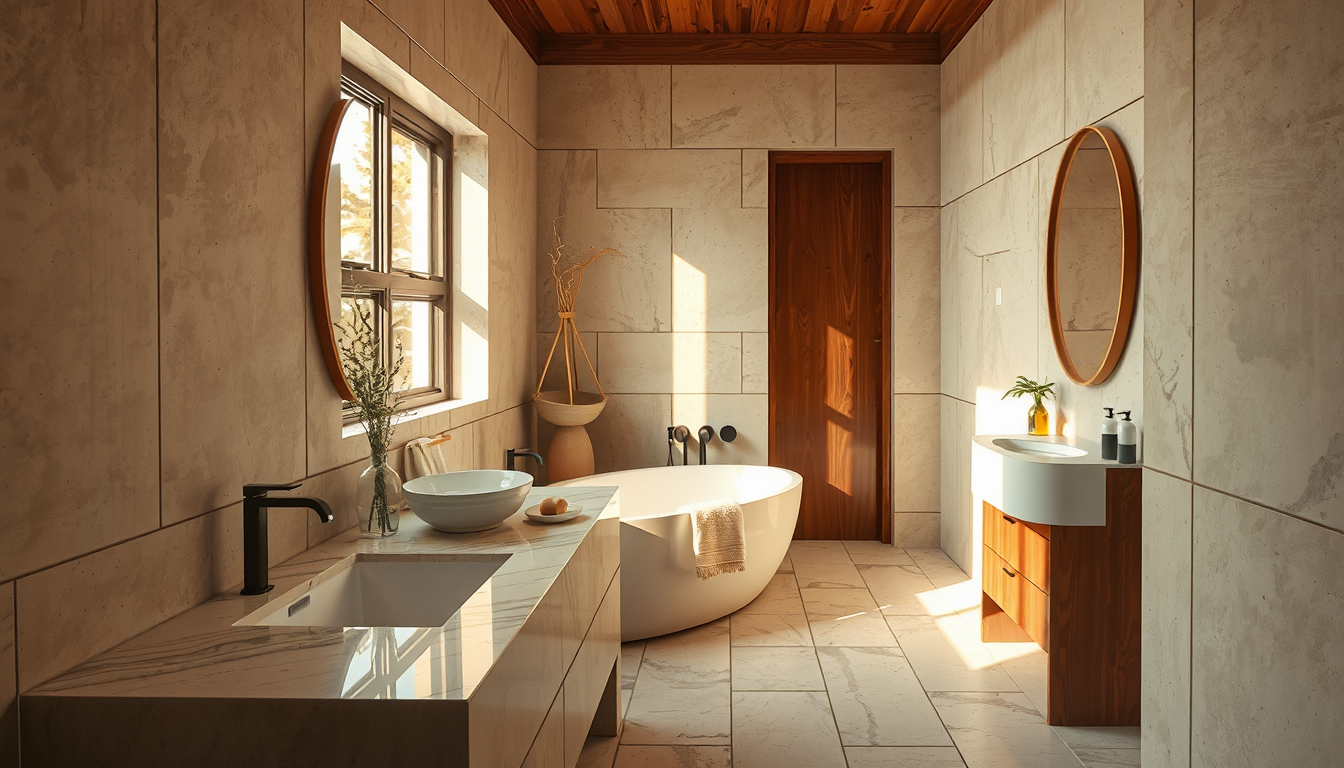
Meta description: Discover how to plan a terrazzo bathroom in Toronto, including material comparisons, 2026 CAD costs, condo rules, waterproofing and maintenance.
A terrazzo bathroom is best specified with terrazzo-look porcelain in most Toronto condos because it is lighter, less porous and easier to replace than poured systems (National Terrazzo & Mosaic Association). Plan approximately $3,500–$9,000 CAD for installed floor and wall tile within a broader 2026 bathroom renovation (Toronto Interior Designer estimate based on HomeStars Canada 2026).
Terrazzo has moved beyond small retro accents. Designers now use it as a room-defining surface alongside natural materials and restrained colour palettes (Architectural Digest). In Toronto bathrooms, however, appearance is only part of the specification: weight, porosity, traction, waterproofing and condo rules also affect the decision (TTMAC; Condominium Authority of Ontario).
Why Is a Terrazzo Bathroom a Durable Choice for Toronto Homes?
Terrazzo combines visual variation with a hard-wearing surface. Traditional terrazzo contains marble, granite, quartz, glass or other chips in a cementitious binder, while epoxy systems use resin (National Terrazzo & Mosaic Association).
Its varied pattern tends to make minor dust and water marks less conspicuous than a uniform dark surface, although regular cleaning remains necessary (Natural Stone Institute). Fine aggregate can feel quiet in a narrow CityPlace bathroom, while larger contrasting chips can anchor an ensuite in a Junction semi.
The limitation is that performance depends on the complete assembly. Cement terrazzo requires an appropriate sealer, and acidic cleaners may etch marble aggregate (Natural Stone Institute). In showers, terrazzo and grout must be installed over a dedicated waterproofing system rather than treated as the waterproof layer (TTMAC).
Choose the waterproofing and wet-slip performance first, then select the terrazzo pattern that works with that system.
Explore more Toronto bathroom design guides.
Which Terrazzo Bathroom Material Is Best for Toronto Condos?
Upgrade the Details That Change Everything
Lighting, mirrors, and matte hardware can make a modest bathroom renovation feel far more custom.
Toronto Interior Designer may earn a commission if you shop through these links at no extra cost to you.
Terrazzo-look porcelain is the strongest all-round choice for most Toronto condos because it is comparatively light, non-porous and replaceable if an individual tile is damaged (Tile Council of North America). It also avoids the thickness and specialist installation associated with traditional poured terrazzo (National Terrazzo & Mosaic Association).
Epoxy terrazzo suits seamless, highly customized interiors and generally has lower water absorption than cement terrazzo (National Terrazzo & Mosaic Association). Cement terrazzo offers the most traditional depth and aggregate variation but requires careful substrate assessment, sealing and maintenance (Natural Stone Institute).
Before ordering any system, condo owners should confirm floor-loading requirements, underlayment rules and alteration approvals with property management (Condominium Authority of Ontario). Those checks are especially important for thick cement installations and heavy precast panels.
How Much Should You Budget for Terrazzo in Toronto?
The following 2026 allowances are planning ranges rather than contractor quotes (Toronto Interior Designer estimates based on HomeStars Canada 2026):
| Surface or upgrade | Toronto planning range | Typical site time |
|---|---|---|
| Demolition and debris removal | $1,000–$3,000 | 1–3 days |
| Waterproofing and shower preparation | $1,500–$4,000 | 2–4 days |
| Terrazzo-look porcelain installation | $3,500–$9,000 | 4–8 days |
| Precast terrazzo components | $4,000–$12,000 | 1–3 days after fabrication |
| Plumbing fixtures and rough-ins | $2,500–$8,000 | 2–5 days |
| Lighting, receptacles and ventilation | $1,500–$4,000 | 1–3 days |
Substrate repairs, downtown parking, elevator bookings and custom fabrication can increase GTA pricing (HomeStars Canada 2026). Obtain at least three itemized quotes using the same drawings and material schedule.
When Should You Choose Cement Terrazzo?
Choose cement terrazzo when authentic colour variation, large aggregate and a monolithic appearance justify additional weight and maintenance. Cement systems are generally thicker and more porous than epoxy terrazzo, and they require compatible sealers because acidic products can damage carbonate-based aggregate (National Terrazzo & Mosaic Association; Natural Stone Institute).
This material is often easier to plan in a house, where the installer can inspect the floor assembly without navigating condominium alteration rules. In an older Junction, Leslieville or Roncesvalles home, movement, deflection and uneven substrates should be corrected before installation (TTMAC).
Ask the installer to document substrate preparation, movement joints, curing requirements and sealer compatibility. A visually attractive sample does not establish whether the full assembly is suitable for a wet room (TTMAC).
When Do Epoxy and Precast Terrazzo Make Sense?
Epoxy terrazzo is appropriate for thin, seamless and highly customized interior surfaces. It can produce brighter colours and lower water absorption than cement-based terrazzo, although ultraviolet exposure may discolour some resin systems (National Terrazzo & Mosaic Association).
Precast terrazzo is useful for vanity tops, thresholds, shelves and wall panels because these pieces can be fabricated off-site and installed after site measurements are confirmed. Large precast pieces still require verified support, safe access and coordinated installation tolerances (TTMAC).
For a vanity, compare terrazzo with the maintenance requirements in our guide to marble bathrooms in Toronto’s climate. Natural marble and marble-containing terrazzo can both react to acidic cleaners (Natural Stone Institute).
How Can You Design a Terrazzo Bathroom Without Overwhelming the Space?
Use one dominant terrazzo plane and allow quieter finishes to support it. For bathrooms under approximately 5 square metres, we generally place an expressive pattern on either the main floor or the shower walls—not automatically on every surface (Toronto Interior Designer editorial guideline).
In our editorial sample comparison, fine-chip patterns remained calmer beside mirrors, niches and plumbing fixtures, while large, high-contrast chips competed with those functional elements (Toronto Interior Designer editorial review, 2026). A restrained layout also limits disruptive cuts around drains, access panels and wall-mounted toilets.
Pair the terrazzo with warm white tile, simple metal finishes and closed storage. The approach echoes the visual-zoning principles in our small-space decluttering guide.
What Tile Size and Finish Work Best in a Shower?
Choose shower-floor pieces that can follow the drainage slope without excessive lippage. Smaller modules provide more grout joints, but tile size alone does not guarantee safe traction; verify the manufacturer’s wet dynamic coefficient of friction and approved applications (Tile Council of North America).
Large-format terrazzo-look porcelain can work on bathroom walls and main floors when the substrate meets applicable flatness requirements and the installer follows mortar, coverage and movement-joint specifications (TTMAC).
Do not select a polished product for a shower floor simply because the showroom sample appears luxurious. Soap residue can reduce traction on any wet surface, so both finish selection and routine cleaning matter (Tile Council of North America).
For post-shower comfort, coordinate the layout with a properly positioned heated towel rail.
What Should Toronto Homeowners Confirm Before Installing Terrazzo?
Condo owners should obtain written alteration approval before ordering materials. A corporation may require drawings, contractor insurance, licensed trades, damage deposits and elevator reservations under its declaration, bylaws or rules (Condominium Authority of Ontario).
Wet-over-dry restrictions are building-specific. Some corporations restrict moving a shower, toilet or bathtub above another unit’s dry living space, even when a technical plumbing solution is available (Condominium Authority of Ontario). Construction hours and delivery procedures must also be confirmed with property management.
For houses, review access, demolition routes and substrate conditions before finalizing the quotation. Older Toronto homes may contain uneven framing or previous renovation layers that are not visible during an initial estimate (HomeStars Canada 2026).
See our Toronto renovation-planning resources before signing a contract.
Does a Toronto Bathroom Renovation Need a Permit?
Replacing cosmetic finishes generally does not require a City of Toronto building permit, but structural alterations and material changes to plumbing systems may require one (City of Toronto). Moving a toilet, shower or load-bearing wall should therefore be reviewed before demolition begins.
Electrical work may require an Electrical Safety Authority notification and inspection, depending on the work and the contractor’s authorization (Electrical Safety Authority). Condo approval does not replace municipal permits or electrical requirements, and municipal approval does not replace the corporation’s consent (City of Toronto; Condominium Authority of Ontario).
Ask the contractor to identify required permits, notifications and inspections in the written scope. Confirm that plumbing and electrical work will be completed by appropriately qualified trades (City of Toronto; Electrical Safety Authority).
Why Does Waterproofing Need Separate Attention?
Terrazzo, porcelain and grout are finish materials—not substitutes for a shower waterproofing system (TTMAC). The assembly must coordinate the membrane, drain connection, seams, corners, penetrations and transitions with applicable building requirements and manufacturer instructions (Ontario Building Code, Division B; TTMAC).
Request the membrane name, approved substrate, seam treatment and flood-testing procedure in writing. Test duration should follow the waterproofing manufacturer’s instructions and any applicable inspection requirements rather than an arbitrary site convention (TTMAC).
In a condo, confirm how the membrane turns up at walls, wraps plumbing penetrations and terminates at the doorway. Photograph these concealed details before tile installation because failures are disruptive and expensive to investigate later (HomeStars Canada 2026).
How Does Toronto Water Affect Fixtures and Finishes?
Toronto’s drinking water averages approximately 124 mg/L of hardness expressed as calcium carbonate, although annual results can vary by treatment and distribution conditions (City of Toronto). This moderately hard water can leave visible mineral residue on glass, fixtures and dark finishes (City of Toronto).
Choose faucets with accessible aerators and finishes whose care instructions permit gentle mineral removal. Do not allow acidic descaler to run onto cement terrazzo or marble chips because acid can etch calcite-bearing aggregate (Natural Stone Institute).
Wall-mounted faucets can simplify counter cleaning, but relocating the supply and drain configuration may trigger condo review or municipal permit requirements (Condominium Authority of Ontario; City of Toronto). Consult our Canadian buyer guides for additional product-selection criteria.
How Should You Clean and Maintain a Terrazzo Bathroom?
Clean terrazzo with a pH-neutral product and remove standing water promptly. Neutral cleaners are recommended for calcareous stone, while harsh or acidic products can attack the binder or marble aggregate in some terrazzo systems (Natural Stone Institute; National Terrazzo & Mosaic Association).
For cement terrazzo, inspect the sealer when water begins darkening the surface rather than beading on top. Resealing frequency depends on product chemistry, shower use, ventilation and cleaner choice, so there is no reliable universal interval (Natural Stone Institute).
Epoxy terrazzo is less porous, but accumulated soap can still make it slippery (National Terrazzo & Mosaic Association). Porcelain generally does not require surface sealing, although cementitious grout may need protection under the grout manufacturer’s instructions (Tile Council of North America).
What Is Our Recommended Toronto Terrazzo Specification?
For most Toronto condo bathrooms, specify matte terrazzo-look porcelain on the main floor and walls, with a compatible small-format tile on the sloped shower floor. Confirm wet-use approval, traction data and grout compatibility before purchase (Tile Council of North America; TTMAC).
Use precast or epoxy terrazzo for custom vanity tops and statement components. Reserve cement terrazzo for projects where authentic depth justifies specialist installation, structural review, sealing and a larger contingency allowance (National Terrazzo & Mosaic Association).
Before demolition, approve a full-size sample under the bathroom’s actual lighting. Also document the waterproofing membrane, drain, grout, edge profiles, sealers and cleaning products so that every component functions as one wet-room system (TTMAC).
Toronto Terrazzo Bathroom Checklist
- Obtain written condo approval and confirm wet-over-dry restrictions (Condominium Authority of Ontario).
- Collect at least three itemized GTA contractor quotes (HomeStars Canada 2026).
- Verify City of Toronto permit requirements for structural or plumbing changes (City of Toronto).
- Confirm applicable ESA notification and inspection requirements (Electrical Safety Authority).
- Request wet-area and slip-resistance documentation (Tile Council of North America).
- Specify the membrane, drain connection and flood-test procedure (TTMAC).
- Check floor loading for cement or precast terrazzo (TTMAC).
- Approve a full-size sample under the installed lighting.
- Select a pH-neutral cleaner and compatible sealer (Natural Stone Institute).
- Photograph concealed plumbing and waterproofing before walls are closed.
What Are the Most Common Questions About Terrazzo Bathrooms?
Is terrazzo suitable for a shower floor?
Yes, terrazzo can be used on a shower floor when the product is approved for wet areas and installed over a complete waterproofing assembly (TTMAC). Verify wet-slip data even when using tiles smaller than 50 mm.
How much does a terrazzo bathroom cost in Toronto?
A complete mid-range Toronto bathroom renovation commonly requires a planning budget of approximately $15,000–$35,000 CAD (HomeStars Canada 2026). Terrazzo-look floor and wall tile may account for $3,500–$9,000 of that amount.
Does terrazzo need to be sealed?
Yes, cement-based terrazzo generally needs a compatible sealer, while epoxy terrazzo and porcelain are less porous (National Terrazzo & Mosaic Association). Inspect cement terrazzo when water darkens the surface for more than 5 minutes.
Can terrazzo be installed in a Toronto condo?
Yes, terrazzo can be installed in a Toronto condo after the corporation approves the proposed assembly (Condominium Authority of Ontario). Submit the required documents before paying a deposit that exceeds $1,000.
Is terrazzo slippery when wet?
Yes, a smooth terrazzo surface can become slippery when wet or coated with soap residue (Tile Council of North America). Request wet dynamic coefficient of friction data for 100% of products proposed for bathroom floors.
How does Toronto water affect terrazzo maintenance?
Toronto water averages approximately 124 mg/L of hardness as calcium carbonate and can leave visible mineral deposits (City of Toronto). Use a pH-neutral cleaner and keep acidic descaler at least 100% contained away from cement terrazzo and marble aggregate (Natural Stone Institute).
Sources
- Architectural Digest, terrazzo flooring and interior-design coverage.
- City of Toronto, When Is a Building Permit Required? and drinking-water quality reports.
- Condominium Authority of Ontario, renovation and governing-document guidance.
- Electrical Safety Authority, renovation notification and inspection guidance.
- HomeStars Canada, 2026 bathroom-renovation cost guidance.
- National Terrazzo & Mosaic Association, terrazzo systems and maintenance guidance.
- Natural Stone Institute, Natural Stone Maintenance and Cleaning Guidelines.
- Ontario Building Code, Division B.
- Terrazzo, Tile and Marble Association of Canada, Specification Guide 09 30 00.
- Tile Council of North America, wet-slip and tile-selection guidance.
Toronto Interior Designer Editorial Team | Toronto Residential Design Editors
The Toronto Interior Designer Editorial Team researches materials, renovation requirements and space-planning strategies for homeowners, condo owners and renters across the GTA. Its coverage emphasizes practical Toronto specifications, Canadian standards and transparent project-planning guidance.
(/author/toronto-interior-designer-editorial-team/)
Keep Small Bathrooms Working Hard
Compact storage, simple shelving, and clean-lined accessories are the fastest way to add polish without crowding the room.
Toronto Interior Designer may earn a commission if you shop through these links at no extra cost to you.
Frequently Asked Questions
Is terrazzo suitable for a shower floor?
Yes, terrazzo can suit a shower floor when it is rated for wet areas and installed over a complete waterproofing system. Verify wet slip-resistance data before installation.
How much does a terrazzo bathroom cost in Toronto?
Budget approximately $15,000–$35,000 CAD for a complete mid-range renovation. Installed terrazzo-look porcelain typically accounts for $3,500–$9,000.
Can terrazzo be installed in a Toronto condo?
Yes, provided the condo board approves the renovation and the floor assembly supports the system. Obtain at least 3 written quotes and confirm plumbing, elevator and construction-hour rules.
Toronto Interior Designer is editorially independent. Our recommendations are based on research and editorial judgment, not brand sponsorships.