
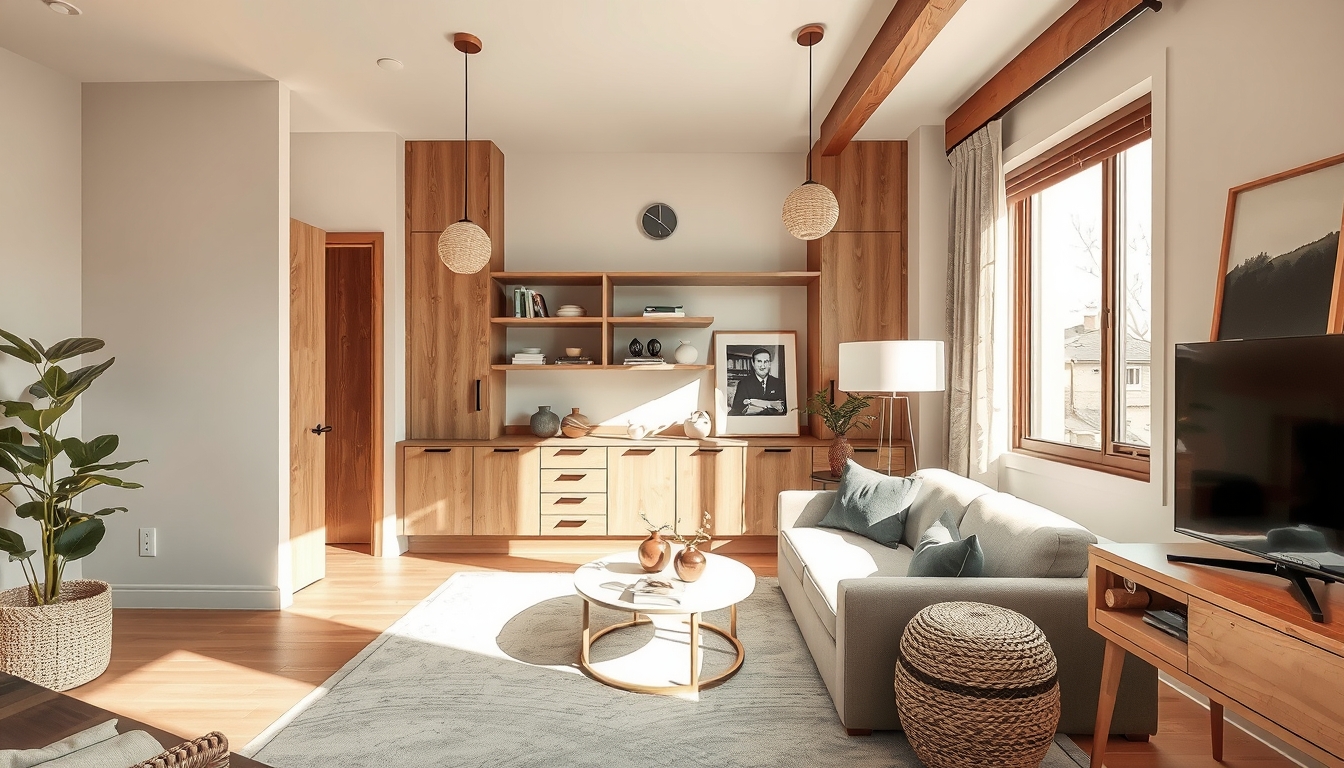
Every toronto home transformation before after story on social media shows the pretty tile and the statement lighting — but the renovations that actually change how you live start with storage. In a city where new condos average roughly 650 square feet and Victorian semis come with closets the size of a carry-on suitcase, storage is the single decision that shapes every other design choice. It decides where your kitchen island lands, whether your hallway feels open or cramped, and how much value you add at resale. At Toronto Interior Designer, we have watched this shift firsthand: the most satisfying renovations we cover are the ones where storage drove the floor plan, not the other way around.
Why Toronto Homeowners Put Storage Before Style in Every Renovation
The math is simple. Pre-1920 Toronto homes — the Victorians, Edwardians, and workers’ cottages that fill the Annex, Cabbagetown, and Roncesvalles — dedicate less than two percent of their total floor area to closet space, compared with six to eight percent in modern builds . That gap means a 1,400-square-foot semi might offer fewer than 28 square feet of actual closet, while a new townhouse half its age provides four times more.
Meanwhile, NKBA trend data shows that 78 percent of kitchen renovations now prioritize storage and organization over purely aesthetic upgrades . Homeowners have caught on: a beautiful backsplash means nothing if you are stacking canned goods on the counter.
Here is a quick-reference table for the storage-focused upgrades we see most often in Toronto projects:
| Upgrade | Typical Toronto Cost (CAD) | Best For | Notes |
|---|---|---|---|
| Custom pantry with pull-out shelving | $4,000–$8,500 | Kitchens under 100 sq ft | Reclaims 20–30% more usable shelf space than standard cabinets |
| Under-stair drawer system | $3,500–$6,000 | Victorian semis, split-levels | Works best with straight-run stairs; L-shapes add $1,500+ |
| Floor-to-ceiling bedroom built-ins | $6,000–$12,000 | Condos and small bedrooms | Eliminates need for standalone dresser, freeing 8–12 sq ft of floor |
| Flush-mount hallway cabinetry | $5,000–$9,000 | Narrow corridors in row houses | Depth should stay under 14 inches to avoid code issues |
| Toe-kick and plinth storage | $1,200–$2,500 | Any kitchen or bathroom | Often overlooked; ideal for baking sheets, cleaning supplies |
Custom cabinetry and pantry storage typically account for 30 to 40 percent of a full Toronto kitchen renovation budget of $35,000–$75,000 CAD . Knowing that upfront helps you allocate dollars where they matter most.
Toronto Home Transformation Before After: Leslieville Victorian Gains 40% Storage
Price Out the High-Impact Pieces First
Before committing to a renovation mood board, benchmark the furniture, lighting, and storage pieces that set the tone.
Toronto Interior Designer may earn a commission if you shop through these links at no extra cost to you.
A young couple purchased a two-storey Leslieville Victorian with original charm and almost zero functional storage. The house had a single coat closet, an open-shelving pantry from the 1970s, and bedrooms with three-foot-wide wardrobes. Their designer’s brief was direct: find at least 40 percent more hidden storage without adding a single square foot.
The kitchen was gutted and rebuilt around a full-height pantry wall with integrated appliance garages that tuck away a stand mixer, toaster oven, and coffee machine behind retractable tambour doors. A dead corner beside the fridge became a pull-out spice rack sized for 60 jars. Under the front staircase, a carpenter installed five graduated drawers — the largest at the base measuring 36 inches wide, tapering to 14 inches at the top — that now hold shoes, dog supplies, and seasonal gear previously crammed into plastic bins in the basement.
Upstairs, the primary bedroom lost its shallow closet in favour of a wall-to-wall built-in system with adjustable shelving, a fold-down laundry hamper, and a hidden jewellery drawer. Total bedroom floor area stayed the same, but usable storage tripled.
“Once we stopped designing rooms and started designing storage, the rooms designed themselves. Every awkward nook had an answer once we asked what needed to live there.” — Project designer, Leslieville renovation
Small Condo Storage Solutions: Custom Built-Ins That Transformed 550 Square Feet
Condo storage is a different puzzle. You cannot open walls, you rarely get permission to touch plumbing runs, and every inch of floor space competes with living function. A 550-square-foot one-bedroom in a midtown Toronto tower showed what is possible when built-ins do the heavy lifting.
The owner replaced a bulky entertainment console with a floor-to-ceiling media wall that doubled as a room divider between the living area and a compact home office nook. The back of the unit holds open shelving for books and files. The front conceals the television, a drop-leaf desk surface, and a two-drawer filing cabinet — all behind clean, flush-mount doors that read as a single seamless panel when closed.
In the galley kitchen, upper cabinets were extended to the ceiling with a small step-stool niche built into the end panel. That single change added nearly seven linear feet of shelf space for items used seasonally — holiday bakeware, oversized platters, the fondue set that comes out twice a year.
Built-in storage solutions like these can increase a Toronto home’s resale value by three to five percent, particularly in the sub-one-million-dollar market where functional square footage matters most to buyers .
The Storage-First Design Method Top Toronto Designers Use Now
The approach gaining traction among Toronto Interior Designer contributors and the broader local design community follows four steps:
- Inventory audit. Before any demolition, catalogue every item the household owns by category and frequency of use. This prevents the common mistake of building beautiful storage that does not fit what you actually own.
- Zone mapping. Assign storage zones by activity — cooking, grooming, working, relaxing — rather than by room. A hallway might serve the kitchen if it is three steps from the prep area.
- Invisible-first detailing. Flush-mount cabinet doors, push-latch hardware, and colour-matched panels keep storage from shrinking the visual space. This is the top-requested feature among designers working on homes under 1,200 square feet.
- Flex capacity. Build adjustable internals — movable shelves, modular drawer inserts, removable dividers — so storage adapts as life changes. A nursery shelf that holds diapers today should hold chapter books in five years without a refit.
This method works whether you are gutting a North York split-level or refreshing a Roncesvalles living room on a weekend budget.
Avoid This Mistake
Do not install fixed, deep shelving in narrow Toronto corridors. We see this constantly in Annex semis and Leslieville row houses where homeowners try to squeeze 24-inch-deep cabinets into hallways that are already tight. The result blocks sightlines, violates the Ontario Building Code minimum corridor width of 860 millimetres, and makes the home feel smaller, not smarter. Stay under 14 inches of depth for any hallway built-in, and use pull-out mechanisms so nothing gets buried at the back.
Toronto Home Transformation Before After: Real Project Costs Revealed
Budget transparency matters. The Leslieville Victorian renovation totalled approximately $92,000 CAD, with $34,000 allocated directly to custom storage — the pantry wall, stair drawers, and bedroom built-ins. The condo project came in at $28,500 CAD, almost entirely cabinetry and millwork, because no structural or plumbing work was required.
In both cases, the owners reported that prioritizing storage early in the design process actually reduced change orders later. When you know where everything goes from day one, you make fewer impulsive additions mid-build — and those additions are where budgets typically blow up.
What to Do Next
If you are considering a renovation that puts storage at the centre, start here:
- Walk your home with a notebook. Open every closet, cabinet, and drawer. Write down what does not fit, what you reach for daily, and what has no home at all.
- Measure your closet percentage. Divide total closet and built-in square footage by total home square footage. If you are under four percent, storage should lead your renovation plan.
- Get three quotes that itemize storage separately. Ask contractors to break out cabinetry, millwork, and built-in costs as their own line items so you can compare accurately.
- Prioritize invisible solutions. Flush doors, integrated handles, and colour-matched panels keep small spaces feeling open while hiding everything you need.
- Browse our renovation tips archive for more Toronto-specific guidance on budgets, timelines, and sourcing local trades.
Storage is not the glamorous part of a renovation. It does not photograph as well as a marble waterfall island or a clawfoot tub. But in Toronto, where space is expensive and every square foot has to earn its keep, it is the upgrade that changes how you live every single day.
Balance Budget and Finish Quality
Mix accessible basics with a few standout pieces so the room feels layered rather than one-note.
Toronto Interior Designer may earn a commission if you shop through these links at no extra cost to you.
Sources
- Urbanation — https://www.urbanation.ca
- CMHC housing stock data — https://www.cmhc-schl.gc.ca
- NKBA 2025 Kitchen & Bath Report — https://nkba.org
- HomeStars renovation cost guide — https://homestars.com
- Toronto Regional Real Estate Board market insights — https://trreb.ca
Frequently Asked Questions
How much does a storage-focused home transformation cost in Toronto?
A full toronto home transformation before after project focused on storage typically costs $28,000–$92,000 CAD depending on scope. Condo projects with built-ins only run $25,000–$35,000, while Victorian whole-home renovations with custom cabinetry, stair drawers, and bedroom systems range from $75,000–$100,000.
Can you add more storage to a Toronto condo without major renovations?
Yes. Custom built-ins like floor-to-ceiling media walls, extended upper cabinets, and flush-mount closet systems can add significant storage without structural or plumbing changes. These projects typically cost $20,000–$35,000 CAD and can increase resale value by three to five percent.
What is the storage-first design method Toronto designers recommend?
The storage-first method involves four steps: conducting a full household inventory audit, mapping storage zones by activity rather than room, prioritizing invisible flush-mount detailing, and building flexible internals with adjustable shelves and modular inserts so storage adapts over time.