Toronto interior design trends 2026 are defined by one clear shift: curated simplicity. Not the cold, gallery-white minimalism of a decade ago, but warm, edited spaces where every piece earns its place. After years of maximalist layering and pandemic-era clutter, Toronto homeowners — especially the thousands moving into newly completed condos — are stripping back to what actually works. The city’s design scene is responding with a distinct language: soft earth tones, multi-functional furniture, locally sourced materials, and spa-grade bathrooms squeezed into 50 square feet. This is design built for how Torontonians actually live, not how a mood board says they should.
Warm Minimalism: The Defining Toronto Interior Design Trend for 2026
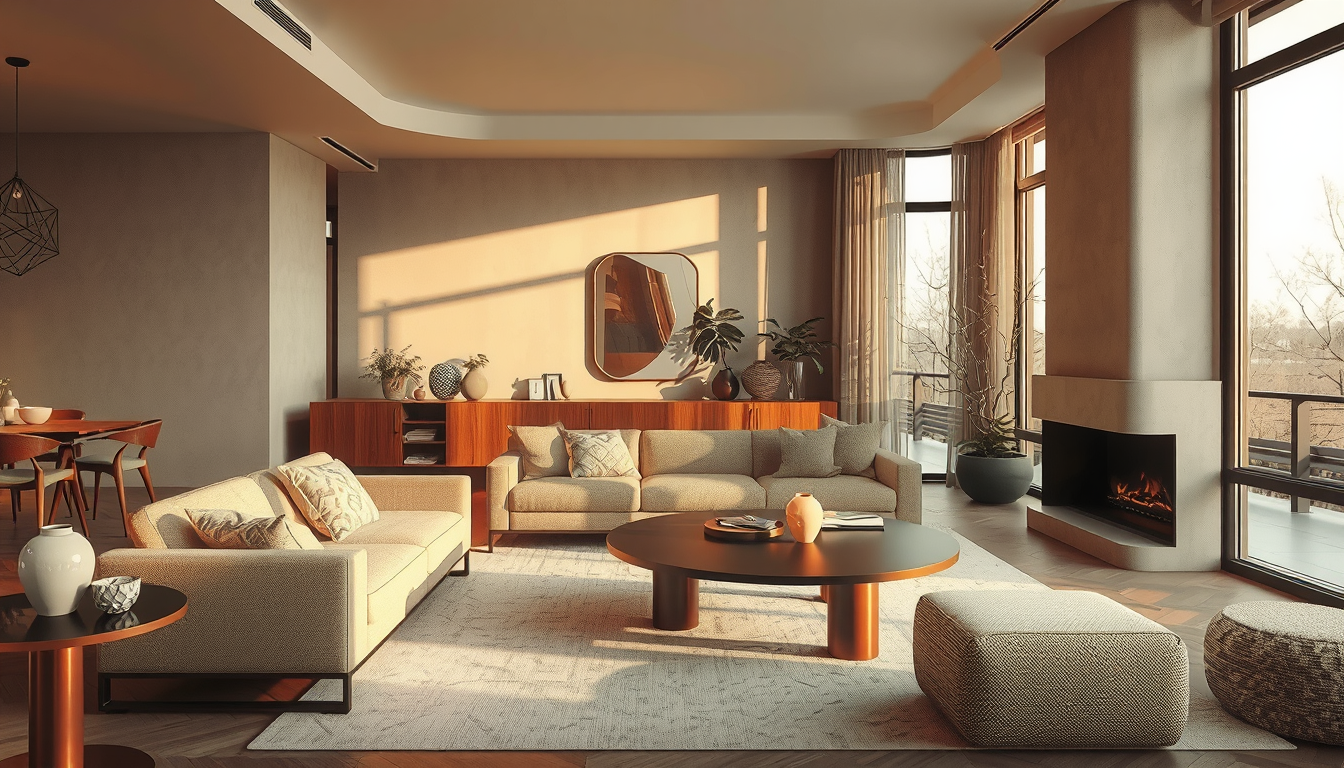
Warm minimalism has gone from Instagram aesthetic to dominant design philosophy. Google Trends data shows search interest in the term up roughly 140 percent since 2023, with Toronto ranking among the top Canadian metros for the query . The look pairs clean lines with organic textures — think fluted oak cabinetry, bouclé upholstery, and hand-thrown ceramics from Ontario makers.
What makes this trend stick in Toronto specifically is winter light. From November through March, north-facing condos can feel like caves. Warm minimalism solves this by combining pale, reflective surfaces (limewash walls, light-toned wide-plank flooring) with warm accent materials (walnut, brass, terracotta) that keep rooms from reading as flat or clinical. The 2026 Pantone Color of the Year, Mauve Mist (PANTONE 18-3211), fits directly into this palette — a soft plum that pairs naturally with the muted earth tones already showing up in Toronto showrooms .
For bedrooms, this translates to layered, warm palettes that work with Canadian light rather than fighting it. Choose one statement texture per room — a limewash accent wall, a chunky knit throw, or a single oversized ceramic — and let the rest breathe.
Condo-Smart Design: Proven Layout Fixes for Small Toronto Condos
See the Pieces Behind the Trend
Translate trend ideas into real products by starting with lighting, occasional furniture, and layered decor.
Toronto Interior Designer may earn a commission if you shop through these links at no extra cost to you.
Of course, warm minimalism looks different depending on how much space you have to work with — and in Toronto, that often means working with far less of it. The city had over 28,000 condo completions in 2024–2025, and the average new unit sits at approximately 650 square feet — roughly 30 percent smaller than the national average for new builds . That reality makes compact-space design the single biggest residential design challenge in the city.
The playbook has matured well beyond “buy a Murphy bed.” Designers at Toronto’s Interior Design Show (IDS) in January 2026 showcased built-in millwork systems that eliminate the need for standalone furniture entirely: banquette seating with hidden storage, floating desks that fold into wall panels, and kitchen islands on locking casters that roll aside for entertaining .
“In a 600-square-foot condo, every inch is either working or wasted. There is no middle ground.” — a principle repeated across multiple IDS 2026 exhibitor presentations.
Three moves that make the biggest impact in tight Toronto floor plans:
- Zone with lighting, not walls. Use pendant heights and dimmer circuits to separate living, dining, and work areas without eating up square footage.
- Go vertical. Floor-to-ceiling shelving and tall, slim storage units draw the eye up and add capacity without a larger footprint.
- Choose leggy furniture. Sofas and side tables on visible legs expose floor area, making a room feel significantly larger than pieces that sit flush to the ground.
If you are working with a compact layout, Toronto Interior Designer has covered proven layout fixes for small condo living rooms that apply directly to this trend.
Toronto Heritage Revival: Modern Interiors in Victorian Homes
While condos dominate new construction, a parallel trend is surging in neighbourhoods like Cabbagetown, the Junction, and Leslieville: heritage home renovations that preserve Victorian bones while inserting clean, contemporary interiors. The Ontario Heritage Act requires compliance with specific guidelines for designated properties, which has created a distinctly Toronto design approach — the “modern insertion within historic shell” .
In practice, this looks like original crown moulding and ceiling medallions paired with handleless cabinetry and poured-concrete countertops. Stained glass transoms sit above minimalist pocket doors. Exposed-brick party walls, once routinely drywalled over, are now being carefully repointed and sealed as feature elements. Original wide-plank pine floors — often hidden beneath layers of carpet and linoleum — are being sanded back to raw wood and finished with matte hardwax oil rather than high-gloss polyurethane, keeping the vintage grain visible without the dated sheen. Designers are treating these heritage details as the statement pieces themselves, keeping the rest of the room deliberately quiet to let 120-year-old craftsmanship do the talking.
This tension — old structure, new interior — is something Toronto does better than almost any other North American city because the housing stock demands it. The key is restraint: honour one or two original features per room and design everything else to support, not compete.
Spa Bathrooms in Toronto: Essential Upgrades for Condo Living
Whether you are renovating a century home or a new-build tower unit, one room consistently tops Toronto renovation wish lists: the bathroom. Toronto Interior Designer editors have tracked a sharp increase in reader interest around spa-inspired bathrooms, and the data matches broader industry reporting . In Toronto’s condo market, where bathrooms average 40 to 55 square feet, achieving a spa feel requires surgical precision.
What works at this scale: curbless showers with linear drains (they make a small bathroom feel twice the size), wall-mounted vanities, recessed medicine cabinets with integrated lighting, and large-format porcelain tiles in warm greige or soft sage that minimize grout lines. Heated floors are a near-universal upgrade in Toronto renovations — they add roughly $800 to $1,500 for a standard bathroom and make a massive difference through six months of cold weather.
For a deeper look at the specific upgrades getting the best return, see our guide to spa-inspired bathroom renovations in Toronto.
What to Invest In vs. Skip: A Toronto Designer’s 2026 Framework
With compelling options across every room, the practical question is where to direct your budget. The fastest way to regret a renovation is chasing a trend at full spend. Here is the framework Toronto designers are recommending in 2026: invest in structure and surfaces, experiment with accessories.
| Trend | Why It Works in Toronto Homes | Budget Impact | Best Room |
|---|---|---|---|
| Warm minimalism palette | Counteracts low winter light; pairs with most condo finishes | Low — paint and textiles | Living room, bedroom |
| Multi-functional built-ins | Maximizes storage in sub-700-sq-ft condos | Medium to high — custom millwork | Entry, living room, home office |
| Heritage detail preservation | Adds irreplaceable character and resale value | Medium — restoration costs | Throughout heritage homes |
| Spa-inspired bathroom upgrades | Heated floors and curbless showers suit Toronto’s climate and condo scale | Medium — $3K–$12K typical | Bathroom |
| Biophilic design and local materials | Connects interiors to Ontario landscape; supports local makers | Low to medium | Any room |
The timelessness test: before committing to any trend, ask whether it solves a functional problem specific to your home. Warm minimalism works because Toronto’s light demands it. Built-in storage works because condo square footage requires it. If a trend only looks good in photos but does not solve a real problem in your space, keep it to swappable elements — throw pillows, art, and accessories — that you can rotate out in two years without a contractor.
What to Do Next
Toronto interior design trends 2026 reward restraint, smart space planning, and local sourcing. Here is how to start:
- Audit your space. Walk every room and identify what is not earning its place — furniture that blocks flow, storage that wastes depth, lighting that flattens the room.
- Pick one high-impact upgrade. A limewash accent wall, heated bathroom floor, or custom built-in will do more than five small swaps.
- Source locally first. Check Toronto makers and Ontario material suppliers before defaulting to imports — IDS 2026 exhibitors are a strong starting point.
- Test colours in your light. Paint large swatches on north- and south-facing walls and live with them for 48 hours before committing.
- Browse more ideas. Explore our full Toronto trends coverage for room-by-room inspiration updated throughout 2026.
Keep the Trend Livable
Ground any trend with simple, versatile pieces that still work when the room evolves over the next few years.
Toronto Interior Designer may earn a commission if you shop through these links at no extra cost to you.
Sources
- Google Trends — https://trends.google.com
- Pantone — https://www.pantone.com
- Urbanation — https://www.urbanation.ca
- IDS Toronto — https://www.interiordesignshow.com
- Ontario Heritage Act — https://www.ontario.ca/laws/statute/90o18
- Homes & Gardens — https://www.homesandgardens.com
Frequently Asked Questions
What are the biggest toronto interior design trends for 2026?
The top trends include warm minimalism with earth tones, condo-smart multi-functional furniture, heritage home modern insertions, spa-inspired bathroom upgrades, and biophilic design using locally sourced Ontario materials.
How do I make a small Toronto condo feel bigger?
Zone spaces with lighting instead of walls, choose furniture on visible legs to expose floor area, go vertical with floor-to-ceiling storage, and invest in custom built-ins that eliminate the need for bulky standalone pieces.
How much do spa bathroom upgrades cost in Toronto?
Typical spa-inspired bathroom renovations in Toronto range from $3,000 to $12,000. Heated floors alone cost roughly $800 to $1,500 for a standard bathroom and are one of the highest-impact upgrades for Toronto’s cold climate.