
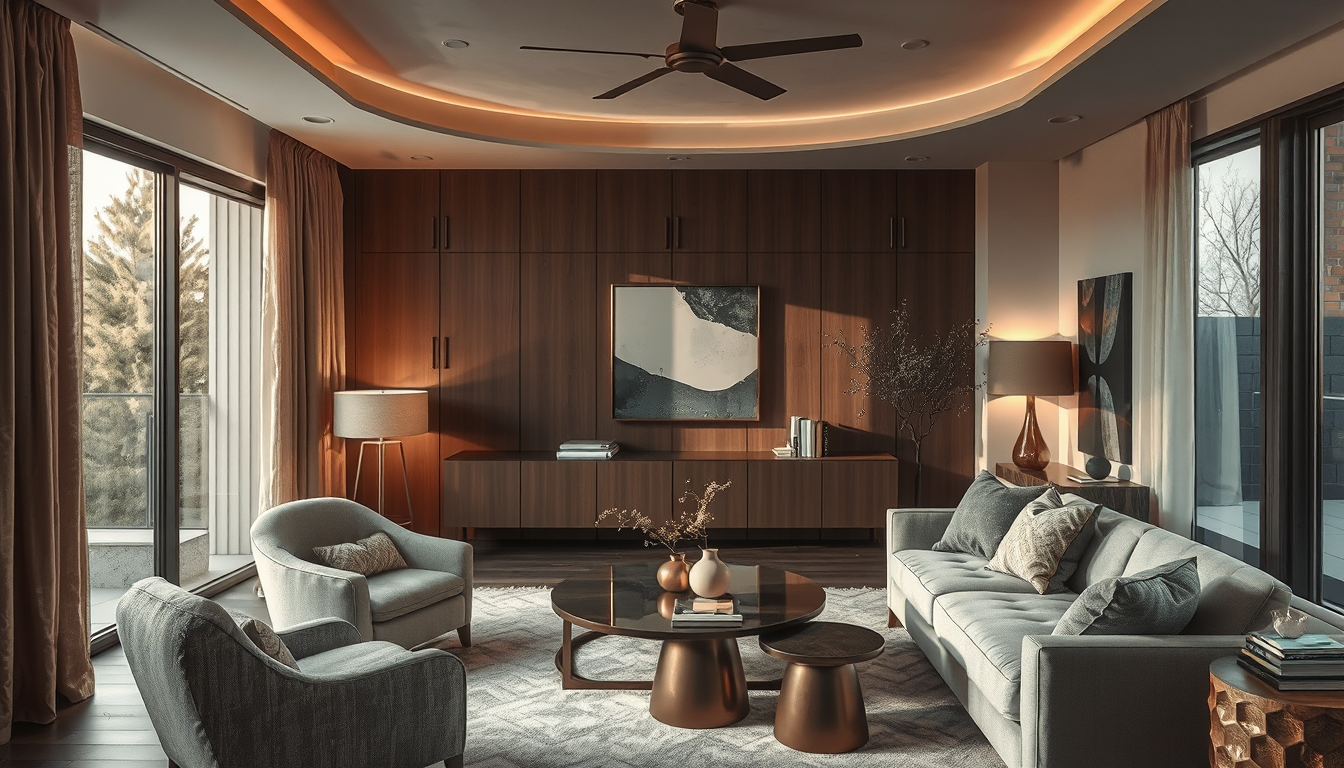
Quiet luxury interior design Canada is not about spending more — it is about choosing better. In a country where winters demand performance from every material and where the average Toronto condo measures roughly 660 square feet, understated elegance is less aesthetic preference and more survival strategy . The idea is simple: invest in fewer, higher-quality pieces that feel good underfoot and hold up across four brutal seasons. Skip the logo-covered accent pillows. Choose wide-plank white oak over laminate. Let the grain of the wood and the weight of the linen do the talking. This is what quiet luxury looks like when it lands in a Canadian home.
What Quiet Luxury Interior Design Means for Canadian Homes
The term “quiet luxury” crossed from fashion into interiors around 2023, fuelled by shows like Succession and brands like The Row. Google search interest for the phrase has surged significantly since then, and the movement shows no sign of fading . But in Canada, the concept carries extra weight.
Our climate is a design constraint that American tastemakers rarely address. A Yorkville condo with floor-to-ceiling windows needs triple-pane glazing that actually becomes an architectural feature — deep reveals, clean sightlines, no fussy window treatments. A Summerhill heritage home with original plaster walls rewards restoration over demolition. Quiet luxury here means respecting what already exists and upgrading the materials that touch your daily life: the floor you walk on barefoot, the countertop you lean against every morning, the wool throw you reach for every October through April.
The most luxurious thing in a Canadian home is not a brand name — it is a material that performs beautifully through every season without asking for attention.
House & Home’s 2026 trend report confirms that warm neutrals, natural stone, and artisan-made objects top the list of Canadian decorating priorities — all core pillars of this movement . Toronto-based firms like Studio Munge and Cecconi Simone have been leading this shift for years, favouring material-first residential projects over flashy statement design.
Best Materials for Quiet Luxury Interiors in Canada
See the Pieces Behind the Trend
Translate trend ideas into real products by starting with lighting, occasional furniture, and layered decor.
Toronto Interior Designer may earn a commission if you shop through these links at no extra cost to you.
Quiet luxury lives and dies by material selection. Every choice should balance sensory appeal with the practical demands of Canadian living. Here is what works and why.
Flooring: Canadian white oak, sourced from Ontario and Quebec forests, is the gold standard. Wide-plank, matte-finished boards run approximately $12–$18 per square foot installed — more than standard engineered options at $6–$10, but the longevity and warmth justify the investment. White oak pairs naturally with radiant in-floor heating, a near-necessity in our climate, and its tight grain resists moisture fluctuations better than red oak or maple.
Textiles: Performance wool, alpaca, and heavyweight Belgian linen replace the fast-fashion polyester blends found in most big-box stores. These fabrics age well, resist pilling, and feel noticeably different against your skin. For sofas and accent chairs, look for Canadian-made upholstery with removable, cleanable slipcovers — practical luxury for homes with kids, pets, or both.
Stone and surfaces: Honed marble and leathered granite read quieter than polished finishes. The textured surface hides water spots and fingerprints, a real advantage in a busy kitchen. If you are weighing countertop options, our comparison of quartz and granite breaks down cost, durability, and maintenance for Canadian kitchens specifically.
Hardware and fixtures: Unlacquered brass, aged bronze, and matte black steel. These finishes develop a patina over time, which is the entire point — quiet luxury embraces gentle aging rather than fighting it.
Quiet Luxury Interior Design Canada: Room-by-Room Trend Guide
Not every room needs the same treatment. Here is how the core trends land across a typical Toronto layout.
| Trend | Why It Works in Toronto Homes | Budget Impact | Best Room |
|---|---|---|---|
| Wide-plank white oak flooring | Pairs with radiant heat; hides wear in high-traffic condos | $12–$18/sq ft installed | Living room, bedroom |
| Honed natural stone surfaces | Warmer visual tone than polished; resists fingerprints | $80–$150/sq ft (countertop) | Kitchen, bathroom |
| Artisan ceramics and handmade pottery | Adds texture without clutter in compact layouts | $50–$300 per piece | Dining room, open shelving |
| Performance wool textiles | Four-season comfort; resists moisture and odour | $200–$800 per throw or cushion set | Living room, bedroom |
| Unlacquered brass hardware | Develops character with age; complements warm neutrals | $15–$40 per pull | Kitchen, bathroom, cabinetry |
Toronto Interior Designer regularly features these materials across our living spaces coverage — browse for specific room layouts and local sourcing tips.
How to Make Quiet Luxury Timeless in Your Canadian Home
Any aesthetic risks becoming a cliché if you follow it too literally. The way to keep quiet luxury from feeling like a time capsule is to focus on principles rather than Pinterest boards.
Buy for decades, not for seasons. A $3,000 solid walnut dining table from a Canadian maker will outlast five rounds of flat-pack replacements. The math works in your favour over time.
Mix eras. Pair a mid-century credenza with a contemporary linen sofa and your grandmother’s brass candlesticks. Quiet luxury is not a catalogue — it is a curated life.
Let one imperfect thing stay. The slightly uneven original hardwood. The vintage doorknobs. The handmade tile with a visible thumbprint. These are the details that keep a space from feeling sterile, and they become more interesting with every passing year.
Edit ruthlessly. In a 660-square-foot condo, every object competes for attention. If you work from home, the same discipline applies to your video call background — a few intentional objects read far better on camera than a cluttered shelf.
Top Canadian Makers and Brands for Quiet Luxury Design
Quiet luxury gains authenticity when you can trace a piece back to the hands that made it. These makers represent the best of Canadian craft, and each one aligns with the material-first philosophy at the heart of this movement.
- Mjölk (Toronto): Curates Japanese and Scandinavian ceramics, textiles, and furniture — the Venn diagram of quiet luxury.
- Jeff Martin Joinery (Victoria, BC): Hand-built wood furniture with visible joinery and zero ornamentation.
- Lambert & Fils (Montreal): Lighting that treats glass and metal as sculptural materials, not afterthoughts.
- Caulfeild Country Boards (Ontario): Wide-plank flooring sourced from reclaimed and sustainably harvested Canadian wood.
The Canada Green Building Council has reported rising residential interest in LEED and similar certifications, reflecting a broader shift — high-end Canadian clients increasingly expect sustainable sourcing as a baseline, not a bonus .
What to Do Next
Quiet luxury interior design in Canada is not a weekend project — it is an ongoing philosophy of choosing less, choosing better, and letting your home age with grace. Here at Toronto Interior Designer, we believe the most elegant spaces are the ones that never shout.
- Audit one room. Pick the space you use most and list every item in it. Remove anything that does not earn its place.
- Invest in one anchor material. Replace your highest-traffic flooring or your most-used countertop with a material you genuinely love touching.
- Source one Canadian-made piece. Start with a single artisan object — a ceramic vase, a hand-thrown bowl, a locally milled cutting board — and build from there.
- Set a five-year material budget. Quiet luxury is cheaper long-term but costs more upfront. Plan for one significant upgrade per year instead of a full renovation.
- Book a consultation. A designer experienced with Toronto’s condo layouts and heritage homes can save you from expensive mistakes and help you prioritize where quality matters most.
Keep the Trend Livable
Ground any trend with simple, versatile pieces that still work when the room evolves over the next few years.
Toronto Interior Designer may earn a commission if you shop through these links at no extra cost to you.
Sources
- Urbanation — https://www.urbanation.ca/
- Google Trends — https://trends.google.com/trends/
- House & Home — https://houseandhome.com/
- CaGBC — https://www.cagbc.org/
Frequently Asked Questions
What is quiet luxury interior design in Canada?
Quiet luxury interior design in Canada focuses on high-quality, understated materials like white oak flooring, honed stone, and performance wool textiles that perform beautifully through four seasons — prioritizing craftsmanship and longevity over logos or flashy statement pieces.
How much does quiet luxury interior design cost in Canadian homes?
Costs vary by material: wide-plank white oak runs $12–$18 per square foot installed, honed stone countertops range from $80–$150 per square foot, and artisan textiles start around $200–$800 per set. The approach costs more upfront but saves money long-term through durability.
Which Canadian brands specialize in quiet luxury furniture and decor?
Notable Canadian makers include Mjölk in Toronto for Japanese and Scandinavian ceramics, Jeff Martin Joinery in Victoria for hand-built wood furniture, Lambert and Fils in Montreal for sculptural lighting, and Caulfeild Country Boards in Ontario for reclaimed wide-plank flooring.