
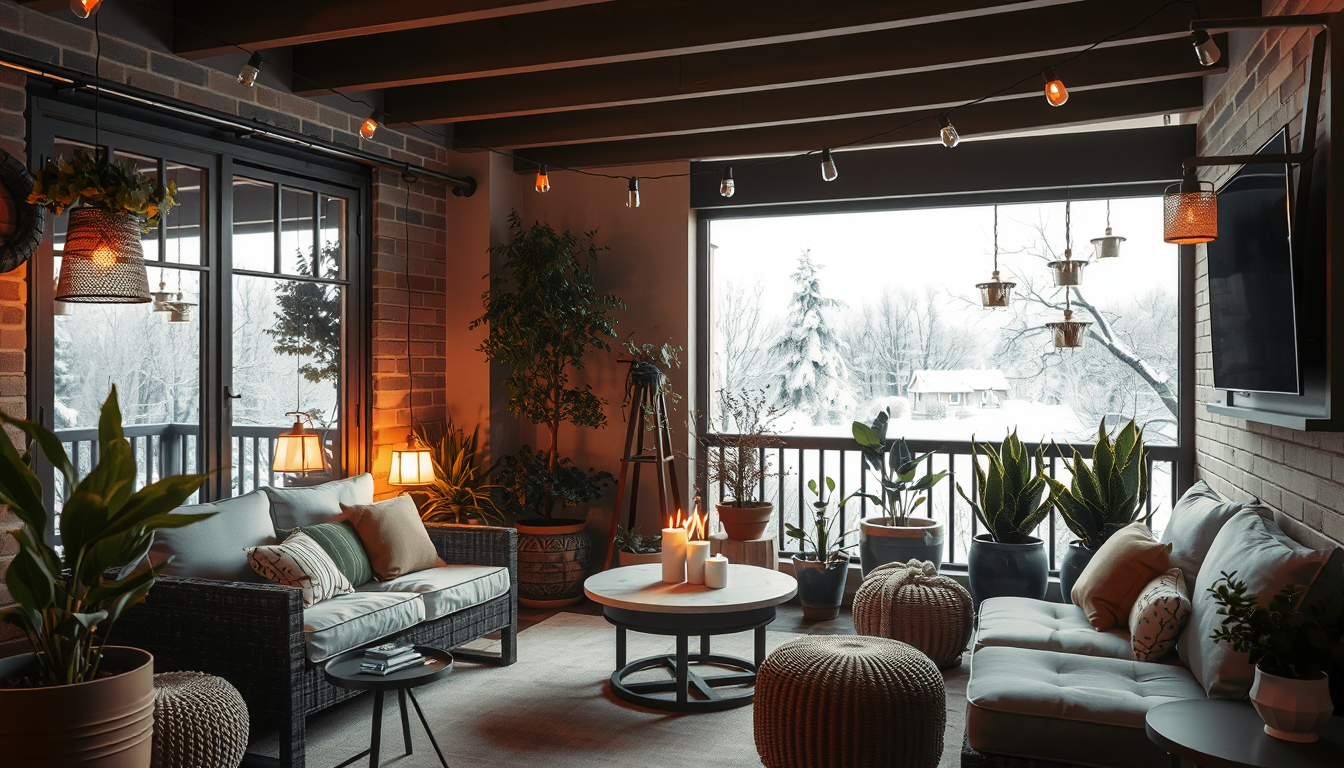
A winter garden Canada homeowners can enjoy year-round starts with one shift in thinking: stop treating outdoor plants as casualties of November and start curating them like furniture in your living room. In Toronto, where temperatures regularly dip below –20°C, the right selection of cold-hardy evergreens, ornamental grasses, and berry-producing shrubs creates an outdoor vignette that actually improves with a dusting of snow. The secret isn’t horticultural heroics — it’s choosing plants for their form, texture, and colour the same way a designer chooses a statement chair or sculptural vase. Here at Toronto Interior Designer, we approach the winter garden as an extension of your interior style, not a survival exercise.
Why Toronto’s Climate Zone Is Ideal for a Winter Garden Canada Homeowners Love
Toronto straddles USDA Hardiness Zones 6a and 5b, with minimum winter temperatures between –23°C and –26°C . That sounds brutal, but it actually opens a wide catalogue of plants rated Zone 5 or lower that reliably overwinter without wrapping, mulching, or prayer. Dozens of native and adapted species thrive here — many with architectural qualities that rival anything you’d find in a curated indoor planter.
The key insight Toronto landscape designers lean on: winter strips a garden down to structure. Leaves drop, flowers fade, and what remains is bark colour, branch silhouette, berry clusters, and evergreen mass. If you select plants specifically for those qualities, your garden doesn’t decline in winter — it reveals a second, more sculptural personality.
This design-forward approach is what separates a planned winter garden from a yard that simply endures the cold. It applies whether you have a Victorian backyard in the Annex, a sloped ravine lot in Rosedale, or a 60-square-foot balcony in a Liberty Village condo.
12 Best Cold-Hardy Plants for a Winter Garden in Canada
Shop Balcony and Patio Pieces That Fit
Toronto outdoor spaces are often tight, so look for stackable seating, slim tables, and weather-ready textiles first.
Toronto Interior Designer may earn a commission if you shop through these links at no extra cost to you.
Not every hardy plant is worth the real estate. The picks below were chosen for visual payoff from December through March — structure, colour, or texture that reads clearly from a window or a walkway.
| Plant | Zone Rating | Winter Feature | Best For | Budget (CAD) |
|---|---|---|---|---|
| Winterberry holly (Ilex verticillata) | Zone 3 | Bright red berries, Nov–Mar | Backyards, borders | $25–$45/shrub |
| Karl Foerster feather reed grass (Calamagrostis × acutiflora) | Zone 4 | Tall golden plumes, movement in wind | Borders, large planters | $15–$25/pot |
| White cedar (Thuja occidentalis) | Zone 2 | Year-round green screening | Privacy, structure | $30–$80/tree |
| Red-twig dogwood (Cornus sericea) | Zone 2 | Vivid crimson stems against snow | Accent, mass planting | $20–$35/shrub |
| Blue Star juniper (Juniperus squamata) | Zone 4 | Silver-blue foliage, low spreading form | Ground cover, containers | $25–$40/plant |
| Japanese pieris (Pieris japonica) | Zone 5 | Evergreen leaves, early spring buds | Sheltered beds | $35–$60/shrub |
| Bergenia (Bergenia cordifolia) | Zone 3 | Leathery leaves turn burgundy in cold | Edging, underplanting | $12–$20/plant |
| Mugo pine (Pinus mugo) | Zone 2 | Dense, rounded evergreen mound | Containers, rock gardens | $30–$55/plant |
| Switchgrass (Panicum virgatum) | Zone 4 | Amber-copper seed heads | Naturalistic borders | $15–$25/pot |
| Siberian iris (Iris sibirica) | Zone 3 | Upright seed pods, winter silhouette | Mixed beds | $10–$18/plant |
| Eastern white pine (Pinus strobus) | Zone 3 | Soft-needled evergreen, graceful form | Specimen tree | $40–$90/tree |
| Coral bark maple (Acer palmatum ‘Sango-kaku’) | Zone 5 | Bright coral-pink bark | Focal point, sheltered spots | $80–$150/tree |
Prices reflect 2025–2026 retail at GTA nurseries. Availability varies by season.
“A winter garden isn’t about defying the cold — it’s about designing with it. Snow is a backdrop. Ice is a finish. Choose plants that perform on that stage.” — Toronto Interior Designer editorial team
Winter Garden Design: Layering Evergreens, Grasses, and Bark Like Outdoor Décor
Think of your winter garden in three layers, the same way you’d layer textures in a living room:
- Anchor layer (evergreens): White cedar, mugo pine, or juniper provide the permanent green mass — your garden’s equivalent of a sofa or area rug. Place these first and build around them.
- Mid-height texture (ornamental grasses): Karl Foerster grass and switchgrass add height, movement, and warm tones. They catch snow beautifully and sway in wind, giving the garden life when everything else is still.
- Accent layer (bark and berries): Red-twig dogwood and winterberry holly deliver the colour punches — the throw pillows and art of your outdoor space. Position them where you’ll see them from a kitchen or living room window.
- Ground plane (evergreen perennials): Bergenia and low junipers keep the soil covered and add burgundy or silver-blue tones at ankle height.
- Focal point (specimen tree or shrub): A single coral bark maple or well-placed Eastern white pine gives the eye somewhere to land — exactly the way a fire pit anchors a backyard gathering space.
This layered approach works at any scale. In a small backyard, three layers are enough. On a balcony, you might compress it to one large container with a dwarf mugo pine, a clump of Karl Foerster grass, and a ring of bergenia around the base.
Balcony vs. Backyard Winter Garden Strategies for Toronto Homes
The biggest variable in Toronto isn’t taste — it’s square footage and planting conditions. A detached home in Leaside and a condo in CityPlace need completely different strategies.
Backyard gardens (in-ground planting): You get the full Zone 6a advantage. Plant directly in soil, use the layering system above, and focus on establishing deep root systems that strengthen year over year. Group plants in odd numbers — threes and fives — for a natural, design-intentional look rather than a rigid grid. Where space allows, create a dedicated winter bed along a south- or west-facing fence line so the low winter sun backlights stems and seed heads in the afternoon.
Balcony and rooftop gardens (container planting): Here’s the critical rule — container-grown plants on exposed balconies experience conditions roughly two zones colder than in-ground equivalents because roots are exposed to air temperatures on all sides . A Zone 6 Toronto balcony planter effectively behaves like Zone 4. Stick to Zone 4 or hardier plants, use insulated or double-walled pots at least 18 inches in diameter, and group containers together for thermal mass.
For both scenarios, place your most visually striking plants along sightlines from interior rooms. The winter garden should feel connected to your indoor spaces — a living view that extends the quiet luxury of your interior outward through the glass.
One regulatory note: The City of Toronto’s Ravine and Natural Feature Protection bylaw restricts certain planting and grading activities near designated ravine edges. If your property sits on or near a ravine lot, confirm the overlay with the city before specifying new plantings .
Season-by-Season Winter Garden Canada Care Calendar
Maintaining a cold-hardy garden is far less work than a summer perennial border, but timing matters. Follow this calendar to keep your winter plantings looking sharp from first frost to spring thaw.
- October: Cut back dead perennials but leave ornamental grasses standing — their seed heads are the winter show. Apply a 3-inch layer of mulch around in-ground shrubs to insulate root zones before the ground freezes.
- November: Water evergreens deeply before the first hard freeze; hydrated cells resist frost damage far better than dry ones. Move any borderline-hardy containers against the building wall for wind protection.
- December–February: Brush heavy, wet snow off evergreen branches to prevent breakage. Otherwise, leave the garden alone — this is when it earns its keep visually.
- March: Prune red-twig dogwood hard (to 6–8 inches) to encourage the brightest new stem colour next winter. Cut back grasses before new growth emerges.
- April: Assess winter damage, replace any losses, and begin the spring transition by adding early bulbs and hellebores around your permanent winter structure.
What to Do Next
A winter garden Canada residents can be proud of doesn’t require a massive budget or a landscape architecture degree — just intentional plant choices and a designer’s eye for form.
- Audit your sightlines: Stand at your most-used interior window and note what you see. That’s where your best winter plants should go.
- Pick three plants from the table above that match your zone, space type, and colour preferences. Start with one from each layer: an evergreen anchor, a grass, and a bark-or-berry accent.
- Check your hardiness zone on the NRCan Plant Hardiness map to confirm whether you fall in 5b or 6a — it affects balcony plant selection significantly.
- Measure your containers. For balcony gardens, use pots at least 18 inches wide and choose plants rated two zones hardier than your listed zone.
- Visit a GTA nursery in early April while stock is fresh and staff can advise on local cultivar performance.
- Browse more outdoor design ideas in our outdoor living collection for layout inspiration that connects your winter garden to the rest of your home.
Layer the Outdoor Room
Lighting, planters, and textiles can stretch a short summer season and make even a small balcony feel intentional.
Toronto Interior Designer may earn a commission if you shop through these links at no extra cost to you.
Sources
- Natural Resources Canada Plant Hardiness Zones — https://planthardiness.gc.ca/
- University of Saskatchewan Horticulture — https://gardening.usask.ca/
- City of Toronto Ravine Bylaw — https://www.toronto.ca/city-government/planning-development/official-plan-guidelines/official-plan/ravine-natural-feature-protection/
Frequently Asked Questions
What plants survive winter outdoors in Canada?
Dozens of cold-hardy species thrive in Canadian winters, including winterberry holly (Zone 3), red-twig dogwood (Zone 2), white cedar (Zone 2), and mugo pine (Zone 2). Choose plants rated for your USDA Hardiness Zone or lower for reliable overwintering without extra protection.
Can you grow a winter garden on a Toronto balcony?
Yes, but container-grown plants experience conditions roughly two zones colder than in-ground equivalents. Use insulated pots at least 18 inches wide, select plants rated Zone 4 or hardier for a Toronto balcony, and group containers together for added thermal mass.
How do you maintain a winter garden in Canada?
Winter garden maintenance is minimal. Water evergreens deeply before the first hard freeze in November, brush heavy wet snow off branches in winter, and prune red-twig dogwood hard in March for the brightest new stem colour. Leave ornamental grasses standing until early spring.