
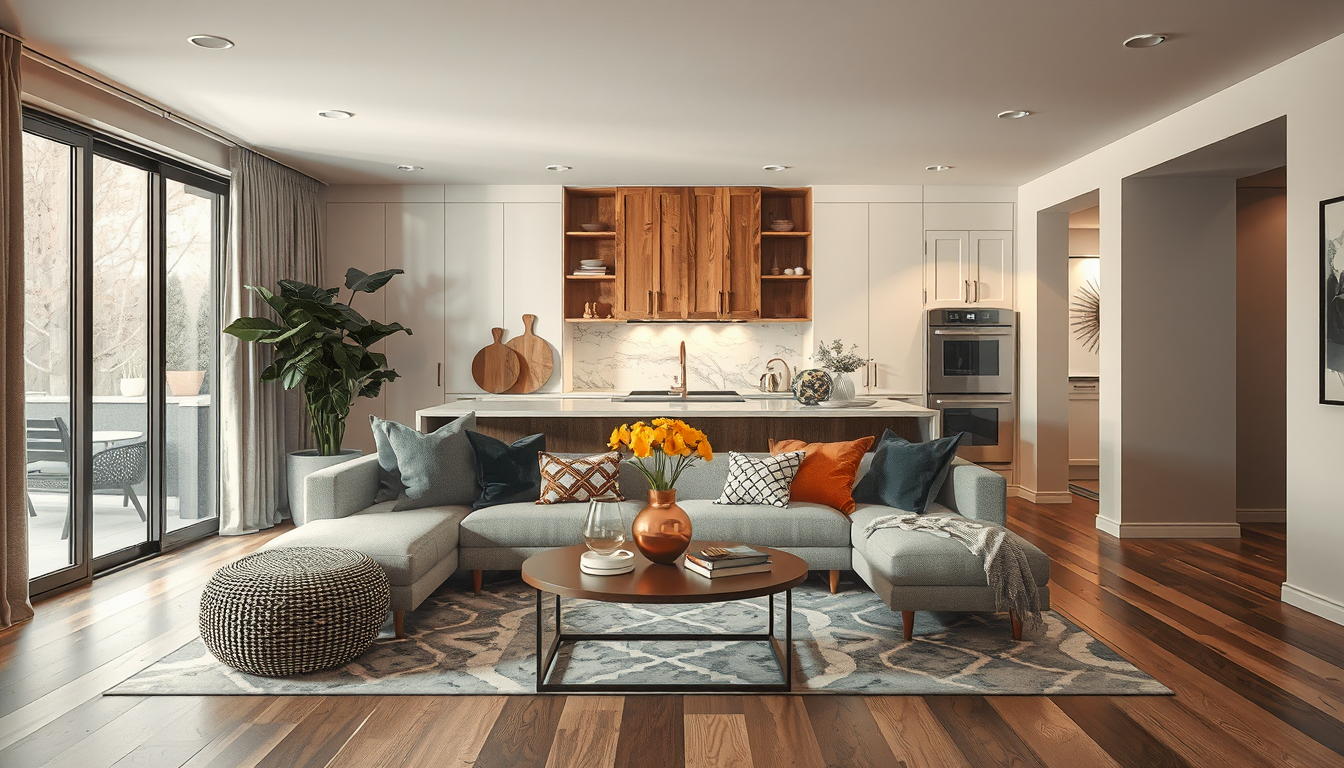
If you’re shopping for laminate flooring Canada-wide, you’ve probably noticed the advice online is overwhelmingly American — wrong retailers, wrong climate assumptions, wrong building codes. That’s a problem when your condo board demands specific sound ratings and your floors need to survive Toronto’s brutal freeze-thaw swings plus bone-dry forced-air winters. This guide cuts through the generic listicles with Canadian-specific brand picks, real GTA pricing, and installation advice built around the climate conditions that actually affect your home. Whether you’re renovating a Leslieville semi or upgrading a midtown condo, here’s what you need to know before you buy a single plank.
Laminate Flooring Canada Cost Breakdown for Toronto Homeowners
Before diving into brands and installation details, here’s what Toronto Interior Designer readers ask about most — what this actually costs. Use this table to ballpark your project budget.
| Upgrade | Typical Toronto Cost (CAD) | Best For | Notes |
|---|---|---|---|
| Entry-level laminate (8 mm, basic click-lock) | $2.50–$4.00/sq ft materials | Rental units, basement playrooms | Often lacks attached underlayment; budget extra for separate pad |
| Mid-range laminate (10–12 mm, textured finish) | $4.00–$6.00/sq ft materials | Main living areas, family homes | Best value tier; most Pergo and Torlys products fall here |
| Premium laminate (12 mm+, waterproof core) | $5.50–$8.00/sq ft materials | Kitchens, condos, high-traffic zones | Waterproof options from Mohawk RevWood and Quickstep perform well near entryways |
| Professional installation (GTA average) | $2.00–$3.50/sq ft labour | Any project over 500 sq ft | Includes floor prep, transitions, and baseboards; confirm underlayment is included |
| Upgraded acoustic underlayment (STC/IIC rated) | $0.75–$1.50/sq ft | Condo installations requiring code compliance | Non-negotiable for most Toronto condo boards |
For a typical 800 sq ft GTA condo, expect to spend $5,500–$9,000 installed with compliant underlayment. Compare that to $12–$25/sq ft for engineered hardwood, and the value proposition is clear.
Avoid This Mistake
Skipping the underlayment upgrade in a condo. Many buyers grab the cheapest laminate with a thin attached pad and assume they’re covered. Ontario Building Code requires minimum STC 50 and IIC 50 sound transmission ratings for multi-unit residential flooring, and most laminate won’t hit those numbers without a proper acoustic underlayment. Your condo board can force you to rip it all out. Budget that extra $0.75–$1.50/sq ft from the start — it’s far cheaper than doing the job twice.
Best Laminate Flooring Brands in Canada: 2026 Top Picks
Price Out the High-Impact Pieces First
Before committing to a renovation mood board, benchmark the furniture, lighting, and storage pieces that set the tone.
Toronto Interior Designer may earn a commission if you shop through these links at no extra cost to you.
Not every brand you see on American review sites is easy to source here. These four are widely stocked at Canadian retailers and backed by warranties you can actually use.
Torlys — Headquartered right in Toronto, Torlys is the only major laminate manufacturer with Canadian-based warranty service and a local customer support centre. Their EverWood Elite line offers a rigid core with strong moisture resistance, and you can see it in person at multiple GTA showrooms. If warranty support matters to you — and it should — this is the brand to shortlist first.
Pergo — Available at Home Depot Canada and select flooring dealers, Pergo’s Outlast+ line includes a built-in moisture barrier that handles Toronto’s humid summers well. The 12 mm thickness gives it a more substantial feel underfoot than most competitors at the same price point.
Mohawk RevWood — Stocked at Lowe’s Canada and independent dealers, RevWood uses a waterproof wood composite core rather than traditional HDF. That matters in Toronto, where slush-soaked boots at the front door are a five-month reality.
Quickstep — Carried by RONA and specialty flooring stores, Quickstep’s Impressive Ultra line is a solid mid-range pick with good scratch resistance. Their click-lock system is one of the easiest for DIY installation.
“The best laminate floor isn’t the one with the highest rating online — it’s the one that matches your home’s humidity profile, your building’s sound requirements, and your comfort with installation. In Toronto, those three factors narrow the field fast.”
How Toronto’s Climate Impacts Laminate Flooring Performance
Toronto’s climate is uniquely hard on flooring. Understanding these seasonal pressures helps you choose the right product and avoid costly mistakes.
Winter dryness. Forced-air heating drops indoor humidity below 30% for months. Laminate planks contract, and gaps appear at the seams. The fix: run a humidifier to keep indoor humidity between 35–50%, and always give your laminate a full 48-hour acclimation period in the room where it will be installed — with the HVAC running at normal settings. Skipping acclimation is the single most common cause of gapping in GTA installations.
Spring moisture swings. March through May, humidity can spike from 25% to 65% in weeks. Low-quality laminate with exposed HDF edges will swell. Choose products with sealed edges or waterproof cores, especially for main-floor rooms near exterior doors.
Condo radiant heating. Many newer Toronto condos use in-floor radiant heat. Not all laminate is rated for radiant systems — check the manufacturer’s specs and keep surface temperatures below 27°C. Torlys and Quickstep both publish radiant-compatible product lists.
If you’re weighing laminate against other options for a full living-space refresh, our renovation tips section covers broader material comparisons.
Condo vs. House Laminate Installation: Sound Ratings and Building Codes
Condo installations require more planning than house projects. Most Toronto condo corporations mandate minimum STC 50 / IIC 50 sound transmission ratings, and some newer buildings push that to STC 55 / IIC 55. You’ll typically need to submit your flooring specs and underlayment product data sheets to your property manager before starting work.
The underlayment does the heavy lifting here. Products like Proflex 90 or Torlys’ own Unisound meet or exceed code requirements when paired with quality laminate. Do not assume that the thin foam pad attached to some laminate planks counts — it rarely achieves the required ratings on its own.
House installations are more straightforward. You still need a vapour barrier over concrete subfloors (most Toronto basements), but you have more flexibility on underlayment thickness and product selection. For houses with forced-air heating, focus on products rated for low-humidity environments and consider adding transition strips at doorways to allow for seasonal expansion.
Planning your renovation budget carefully matters — if you’re financing the project, our guide to home renovation loans in Canada breaks down the five smartest options available right now.
Step-by-Step Laminate Flooring Installation Tips for Canadian DIYers
Laminate is one of the most DIY-friendly flooring options, but Canadian conditions add a few extra steps that make the difference between a floor that lasts and one that buckles by spring.
- Acclimate properly. Open the boxes and spread planks in the installation room for 48 hours minimum. Keep your thermostat at the temperature you normally use — this is about matching the laminate to your actual living conditions, not a warehouse.
- Test your subfloor moisture. Use a moisture meter on concrete subfloors, especially in basements. Readings above 4.5% on a pin-type meter mean you need a 6-mil poly vapour barrier before any underlayment goes down.
- Stagger your seams. Offset end joints by at least 30 cm (12 inches) row to row. This isn’t just aesthetic — staggered joints handle expansion stress better during Toronto’s humidity swings.
- Leave expansion gaps. Maintain 10 mm (3/8 inch) gaps at all walls, columns, and transitions. Your baseboards will cover them. In winter, these gaps prevent buckling when summer humidity causes planks to expand.
- Install transitions last. T-mouldings, reducers, and thresholds go in after the field is laid. Use the manufacturer’s matching profiles when available — aftermarket transitions from the hardware store rarely colour-match well.
For a cohesive look across your whole home, pairing neutral-toned laminate with a complementary palette works well. Our guide to neutral home decor ideas for Canada covers colour schemes that tie flooring and furnishings together.
What to Do Next
Shopping for laminate flooring at Canadian retailers can feel overwhelming, but narrowing your choices is straightforward once you know your constraints. Here’s your checklist:
- Measure your space and add 10% for waste and cuts — standard practice, but especially important for irregularly shaped Toronto condos and semis.
- Check your condo rules before buying. Request your building’s flooring requirements in writing, including required STC/IIC ratings and any approved product lists.
- Order samples from at least three brands. Live with them on your actual subfloor for a week to see how they look in your light and feel underfoot.
- Get two to three installation quotes from GTA contractors on HomeStars or through your flooring retailer. Compare what’s included — some quotes bundle underlayment and transitions, others don’t.
- Budget for underlayment separately if your laminate doesn’t include an attached acoustic pad rated for your building’s code requirements.
- Time your project right. Spring and early fall offer the most stable humidity for installation. Avoid mid-winter when indoor air is driest.
Toronto Interior Designer publishes renovation guides built around real Canadian conditions — not repackaged American advice. Bookmark this page, grab your samples, and start planning with confidence.
Balance Budget and Finish Quality
Mix accessible basics with a few standout pieces so the room feels layered rather than one-note.
Toronto Interior Designer may earn a commission if you shop through these links at no extra cost to you.
Sources
- HomeStars contractor estimates — https://homestars.com
Frequently Asked Questions
How much does laminate flooring cost in Canada?
In the Toronto GTA, expect to pay $2.50–$8.00 per square foot for materials depending on quality, plus $2.00–$3.50 per square foot for professional installation. A typical 800 sq ft condo runs $5,500–$9,000 fully installed with code-compliant underlayment.
What laminate flooring brands are available in Canada?
The top brands widely stocked at Canadian retailers include Torlys (headquartered in Toronto), Pergo (at Home Depot Canada), Mohawk RevWood (at Lowe’s Canada), and Quickstep (at RONA). All offer Canadian-backed warranties and products suited to our climate.
Do Toronto condos require special underlayment for laminate flooring?
Yes. Most Toronto condo corporations require minimum STC 50 and IIC 50 sound transmission ratings under Ontario Building Code. You’ll need a dedicated acoustic underlayment like Proflex 90 or Torlys Unisound — the thin foam pad attached to some laminate rarely meets these ratings alone.