
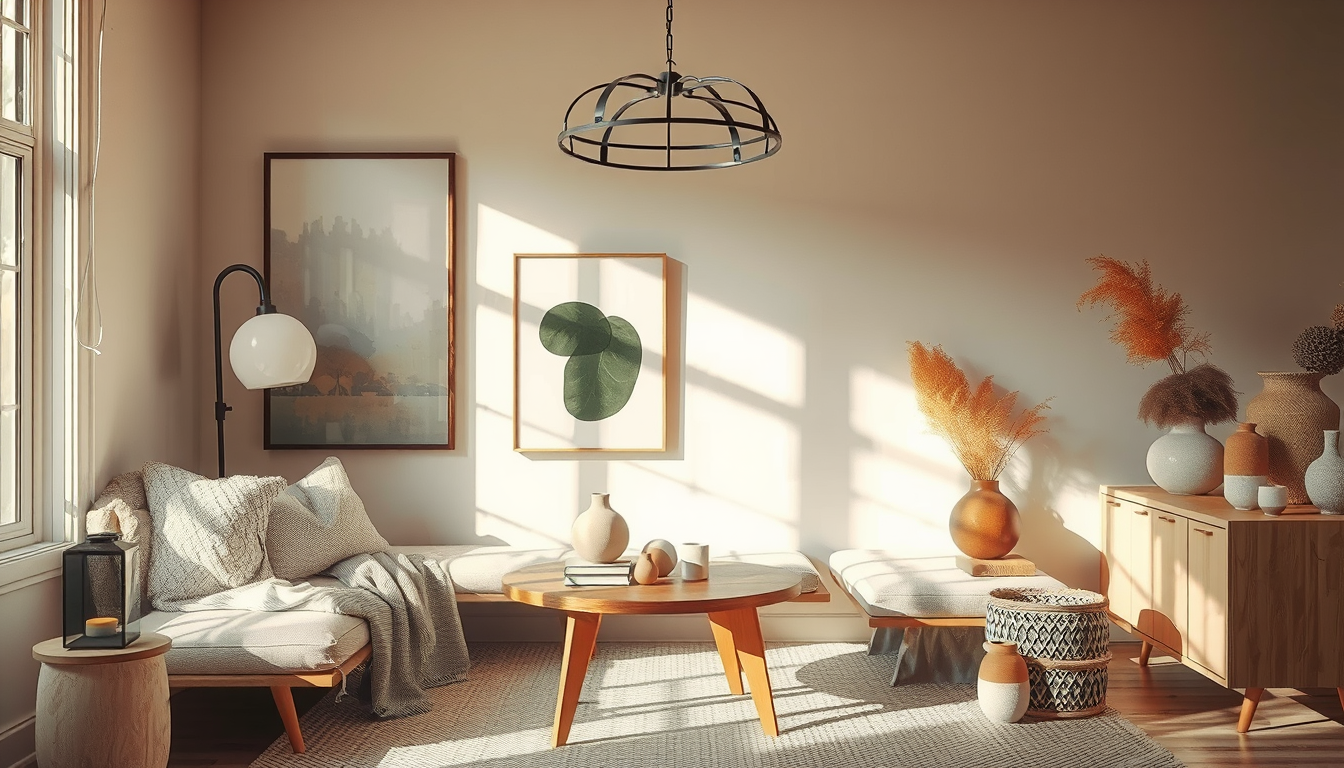
When you search for layered lighting ideas canada winter, most advice ignores the one thing that makes our situation unique: latitude. Toronto gets roughly 8 hours and 50 minutes of daylight on the winter solstice, and overcast skies can cut usable indoor light even further . Between November and March, your home has to do what the sun cannot — deliver enough of the right light, at the right time, to keep you alert by day and relaxed by evening. The fix is not one bright overhead fixture. It is a deliberate three-layer system tuned to each room and each hour, and it is simpler to build than you think.
Why Canadian Winters Demand a Different Lighting Strategy
Most lighting guides are written for climates where natural light is plentiful year-round. In Toronto, winter daylight drops by nearly seven hours compared to June, and Seasonal Affective Disorder affects an estimated 2–10 percent of Canadians, with subclinical winter blues touching up to 15 percent of the population . That makes lighting a health decision, not just a decorative one.
The core problem is twofold. First, dark mornings and early sunsets compress the window of natural alertness cues your body relies on. Second, most Canadian homes default to a single overhead fixture per room — fine in July, dismal in January. A single-source setup creates flat, shadowy light that strains your eyes during tasks and offers no warmth or atmosphere in the evening.
The solution used by designers at Toronto Interior Designer and lighting professionals across the country is the three-layer approach: ambient light for overall illumination, task light for focused work, and accent light for depth and mood. When you combine all three and pair them with the right colour temperatures, you build an indoor light environment that compensates for what winter takes away.
The Three-Layer Lighting System: Ambient, Task, and Accent Explained
Find the Finishing Pieces
Accent lighting, ceramics, mirrors, and small furniture often make the biggest difference in builder-grade rooms.
Toronto Interior Designer may earn a commission if you shop through these links at no extra cost to you.
Understanding each layer is the first step to applying it.
- Ambient lighting provides general, room-wide illumination. Think flush-mount ceiling fixtures, recessed pot lights, or large pendants. This layer replaces the overhead daylight you lose in winter.
- Task lighting delivers focused, higher-intensity light exactly where you need it — a desk lamp, under-cabinet strips in the kitchen, or a reading sconce beside the bed. It reduces eye strain and supports concentration.
- Accent lighting adds dimension: LED strip tape behind a bookshelf, a picture light over artwork, or a backlit mirror. It eliminates the flat, cave-like feeling that single-source rooms suffer from during dark months.
- Decorative lighting is an optional fourth layer — a sculptural pendant or statement chandelier that functions as a visual anchor even when turned off.
“The biggest mistake I see in Toronto condos is one potlight grid doing all the work. Adding even two supplementary layers — a table lamp and a strip of LED tape — transforms a room from clinical to livable in five minutes.”
The goal is never to blast a room with maximum lumens. It is to distribute light at multiple heights and angles so the space feels dimensional, the way a room with two large windows feels on a summer afternoon.
Layered Lighting Ideas Canada Winter: A Room-by-Room Guide
Every room has different demands. The table below gives a practical starting point — adjust based on your layout and budget.
| Room | Ambient Layer | Task Layer | Accent Layer | Budget Range (CAD) |
|---|---|---|---|---|
| Living room | Dimmable flush mount or pendant | Floor lamp beside seating | LED strip behind media unit or shelving | $150–$500 |
| Kitchen | Recessed pot lights (3000K–4000K) | Under-cabinet LED strips | Pendant over island or breakfast bar | $200–$600 |
| Bedroom | Ceiling fixture on dimmer | Bedside sconces or table lamps | LED tape behind headboard | $100–$350 |
| Home office | Overhead panel or pendant (4000K–5000K) | Adjustable desk lamp (5000K) | Bias light behind monitor | $120–$400 |
| Bathroom | Vanity bar or recessed lights | Lighted mirror (4000K) | Toe-kick LED strip or candle sconce | $80–$300 |
For small condo living rooms, floor lamps and plug-in sconces are ideal because they require zero wiring changes. In the kitchen, under-cabinet strips are the single highest-impact upgrade — they eliminate counter shadows and make meal prep safer. If you are planning a larger renovation, our kitchen layout guide covers how to integrate lighting into cabinetry from the start.
A dedicated home office benefits most from cooler-temperature task lighting during work hours, then a quick switch to warm ambient light after you close the laptop. Position your desk lamp on the opposite side of your dominant hand to minimize glare and shadow on your workspace.
Colour Temperature Tips: Mimicking Natural Light From Morning to Evening
Colour temperature — measured in Kelvins (K) — is the overlooked variable that separates good layered lighting from great. The WELL Building Standard recommends cooler temperatures of 4000K–5000K during daytime hours to support alertness and circadian rhythm, shifting to 2700K–3000K warm white in the evening to encourage melatonin production .
Here is a simple daily schedule to follow:
- Morning (6–9 AM): Turn on cooler-toned task lights (4000K–5000K) in the kitchen and bathroom. This mimics the blue-spectrum daylight your body expects at sunrise.
- Midday (9 AM–4 PM): Use full ambient lighting at 3500K–4000K in workspaces. Open blinds to capture every minute of available daylight.
- Evening (4–9 PM): Switch to warm ambient and accent lighting only (2700K–3000K). Dim overhead fixtures to 40–60 percent.
- Night (9 PM onward): Rely on accent lighting and low-wattage table lamps. Avoid screens or cool-toned bulbs within an hour of sleep.
Smart bulbs with tunable white technology make this effortless — set schedules once and forget them. The North American residential market for tunable smart lighting has grown more than 35 percent in recent years as wellness-driven homeowners adopt circadian-friendly setups . LED bulbs use up to 75 percent less energy than incandescent equivalents, so tripling your fixture count barely moves the electricity bill .
Budget-Friendly Layered Lighting Upgrades for This Weekend
You do not need an electrician or a large budget to start. Toronto Interior Designer recommends this five-step weekend plan:
- Audit every room. Count your current light sources per room. If any room has only one, it is your priority.
- Add a table or floor lamp to your living room and bedroom. Choose models with a three-way switch or built-in dimmer. Budget: $40–$120 each.
- Install peel-and-stick LED strip tape behind your TV unit, under kitchen cabinets, or along a bookshelf. Budget: $20–$50 per roll.
- Swap bulbs to the right colour temperature. Replace cool-white bathroom bulbs with 3000K warm white; replace warm bedroom desk bulbs with 4000K for daytime use. Budget: $5–$15 per bulb.
- Add one smart bulb to your most-used room and set a morning-to-evening colour schedule. Budget: $15–$40.
Total cost for a meaningful upgrade across two or three rooms: roughly $150–$350 CAD — less than a single designer pendant, with arguably more impact on how your home feels from November through March.
What to Do Next
These searches spike every October for good reason — once the clocks fall back, bad lighting becomes impossible to ignore. Do not wait for a full renovation. Start this weekend:
- Walk your home tonight and note which rooms feel flat or dim with only the overhead on.
- Pick your highest-priority room and add one task light and one accent light source.
- Replace at least three bulbs with the correct colour temperature for their room and time of use.
- Set a phone reminder for November 1 to check that every room has at least two active light layers before the darkest months arrive.
- Explore more ideas in our warm bedroom colours guide to pair your new lighting with winter-friendly palettes.
Good lighting will not return the seven hours of daylight Toronto loses each winter, but a well-layered system comes remarkably close to replacing what that light actually did for your mood, your energy, and your comfort at home. At Toronto Interior Designer, we consider it the single most cost-effective upgrade for any Canadian home — and the one most people put off a year too long.
Source Warm, Livable Staples
Natural textures and simple silhouettes are easier to layer when you start with timeless foundational pieces.
Toronto Interior Designer may earn a commission if you shop through these links at no extra cost to you.
Sources
- NRC Canada sunrise/sunset data — https://nrc.canada.ca/en/certifications-evaluations-standards/canadas-official-time/sunrise-sunset
- Canadian Mental Health Association — https://cmha.ca/brochure/seasonal-affective-disorder-2/
- WELL Building Standard v2 — https://v2.wellcertified.com/en/wellv2/light
- LEDs Magazine market analysis — https://www.ledsmagazine.com/
- Natural Resources Canada — https://natural-resources.canada.ca/energy-efficiency/products/lighting/
Frequently Asked Questions
What are the best layered lighting ideas for Canadian winters?
The best approach uses three layers in every room: ambient light for overall brightness, task light for focused activities, and accent light for depth. Pair these with tunable colour temperatures — cooler 4000K–5000K in the morning, warm 2700K–3000K in the evening — to mimic natural daylight cycles lost during Canadian winters.
How much does it cost to add layered lighting in a Canadian home?
A meaningful upgrade across two or three rooms costs roughly $150–$350 CAD. Peel-and-stick LED strips run $20–$50, table or floor lamps $40–$120 each, and smart bulbs $15–$40. No electrician is needed for most plug-in and adhesive solutions.
Does layered lighting help with Seasonal Affective Disorder in winter?
Yes. Cooler-temperature task lighting (4000K–5000K) during morning hours supports circadian rhythm and alertness, which can help counter the effects of reduced winter daylight. The WELL Building Standard recommends shifting to warm white (2700K–3000K) in the evening to encourage healthy melatonin production.