
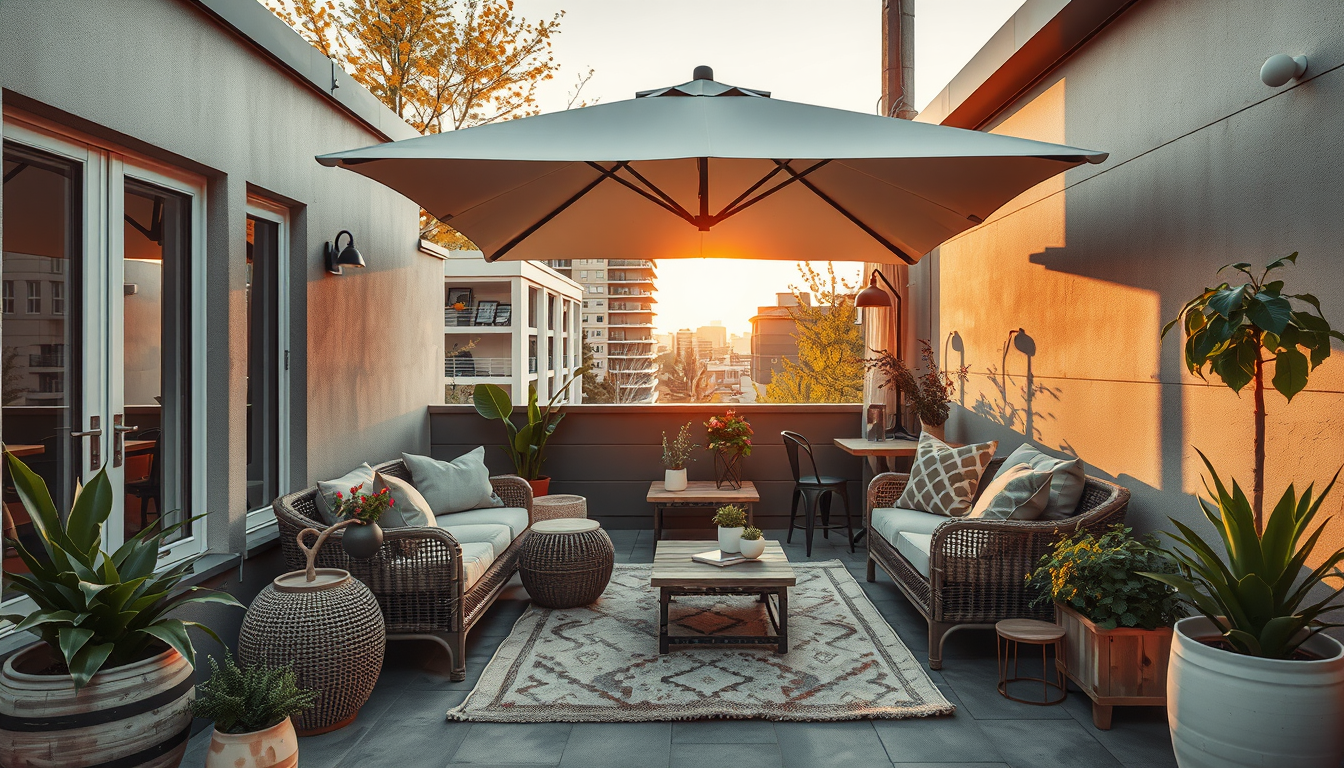
Choosing a patio umbrella Canada shoppers can actually rely on means thinking beyond colour swatches. Toronto patios, condo balconies, and suburban decks face a unique cocktail of weather: freeze-thaw cycles that crack cheap pole mechanisms, Lake Ontario wind gusts that turn flimsy canopies into projectiles, and a short but punishing UV season that fades bargain fabric in a single summer. The right umbrella does double duty — it protects your skin and your furniture investment while anchoring the look of your entire outdoor room. Here at Toronto Interior Designer, we treat patio shade the same way we treat a living room light fixture: it is a design decision that earns its place or gets replaced.
What Makes a Patio Umbrella Built for Canadian Weather
Most big-box product descriptions are written for a mild American climate. Canadian buyers need to read past the marketing and focus on three performance specs that actually matter here.
UV protection. Environment Canada data shows Toronto averages roughly 2,066 sunshine hours per year, with the UV index regularly hitting 8–10 through July and August . Health Canada recommends shade structures as a primary UV defence, but notes that a standard patio umbrella blocks only about 60–65 percent of UV radiation unless the fabric carries a UPF 50+ rating . That rating is non-negotiable if you eat, work, or lounge outside regularly.
Wind resistance. Spring and fall storms push gusts past 70 km/h along the Toronto waterfront and on exposed rooftops . A freestanding umbrella base needs a minimum of 50 pounds to stay put in those conditions — heavier if you choose a cantilever model with a wider canopy. Lightweight resin bases sold at discount stores rarely clear 30 pounds, which is why so many end up shattered across condo pool decks after the first October squall.
Fabric longevity. Solution-dyed acrylic fabrics like Sunbrella retain colour and UV-blocking ability for five to ten years, compared to one or two seasons for standard polyester . Given Canadian price premiums on outdoor furniture, spending more upfront on fabric that lasts is the smarter math.
7 Best Patio Umbrellas to Buy in Canada Right Now
Shop Balcony and Patio Pieces That Fit
Toronto outdoor spaces are often tight, so look for stackable seating, slim tables, and weather-ready textiles first.
Toronto Interior Designer may earn a commission if you shop through these links at no extra cost to you.
After reviewing specifications, retailer availability, and real-world durability reports, these are the models we recommend across price points. All are available through Canadian retailers with domestic shipping.
| Model | Type | Canopy Size | UPF Rating | Wind Rating | Approx. Price (CAD) | Best For |
|---|---|---|---|---|---|---|
| Treasure Garden AKZ Plus | Cantilever | 10 ft × 13 ft | 50+ | 65 km/h | $1,400–$1,800 | Large decks, entertaining |
| Corliving UV and Wind Resistant | Market | 9 ft | 50+ | 55 km/h | $250–$350 | Budget-friendly backyards |
| Galtech 11-ft Teak | Market (tilt) | 11 ft | 50+ | 50 km/h | $900–$1,200 | Design-forward patios |
| Purple Leaf 10-ft Cantilever | Cantilever | 10 ft | 50+ | 60 km/h | $500–$700 | Condo rooftops, small lots |
| Frankford Eclipse | Market | 7.5 ft | 50+ | 55 km/h | $600–$800 | Bistro balconies |
| Bambrella Levante | Cantilever | 11.5 ft | 50+ | 70 km/h+ | $2,500–$3,200 | Commercial-grade luxury |
| IKEA LINDÖJA/BETSÖ combo | Market | 9.8 ft | Basic | 40 km/h | $100–$170 | Starter setups, renters |
A note on sourcing: Canadian Tire, Wayfair.ca, Costco.ca, and JYSK carry most mid-range models. For premium lines like Treasure Garden and Bambrella, check GTA patio showrooms such as Cabana Coast, Hauser, and InsideOut Patio. Retailers typically mark down patio umbrellas 30–50 percent in late August, so planning a season ahead saves serious money.
Cantilever vs. Market vs. Tilt: Best Patio Umbrella Style for Your Space
The umbrella silhouette you choose shapes the entire layout of your outdoor room — not just where shade falls, but where furniture can go and how people move through the space.
- Cantilever (offset pole). The pole sits to the side, leaving the full canopy area open underneath. This is the fastest-growing umbrella category in North America, driven by condo and small-space living where a centre pole eats up usable table space. Ideal for sectional seating, dining sets, or outdoor rooms styled with the same intention as indoor living spaces. Downside: heavier bases and higher price points.
- Market (centre pole). The classic café look. Clean lines, easy storage, and the widest range of price points. Works best when centred through a table grommet. Less practical for lounge layouts because the pole lands right where you want to stretch out.
- Tilt (push-button or crank). A market umbrella with an adjustable canopy angle. Excellent for east- or west-facing balconies where the sun tracks low. The tilt mechanism adds a failure point, so spend up for an aluminium crank rather than plastic.
A patio umbrella is not decoration — it is architecture. It defines the ceiling of your outdoor room, and every furniture decision flows from where that shade lands.
For condo owners, check your building’s rules before buying. Many Toronto condo boards restrict balcony installations to freestanding bases only — no drilling, no permanent mounts. A weighted cantilever base is usually the compliant solution.
How Toronto Designers Style Patio Umbrellas Into Outdoor Rooms
At Toronto Interior Designer, we approach outdoor spaces with the same layering strategy we use indoors. The umbrella is your ceiling plane — once it is set, everything else falls into place.
Coordinate, do not match. Pick an umbrella canopy colour that sits in the same tonal family as your outdoor cushions but does not duplicate them exactly. A warm charcoal canopy over terracotta cushions reads intentional. An identical navy-on-navy feels flat.
Anchor with a rug. An outdoor rug beneath your seating group ties the umbrella’s coverage area into a defined room. It also signals where the “living room” ends and the open deck begins — critical on large patios that otherwise feel sprawling.
Layer lighting underneath. Battery-operated LED string lights draped from the umbrella ribs turn a daytime shade structure into an evening focal point. This one move extends usable hours by three or four per night through the summer.
Think vertically with a pergola pairing. If your yard allows it, combining an umbrella with a fixed pergola structure creates layered shade and architectural depth. The pergola frames the space; the umbrella provides adjustable, movable protection within it.
Wind-Proofing and Maintenance Tips for Canadian Patio Umbrellas
Even the best umbrella needs a strategy to survive a Canadian year. These five steps protect your investment and keep the canopy looking sharp season after season.
- Close and strap the canopy every evening. Overnight wind is the number-one killer of patio umbrellas. Use a Velcro tie or bungee, not just the crank-down position.
- Add weight beyond the base. Sandbag rings or concrete weight plates on top of a standard base bring you closer to that 50-pound minimum for exposed locations.
- Store before first frost. Freeze-thaw cycles crack plastic fittings and corrode cheap steel. Bring the umbrella indoors or into a heated garage by mid-October.
- Clean fabric twice per season. A mild soap-and-water scrub prevents mildew — a real issue in Toronto’s humid summers. Sunbrella fabric is machine-washable; most polyester is not.
- Inspect the tilt and crank mechanism each spring. Lubricate moving parts with a silicone spray. Replace any cracked plastic gears before they fail mid-gust.
For year-round outdoor planning, our guide to cold-hardy plants for Canadian winter gardens covers what to keep growing once the umbrella goes into storage.
What to Do Next
Ready to shop? Use this checklist before you buy:
- Confirm UPF 50+ rating on the canopy fabric — anything less is inadequate for Toronto’s summer UV.
- Weigh your base — aim for 50 lbs minimum, more for cantilever models or exposed rooftops.
- Measure your space — a 9-ft canopy covers a four-person dining table; go 10 ft+ for sectional lounges.
- Check condo rules if you are on a balcony or shared rooftop — freestanding bases only in most GTA buildings.
- Set a late-August price alert on Wayfair.ca or Costco.ca to catch 30–50 percent markdowns.
- Choose solution-dyed acrylic fabric if you plan to keep the umbrella more than two seasons.
The best patio umbrella Canada homeowners can invest in is one that handles real weather, fits the proportions of your space, and looks like it belongs in a room you designed on purpose — not an afterthought you dragged out of the garage. Start with performance, layer in style, and your outdoor space will feel like every other room in the house: intentional.
Layer the Outdoor Room
Lighting, planters, and textiles can stretch a short summer season and make even a small balcony feel intentional.
Toronto Interior Designer may earn a commission if you shop through these links at no extra cost to you.
Sources
- Environment Canada — https://climate.weather.gc.ca/
- Health Canada Sun Safety — https://www.canada.ca/en/health-canada/services/sun-safety.html
- Sunbrella — https://www.sunbrella.com/
Frequently Asked Questions
What is the best patio umbrella for Canadian wind?
For high-wind areas like Toronto’s waterfront, choose a cantilever model rated for 60–70 km/h gusts with a base weighing at least 50 pounds. The Bambrella Levante and Treasure Garden AKZ Plus are top choices for wind resistance in Canada.
Do patio umbrellas block UV rays in Canada?
Only umbrellas with a UPF 50+ rated fabric block enough UV radiation for safe outdoor use during Toronto’s summer, when the UV index regularly hits 8–10. Standard canopies without a UPF rating block just 60–65 percent of UV rays.
When is the best time to buy a patio umbrella in Canada?
Late August through September offers the best deals, with Canadian retailers like Wayfair.ca and Costco.ca marking down patio umbrellas 30–50 percent as the season ends. Planning a season ahead saves serious money.