
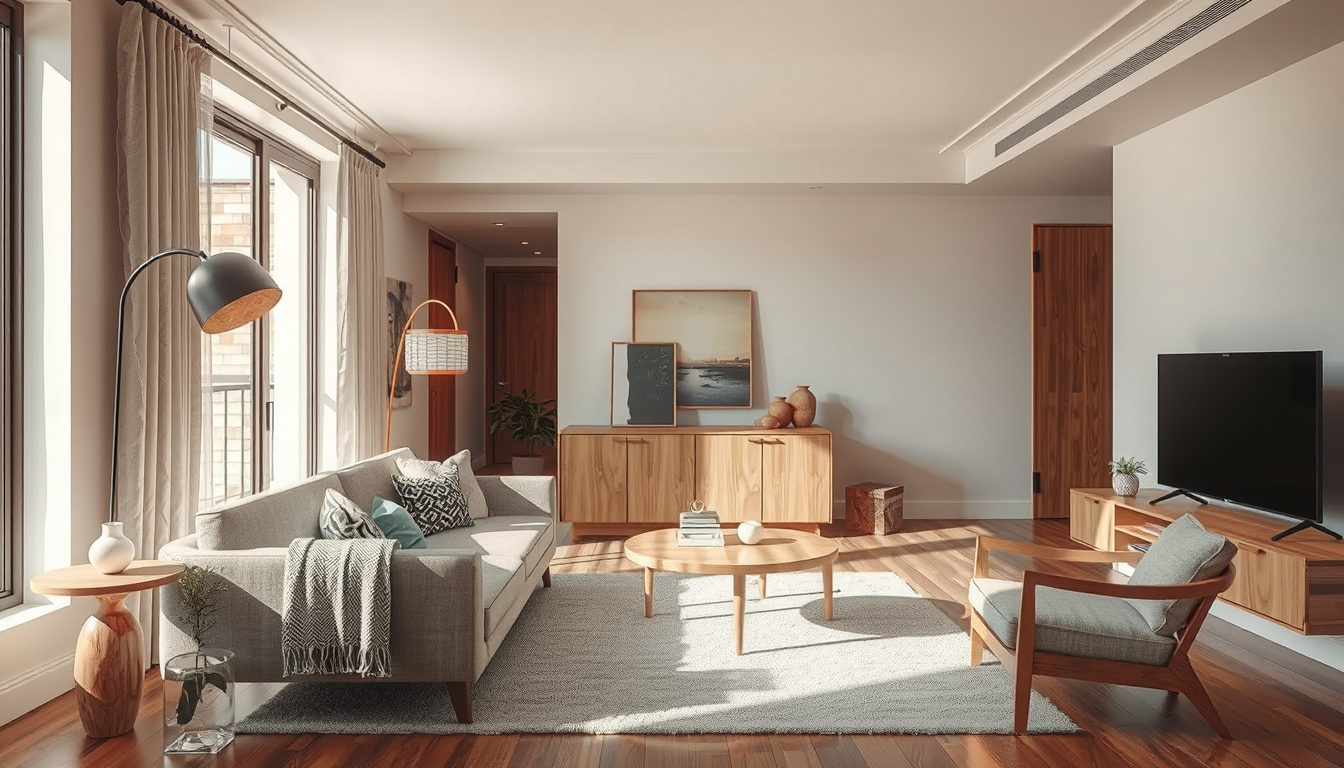
Finding the right small apartment living room furniture Canada shoppers can actually buy — without cross-border duties or months-long shipping — is the single biggest design challenge in Toronto’s condo market right now. With the average new Toronto condo hovering around 620 square feet , your living room likely doubles as your dining area, home office, and guest room. That means every piece of furniture needs to earn its footprint. The good news: Canadian retailers have caught up to the demand for compact, well-designed pieces that look intentional rather than compromised. Here is exactly what to buy, where to find it, and how to make a 500-to-700-square-foot floor plan feel twice its size.
Why Small Apartment Living Room Furniture in Canada Needs a Condo-First Strategy
Most furniture showrooms — and most design magazines — stage rooms that are 300 to 400 square feet of living space alone. That is nearly the entire footprint of many Toronto one-bedrooms. When Domino featured a Warsaw apartment that packed six zones into 678 square feet , the layout tricks were smart, but the sourcing was entirely European. The same problem appears in Architectural Digest’s coverage of compact Milan apartments : beautiful ideas, zero Canadian retail links.
Toronto’s layout challenges are also specific. Most new condos have narrow, rectangular floor plans with floor-to-ceiling windows on one short wall. That rules out deep sectionals, oversized media consoles, and anything wider than 85 inches if you want a walkway. You also need furniture that handles Canadian humidity swings — dry winters and humid summers — without warping or off-gassing in sealed condo air.
At Toronto Interior Designer, we consistently recommend starting with your floor plan dimensions, not a Pinterest board. Measure your living room wall-to-wall, mark the entry path and any HVAC vents, and then shop with maximum sofa depth and width already decided.
5 Best Space-Saving Sofas for Small Canadian Apartments
Source Scaled-Right Living Room Pieces
Start with apartment-scale sofas, nesting tables, and layered lighting that fit Toronto floor plans without overwhelming them.
Toronto Interior Designer may earn a commission if you shop through these links at no extra cost to you.
Once your measurements are set, the sofa is the first piece to lock down — it is the largest item in any small living room and dictates what else can fit. Here are the top compact options from Canadian retailers, with no cross-border duties on upholstered goods — a real cost advantage given that Canadian import duties on US-made upholstered furniture sit at 9.5% under current tariff schedules .
| Sofa | Retailer | Width | Depth | Price Range (CAD) | Best For |
|---|---|---|---|---|---|
| EQ3 Solo Condo Sofa | EQ3 (Winnipeg-based) | 72″ | 33″ | $1,400–$1,800 | Narrow floor plans under 12 ft wide |
| Structube KINSEY | Structube (Montreal-based) | 76″ | 34″ | $700–$900 | Budget-conscious first condos |
| Article Sven Apartment Sofa | Article (Vancouver-based) | 72″ | 35″ | $1,200–$1,500 | Mid-century style without bulk |
| IKEA ÄPPLARYD Compact | IKEA Canada | 75″ | 33″ | $650–$800 | Modular configs, sub-600 sq ft rooms |
| EQ3 Replay Sectional | EQ3 | 88″ (L-shape) | 33″ | $2,200–$2,800 | Corner placement in open-concept layouts |
All five ship within Canada. EQ3, Structube, and Article manufacture or warehouse domestically, so delivery typically runs two to four weeks rather than the three-plus months common with US custom orders.
“In a 620-square-foot condo, every inch of sofa depth matters more than the upholstery colour. A 33-inch-deep sofa gives you back nearly a foot of walkway compared to a standard 38-inch model — and that foot changes everything.”
If you are also rethinking your work-from-home setup in a tight layout, our guide to built-in home office ideas covers dual-purpose desk solutions that pair well with compact living rooms.
Essential Multi-Function Furniture for Compact Canadian Living Rooms
With your sofa sorted, the next priority is making every remaining piece pull double duty. The multi-function furniture market is projected to grow at roughly 6.5% annually through 2030, driven largely by urban densification . In practical terms, that means more lift-top coffee tables, storage ottomans, and nesting sets hitting Canadian shelves every season.
Here is a five-point checklist for choosing multi-function living room pieces:
- Lift-top coffee tables should have a smooth hydraulic mechanism, not a spring hinge — test it in-store if possible. Structube and IKEA Canada both carry options under $500 CAD.
- Storage ottomans need a flat, stable top surface if they will double as seating. Look for weight ratings above 250 lbs. Article’s Cigar ottoman and EQ3’s Tux storage ottoman both qualify.
- Nesting tables work best in sets of two, not three. A pair lets you pull out an extra surface for guests and tuck it back without visual clutter.
- Console tables behind sofas can replace a dining table entirely in condos under 550 square feet. Choose one at sofa-back height (28–30 inches) with a depth of 12 to 14 inches.
- Wall-mounted shelving above the sofa replaces the need for side tables. IKEA’s EKET system and Structube’s floating shelf lines keep floor space completely open.
These pieces also help with the perennial Toronto condo problem of seasonal storage. For more strategies on maximizing hidden storage throughout a small home, see our bedroom storage solutions guide.
How to Zone a Small Apartment Living Room in 500–700 Square Feet
Choosing the right furniture is only half the equation — where you place it determines whether a small apartment feels organized or chaotic. Zoning uses furniture placement, rugs, and lighting to define distinct activity areas within a single room, no walls required. House & Home’s 2026 decorating trends report confirms that zoning with low-profile furniture and area rugs is now a mainstream strategy .
Here is how Toronto Interior Designer recommends zoning a typical rectangular condo living room (roughly 12 by 18 feet):
- Zone 1 — Seating. Place your compact sofa against the long wall, facing the window wall. Use a 5-by-7-foot area rug to anchor it.
- Zone 2 — Dining or workspace. Position a narrow console table or a 36-inch round bistro table behind the sofa or against the opposite wall. A change in rug or bare floor signals the zone shift.
- Zone 3 — Entry. A slim bench or wall-mounted hook rail within three feet of the front door creates a landing zone that stops clutter from spreading into the living space.
- Zone 4 — Reading or lounge. A single accent chair angled toward the window, with a floor lamp and small side table, creates a distinct area without taking more than 15 square feet.
The key rule: leave at least 30 inches of clear walkway between every zone. In a narrow condo, that often means choosing armless chairs and round tables over anything with sharp corners.
Top Canadian Retailers for Small Apartment Living Room Furniture
Buying domestically is not just about patriotism — it is a practical budget decision. With current trade uncertainties and tariff fluctuations, sticking with Canadian brands saves you 10 to 20 percent compared to equivalent US imports after duties and exchange. Browse our living spaces category for more condo-focused design inspiration.
- EQ3 — Best for modern silhouettes in compact dimensions. Showrooms in Toronto, Vancouver, Calgary, and Winnipeg.
- Structube — Best value. Trend-forward pieces at aggressive price points, with over 60 stores across Canada.
- Article — Online-only, ships from Vancouver. Strong mid-century and Scandinavian lines, with a generous return window.
- IKEA Canada — Unmatched for modular systems (KALLAX, BESTÅ, ÄPPLARYD) that adapt as your layout needs change.
- CB2 Canada — Higher price point, but their Avec and Gwyneth compact sofa lines are specifically designed for small footprints.
What to Do Next
Finding the right small apartment living room furniture Canada retailers stock does not require compromise on style — just smarter measurements and better sourcing. Here is your action plan:
- Measure your living room wall-to-wall and mark walkways, vents, and door swings on a simple sketch before shopping.
- Set a sofa budget between $700 and $1,800 CAD — that range covers every Canadian-made compact option worth considering.
- Visit one showroom (EQ3 or Structube) to test seat depth in person, then compare pricing online with Article and IKEA.
- Choose at least one multi-function piece — a lift-top table or storage ottoman — to reduce total item count.
- Zone your floor plan on paper first using the four-zone method above, then arrange furniture to match.
- Shop Canadian-made or Canadian-warehoused brands to avoid duty surprises and long shipping windows.
Toronto Interior Designer publishes new small-space guides regularly. Start with the picks above, measure twice, and furnish a living room that works as hard as you do.
Finish the Room With Texture
Layer in rugs, side tables, and decor accents that warm up condo living rooms without adding clutter.
Toronto Interior Designer may earn a commission if you shop through these links at no extra cost to you.
Sources
- Urbanation — https://www.urbanation.ca
- Domino — https://www.domino.com
- Architectural Digest — https://www.architecturaldigest.com
- CBSA Customs Tariff — https://www.cbsa-asfc.gc.ca/trade-commerce/tariff-tarif/
- Grand View Research — https://www.grandviewresearch.com
- House & Home — https://houseandhome.com
Frequently Asked Questions
Where can I buy small apartment living room furniture in Canada without paying import duties?
EQ3, Structube, Article, and IKEA Canada all manufacture or warehouse domestically, so you avoid the 9.5% import duty on US-made upholstered furniture. Delivery typically takes two to four weeks compared to three-plus months for cross-border custom orders.
What sofa depth is best for a small Toronto condo living room?
A sofa depth of 33 inches is ideal for compact condos. Compared to a standard 38-inch-deep model, a 33-inch sofa gives you nearly a foot of extra walkway — a critical difference in narrow rectangular floor plans under 700 square feet.
How do you zone an open-concept condo living room without walls?
Use furniture placement, area rugs, and lighting to define four zones: seating, dining or workspace, entry, and a reading nook. Keep at least 30 inches of clear walkway between zones and choose armless chairs and round tables to maximize flow in narrow layouts.