
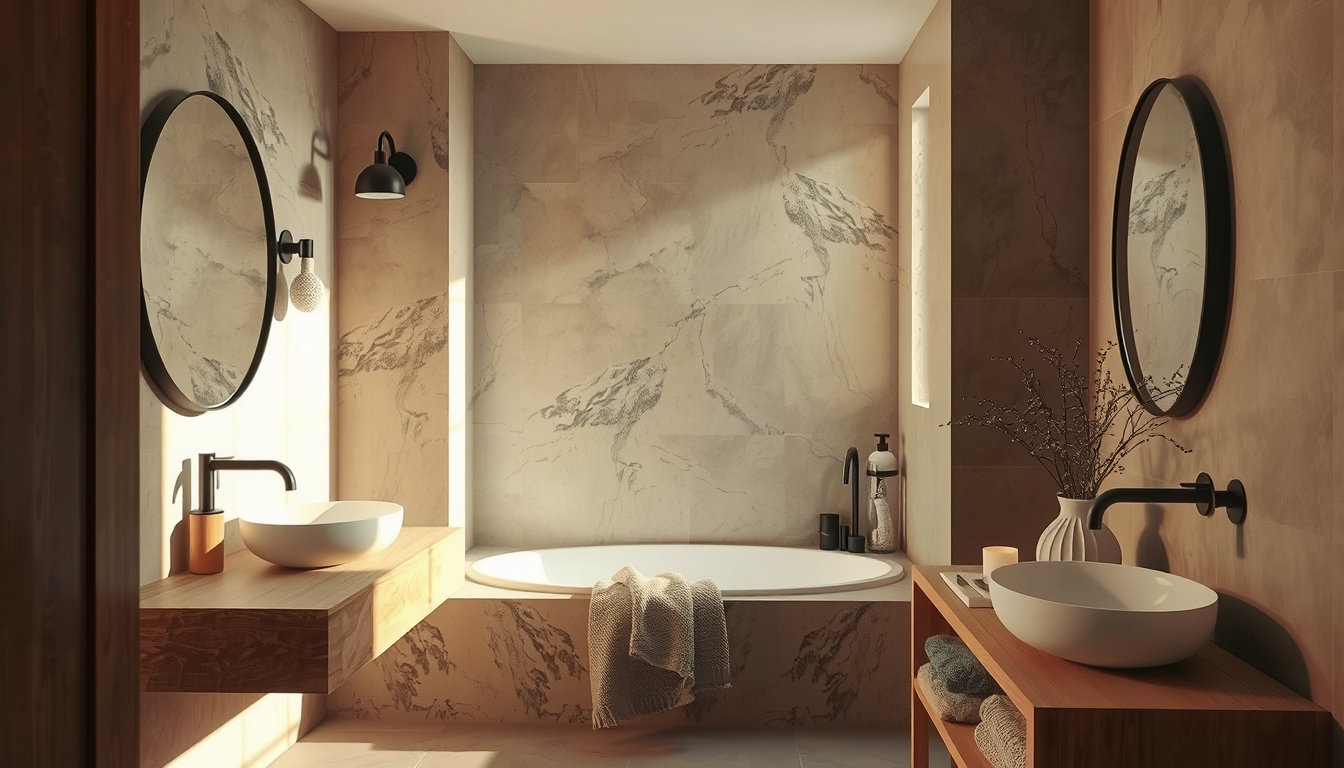
For a ceramic vs porcelain bathroom, choose porcelain for floors, shower pans and wet rooms because certified porcelain absorbs no more than 0.5% water. Choose glazed ceramic for most walls, where easier cutting and lower material costs can free budget for waterproofing and substrate preparation (ANSI A137.1; Tile Council of North America).
Last updated: April 1, 2026 Meta description: Compare ceramic vs porcelain bathroom tile for Toronto homes, including 2026 costs, waterproofing, heated floors, condo rules and permits.
What Is the Difference Between Ceramic and Porcelain Bathroom Tile?
Porcelain and ceramic are both fired-clay tiles, but porcelain must have water absorption of 0.5% or less to meet the ANSI definition. Non-porcelain ceramic absorbs more water, although a suitable glazed product can still perform well on bathroom walls and approved floors (ANSI A137.1; Tile Council of North America).
The practical distinction is not “good versus bad.” A Junction semi with an older wood subfloor may need levelling and reinforcement, while a CityPlace condo renovation can require board approval, elevator protection and restricted work hours (Tile Council of North America; Condominium Authority of Ontario).
How do their specifications compare?
Porcelain’s dense body makes it a dependable default for frequently used floors, showers and wet rooms. Through-body or colour-body porcelain may also make small chips less visible, but that characteristic varies by collection and should be confirmed on the product sheet (Tile Council of North America).
Ceramic is particularly useful for shower walls, tub surrounds and vanity backsplashes. Its more workable body can simplify cuts around valves, niches and outlets, while an approved glazed surface provides a cleanable bathroom finish (Tile Council of North America).
In our editorial review, we compared technical sheets rather than relying on showroom labels. Thickness, approved applications, shade variation and slip-test results differed within both categories, confirming that the exact product specification matters more than the category name.
Porcelain is usually the safer floor choice, but application and slip ratings matter more than the word “porcelain.”
How Much Does Ceramic vs Porcelain Bathroom Tile Cost in Toronto?
Upgrade the Details That Change Everything
Lighting, mirrors, and matte hardware can make a modest bathroom renovation feel far more custom.
Toronto Interior Designer may earn a commission if you shop through these links at no extra cost to you.
Budget approximately $20 to $45 per square foot for straightforward professional tile-setting labour in Toronto, excluding tile, demolition and major substrate repairs. Large formats, intricate patterns, limited access and corrective work can raise the final price (HomeStars Canada 2026).
These figures are planning allowances, not fixed contractor prices:
| Upgrade | Toronto Cost Range (CAD) | Typical Timeline | Approval or Permit |
|---|---|---|---|
| Tile demolition and disposal | $1,000–$3,000 | 1–2 days | Usually none |
| Subfloor levelling or repair | $1,000–$3,500 | 1–3 days | Usually none |
| Shower waterproofing membrane | $1,200–$3,000 | 1–2 days | Usually none |
| Tile-setting labour | $20–$45/sq. ft. | 3–7 days | Usually none |
| Electric floor heating | $15–$30/sq. ft., plus tile work | 1–2 days | ESA notification generally required |
| Condo protection and logistics | $500–$2,000 | Project-dependent | Board approval may apply |
Cost sources: HomeStars Canada 2026. Approval guidance: City of Toronto, Electrical Safety Authority and Condominium Authority of Ontario.
What should the quotation include?
Request an itemized scope covering demolition, disposal, floor preparation, waterproofing, setting materials, grout, edge profiles and sealant. Written scopes make it easier to identify bids that omit preparation or waste handling (HomeStars Canada 2026).
Ask whether floor levelling, movement accommodation and an uncoupling membrane are included. These details are especially important in older Toronto houses where the existing assembly may not meet the tile manufacturer’s flatness or stiffness requirements (Tile Council of North America).
For broader project budgeting, consult our Toronto renovation planning guides.
What can increase a condo quotation?
Toronto condo costs can rise when trades must reserve elevators, protect corridors, schedule plumbing shut-offs or work within shortened renovation hours. Condo corporations may also request contractor insurance, acoustic documentation or a refundable damage deposit (Condominium Authority of Ontario).
Section 98 of Ontario’s Condominium Act, 1998 may require an alteration agreement when renovations affect common elements. Owners should obtain written approval before ordering non-returnable tile or confirming installation dates (Condominium Authority of Ontario).
Material selection can affect the budget too, particularly when colour, finish or batch variation is important. Similar purchasing considerations are covered in our Toronto natural-stone countertop guide.
Which Ceramic or Porcelain Tile Performs Best on Bathroom Floors?
Porcelain is usually the stronger bathroom-floor choice because certified products absorb no more than 0.5% water and many collections are approved for heavier use. It suits family bathrooms, pet-washing areas and curbless showers when the selected finish is explicitly rated for that application (ANSI A137.1; Tile Council of North America).
Slip performance must be evaluated separately. Wet dynamic coefficient of friction is only one consideration; drainage, grout joints, texture, footwear and maintenance also influence traction (Tile Council of North America).
Small mosaics create additional grout joints underfoot, but homeowners should still confirm the manufacturer’s wet-floor rating (Tile Council of North America).
Which finishes handle Toronto water best?
Toronto drinking water averages approximately 124 mg/L of hardness expressed as calcium carbonate. That level can leave visible mineral residue on dark, glossy or deeply textured surfaces (City of Toronto).
A mid-tone matte tile will generally disguise dried droplets more effectively than polished black tile, although samples should be tested under the bathroom’s actual lighting. Toronto homeowners can compare full-size samples at GTA showrooms operated by suppliers such as Ciot and Olympia Tile before ordering (Ciot; Olympia Tile).
This maintenance test is particularly useful for busy family and pet-friendly bathrooms. Our Toronto pet-grooming nook ideas offer related guidance on washable finishes and accessible cleaning.
What works best in showers and wet rooms?
Use a porcelain tile rated for shower floors with a continuous waterproofing system and properly sloped drain assembly. Neither porcelain nor ceramic replaces the waterproof layer beneath the finished surface (Ontario Building Code; Tile Council of North America).
Mosaics usually follow a conventional shower slope more easily than large tiles. Large-format products may require envelope cuts or a compatible linear-drain design to maintain drainage without excessive lippage (Tile Council of North America).
Glazed ceramic remains suitable for shower walls when its technical sheet permits wet-area use. Seal changes of plane with the movement material specified by the installation system rather than treating grout as a flexible joint (Tile Council of North America).
When Is Ceramic Tile the Smarter Choice for a Toronto Bathroom?
Ceramic is often the smarter choice for shower walls, tub surrounds, vanity backsplashes and decorative features. These surfaces do not experience foot traffic, so porcelain’s added density may offer little practical benefit when an approved glazed ceramic is available (Tile Council of North America).
Ceramic is generally easier to drill and cut around shower controls, niches and outlets. That workability can reduce installation effort, although the saving depends on the layout, tile format and installer’s scope (Tile Council of North America; HomeStars Canada 2026).
Toronto’s approximately 124 mg/L water hardness may produce pale residue on saturated colours and textured glazes. Test a sample with local tap water before choosing a dark shower feature wall (City of Toronto).
When is porcelain worth the premium?
Porcelain earns its premium on main floors, shower pans, curbless thresholds and surfaces exposed to frequent water or abrasive dirt. Its low absorption and wide availability in floor-rated collections make it a reliable high-use option (ANSI A137.1; Tile Council of North America).
It is also useful when one finish must continue from a bathroom into a hallway or laundry room. Dense porcelain can require diamond bits, wet cutting and additional labour, so installation cost may offset a modest difference in tile price (Tile Council of North America; HomeStars Canada 2026).
For homes with dogs, consider a matte, floor-rated product that balances traction and cleanability. Our small-apartment dog-den guide explains how integrated storage can preserve circulation in compact condos.
Can Bathroom Tile Be Used in Unheated Toronto Spaces?
Use tile explicitly rated for freeze-thaw exposure in an unheated mudroom, enclosed porch or seasonal bathroom. Porcelain’s absorption limit of 0.5% supports freeze-thaw performance, but the manufacturer must still approve the exact product for freezing or exterior conditions (ANSI A137.1; ASTM C1026).
Ordinary indoor ceramic should not be assumed suitable. Absorbed moisture can expand when frozen and contribute to cracking, making recognized freeze-thaw testing more useful than a ceramic or porcelain label alone (ASTM C1026).
Toronto conditions matter when a bathroom is beside a poorly insulated addition or above an unheated garage. The assembly also requires a stable substrate, compatible mortar and perimeter movement accommodation (Tile Council of North America).
Browse our Canadian material buyer guides for additional finish comparisons.
How Do Heated Floors Affect Ceramic and Porcelain Tile?
Both ceramic and porcelain conduct heat and can be installed over compatible electric floor-warming systems. The heating cable, membrane, mortar and tile must be approved to work as one assembly (Schluter Systems Canada).
Budget approximately $15 to $30 per square foot for an electric heating system and related installation before ordinary tile-setting costs. Room shape, thermostat location and electrical capacity can change the final quotation (HomeStars Canada 2026; Electrical Safety Authority).
Approved equipment must be installed according to Ontario electrical requirements and the manufacturer’s instructions. An Electrical Safety Authority notification is generally required and should be arranged by the homeowner or Licensed Electrical Contractor responsible for the work (Electrical Safety Authority).
Photograph cable-resistance tests before, during and after installation so the results remain available once the tile conceals the system (Schluter Systems Canada).
What Toronto Permits and Condo Rules Apply to Bathroom Tile?
Replacing tile without changing plumbing or structural framing generally does not require a City of Toronto building permit. Moving drains, altering framing or undertaking other work regulated by the Ontario Building Code can require permits, while electric floor heating can require a separate ESA notification (City of Toronto; Electrical Safety Authority).
Toronto construction noise is generally permitted from 7 a.m. to 7 p.m. Monday through Friday and from 9 a.m. to 7 p.m. on Saturday. Construction noise is prohibited on Sundays and statutory holidays, subject to the exceptions in Chapter 591 (City of Toronto).
What changes in a condo?
Obtain written condo approval before ordering tile or booking trades. Corporations may require drawings, insurance certificates, plumbing coordination, acoustic documentation, elevator reservations and damage deposits (Condominium Authority of Ontario).
“Wet-over-dry” restrictions are building policies, not one Toronto-wide rule. A corporation may prohibit moving a bathroom above another unit’s bedroom or require engineering review and a Section 98 agreement when common elements are affected (Condominium Authority of Ontario).
Condo work periods can also be narrower than municipal noise hours. The corporation’s access and renovation rules therefore remain important even when work is permitted under Chapter 591 (City of Toronto; Condominium Authority of Ontario).
What Is the Best Ceramic vs Porcelain Bathroom Choice?
Choose porcelain for bathroom floors, shower pans, curbless thresholds and freeze-exposed spaces when the exact product is approved for the application. Choose glazed ceramic for most walls when easier cutting, decorative variety and budget are higher priorities (ANSI A137.1; Tile Council of North America).
Do not use the tile upgrade to compensate for weak preparation. Correct waterproofing, substrate flatness, movement accommodation and qualified installation have a greater effect on the completed assembly than the category name alone (Ontario Building Code; Tile Council of North America).
Before finalizing finishes, review our bathroom design coverage and Toronto design trends.
What Should Your Toronto Bathroom Tile Checklist Include?
- Confirm whether every tile is approved for walls, dry floors, wet floors or freeze-thaw exposure (Tile Council of North America).
- Select porcelain with water absorption of 0.5% or less for demanding floor and wet-room applications (ANSI A137.1).
- Verify wet-area slip information instead of relying on a matte appearance alone (Tile Council of North America).
- Obtain at least three itemized GTA contractor quotations (HomeStars Canada 2026).
- Include demolition, disposal, substrate repair, waterproofing, grout and edge profiles in the scope (HomeStars Canada 2026).
- Test dark or textured samples against Toronto’s approximately 124 mg/L water hardness (City of Toronto).
- Secure condo approval before reserving elevators or scheduling plumbing shutdowns (Condominium Authority of Ontario).
- Confirm City permit and ESA notification requirements before moving plumbing or adding electric heat (City of Toronto; Electrical Safety Authority).
- Photograph waterproofing and heating-cable tests before tile conceals the installation (Schluter Systems Canada).
- Retain at least one unopened box for future repairs, subject to the supplier’s storage guidance (Tile Council of North America).
Frequently Asked Questions
Is porcelain better than ceramic for a bathroom floor?
Yes, porcelain is usually the better floor choice because its water absorption is limited to 0.5% or less. The exact tile must still be rated for floors and the intended wet conditions (ANSI A137.1; Tile Council of North America).
Is ceramic bathroom tile waterproof?
No, ceramic tile is not a substitute for waterproofing, even when its glazed face sheds water. A shower requires 1 continuous, code-compliant waterproofing system behind or beneath the finished tile (Ontario Building Code; Tile Council of North America).
How much does bathroom tile installation cost in Toronto?
Budget approximately $20 to $45 per square foot for straightforward professional tile-setting labour, excluding tile and major repairs. Large formats, complex patterns and condo logistics can raise the 2026 total (HomeStars Canada 2026).
Can ceramic and porcelain be installed over heated floors?
Yes, both can be installed over an approved electric floor-heating assembly. Allow approximately $15 to $30 per square foot before regular tile-setting costs and confirm ESA notification requirements (HomeStars Canada 2026; Electrical Safety Authority).
Does replacing bathroom tile require a Toronto permit?
No, finish-only tile replacement generally requires 0 City building permits when plumbing and structural framing remain unchanged. Moving a drain, modifying framing or adding electric heat can require a City permit, an ESA notification or both (City of Toronto; Electrical Safety Authority).
Is porcelain suitable for an unheated Toronto bathroom?
Yes, but only if the product is specifically approved for freeze-thaw exposure. Although porcelain absorbs no more than 0.5% water, freezing suitability still depends on product-specific testing such as ASTM C1026 (ANSI A137.1; ASTM C1026).
Sources
- ANSI A137.1, American National Standard Specifications for Ceramic Tile.
- ASTM C1026, Standard Test Method for Measuring the Resistance of Ceramic and Glass Tile to Freeze-Thaw Cycling.
- City of Toronto, Drinking Water Analysis and Water Quality Reports.
- City of Toronto, When Is a Building Permit Required?
- City of Toronto Municipal Code, Chapter 591, Noise.
- Condominium Authority of Ontario, Changes to Common Elements and Section 98 Agreements.
- Electrical Safety Authority, electric floor-heating and notification guidance.
- Government of Ontario, Ontario Building Code.
- HomeStars Canada, 2026 bathroom-renovation and tile-installation cost guidance.
- Schluter Systems Canada, Ditra-Heat Installation Handbook.
- Tile Council of North America, porcelain certification and tile-selection guidance.
Toronto Interior Designer Editorial Team | Canadian Interior Design Editors
The Toronto Interior Designer editorial team researches materials, renovation requirements and practical design choices for homeowners, condo residents and renters across the GTA. Its coverage emphasizes Canadian standards, Toronto building constraints and transparent project planning.
(/author/editorial-team/)
Keep Small Bathrooms Working Hard
Compact storage, simple shelving, and clean-lined accessories are the fastest way to add polish without crowding the room.
Toronto Interior Designer may earn a commission if you shop through these links at no extra cost to you.
Frequently Asked Questions
Is porcelain better than ceramic for a bathroom floor?
Yes. Porcelain absorbs 0.5% water or less under ANSI A137.1, making it a strong choice for bathroom floors when rated for wet use.
How much does bathroom tile installation cost in Toronto?
Budget approximately $20 to $45 per square foot for straightforward installation, excluding tile and major repairs. Prices vary, so obtain 3 written contractor quotes.
Can ceramic and porcelain tile be installed over heated floors?
Yes, both work with approved electric floor-heating systems. Budget approximately $15 to $30 per square foot before tile-setting costs and confirm ESA requirements.
Toronto Interior Designer is editorially independent. Our recommendations are based on research and editorial judgment, not brand sponsorships.