
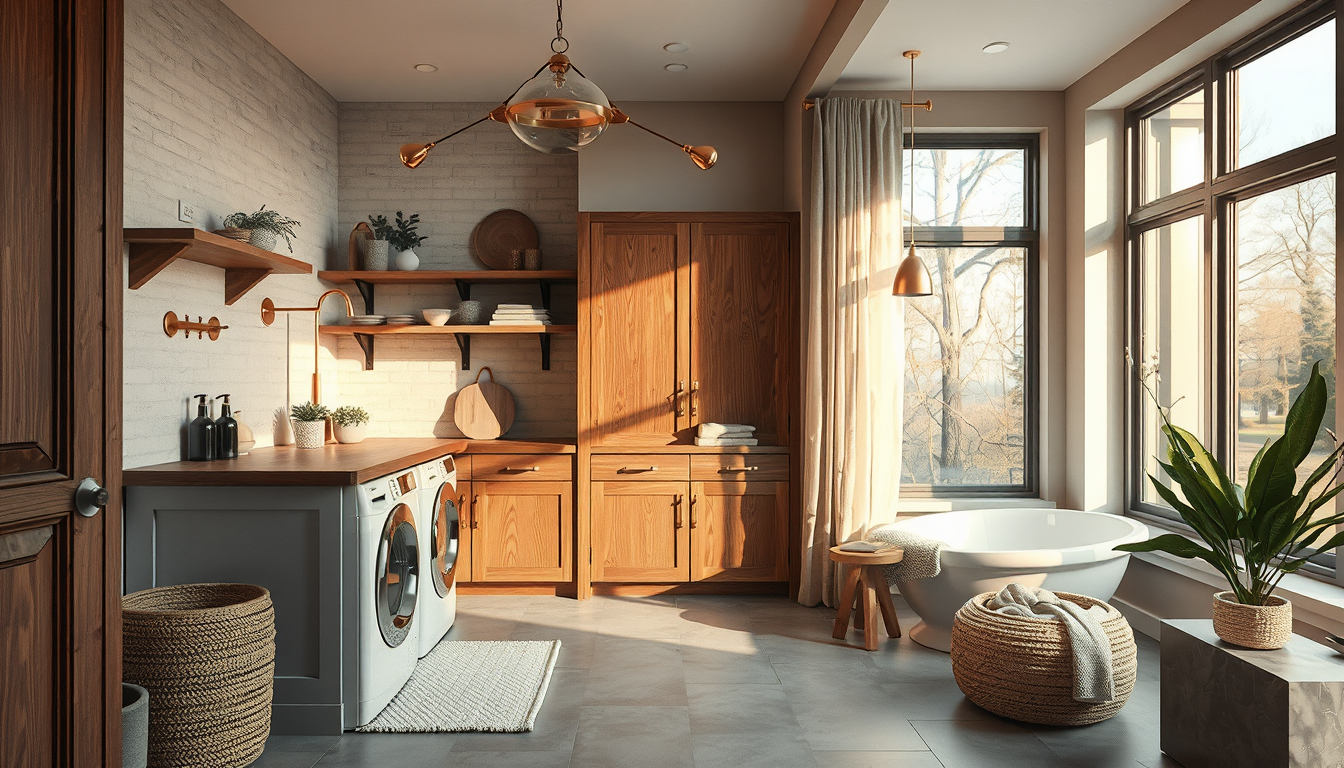
The best laundry room ideas Canada homeowners can invest in start with one truth most design blogs ignore: your laundry room has to survive winter. Five-plus months of soaked parkas, salt-crusted boots, and indoor drying loads put Canadian utility spaces under pressure that a Pinterest-pretty folding counter simply cannot handle. Whether you are working with a Toronto semi basement, a condo closet, or a main-floor mudroom hybrid, the goal is the same — build a laundry space that works as hard as you do, looks intentional, and holds up against humidity, hard water, and heavy-duty gear. At Toronto Interior Designer, we design these rooms every week, and the strategies below are drawn directly from what actually performs in Canadian homes.
What a Canadian Laundry Room Renovation Actually Costs in 2026
Before you pick finishes or shop for appliances, get the numbers straight. A well-planned laundry room renovation in Canada typically falls between $5,000 and $15,000 and can recoup 60–70% of that investment at resale . The table below breaks down realistic moves for Toronto homeowners.
| Upgrade | Typical Toronto Cost (CAD) | Best For | Notes |
|---|---|---|---|
| Stacked washer-dryer swap + plumbing | $2,500–$4,500 | Condos and small semis | Heat pump dryers eliminate venting needs |
| Custom upper cabinetry + countertop | $2,000–$4,000 | Any layout | Use moisture-resistant melamine or marine-grade plywood |
| Mudroom-laundry hybrid buildout | $5,000–$10,000 | Detached and semi homes | Includes bench, hooks, boot tray, and tile flooring |
| Ventilation and dehumidifier install | $800–$1,500 | Basement laundry rooms | Critical for mould prevention below grade |
| Luxury vinyl or porcelain tile flooring | $1,200–$2,500 | All layouts | Waterproof and salt-resistant — skip hardwood here |
Energy Star-certified washers and dryers can save $150–$200 per year on utility bills, a meaningful number under Ontario’s tiered electricity pricing . If your budget allows only one splurge, put it toward the appliances — they drive daily operating costs more than any other single element.
Small-Space Laundry Room Ideas for Toronto Condos and Semis
Price Out the High-Impact Pieces First
Before committing to a renovation mood board, benchmark the furniture, lighting, and storage pieces that set the tone.
Toronto Interior Designer may earn a commission if you shop through these links at no extra cost to you.
Over 60% of Toronto’s housing stock — semis, detached homes, and Victorian row houses — relies on basement laundry setups . Condos, meanwhile, squeeze machines into hallway closets or bathroom alcoves. Both scenarios demand ruthless space planning.
For basement laundry rooms, stack your machines to free up a full 27 inches of floor width. Use that reclaimed space for a narrow utility cart or a wall-mounted fold-down drying rack. Install a ceiling-mounted retractable clothesline above the machines — it costs under $40 and handles a full load of delicates without eating any floor space.
For condo closet laundry, replace bifold doors with a barn-style slider or a pocket door to gain six inches of usable depth. Mount a shallow shelf above the machines for detergent and supplies, and add an over-the-door hook rack on the inside face of the door for small items. If your condo allows it, a compact condensing dryer eliminates the vent line entirely and opens up more flexible placement options.
The principle is the same regardless of square footage: vertical storage first, then depth, then width. If you are tackling a broader renovation, our bathroom renovation checklist covers adjacent plumbing decisions that often overlap with laundry room projects.
Mudroom-Laundry Hybrid: The Essential Canadian Winter Layout
This is the single highest-impact layout move for any Canadian home with a side or rear entry. Combining your mudroom and laundry room into one space eliminates the trail of wet gear through the house and puts dirty outerwear directly next to the wash.
A mudroom-laundry hybrid is not a compromise — it is the most logical floor plan decision a Canadian homeowner can make. Wet gear, dirty boots, and laundry all belong in the same drainage-ready, tile-floored, well-ventilated room.
What the hybrid needs to function:
- Tile or luxury vinyl flooring with a floor drain if possible. Salt and slush will destroy hardwood and laminate within two seasons.
- A built-in bench with open storage below for boot trays and shoe racks. Closed cabinetry traps moisture and breeds mildew.
- Wall-mounted hooks at two heights — adult height for parkas and a lower row for kids’ jackets and backpacks.
- A countertop over the washer-dryer for folding, sorting, and staging school bags.
- A retractable drying rack or ceiling-mounted airer for snow pants, toques, and gloves that need to dry overnight.
Toronto’s 2026 building code updates now encourage dedicated laundry drainage and water shutoff valves on every floor, making main-floor laundry rooms more builder-friendly than in previous years . If you are building new or doing a major reno, talk to your contractor about routing drainage to a main-floor hybrid room.
Best Storage Solutions for Winter Gear and Seasonal Linens
Built-in cabinetry is the number-one most-wanted feature in utility spaces according to 2026 Houzz data . In a laundry room, that means floor-to-ceiling uppers with adjustable shelves — not decorative open shelving that collects lint and dust.
- Upper cabinets: detergent, stain removers, cleaning supplies, and seasonal linens like flannel sheets and heavy duvets.
- Lower cabinets or pull-out bins: sorting hampers for lights, darks, and delicates. Use ventilated wire bins rather than solid-sided hampers to prevent mildew.
- Wall-mounted rail systems: brooms, mops, and the ironing board. A single IKEA SKÅDIS pegboard can hold an entire cleaning kit in under four square feet of wall space.
- Over-door or end-panel hooks: reusable shopping bags, lint rollers, and dog leashes.
For homes with limited laundry room square footage, consider a hallway linen closet within a few steps of the machines. Our living spaces category has more ideas on making adjacent rooms work harder.
Materials and Finishes That Survive Canadian Humidity and Hard Water
Canadian laundry rooms face two enemies that most US-focused design advice ignores: basement humidity and hard water mineral buildup. At Toronto Interior Designer, we specify materials for these conditions on every project.
Flooring: Porcelain tile or luxury vinyl plank. Both are waterproof, salt-resistant, and easy to clean. Avoid natural stone — it stains from iron-rich Toronto water without regular sealing.
Countertops: Quartz or solid surface. Laminate works on a budget but seal all edges with silicone to prevent swelling from splashes. Skip marble or butcher block entirely.
Cabinetry: Melamine, thermofoil, or marine-grade plywood with a sealed finish. Solid wood will warp in a humid basement within three to five years.
Walls: Semi-gloss or satin paint with mould-resistant primer. If the room is below grade, run a dehumidifier and target 40–50% relative humidity year-round.
Appliances: Heat pump dryers are surging in Canadian sales because they are ventless and roughly 50% more energy-efficient than conventional models . They are especially practical in condos and interior rooms where traditional venting is not possible. For inspiration on handling moisture in wet spaces, see our guide to wet room designs for Canadian homes.
Avoid This Mistake
Do not install upper cabinets without first confirming your ceiling height and the swing clearance of your washer and dryer lids. In Toronto basements with seven-foot ceilings, standard 30-inch uppers will block a top-loading washer from opening fully. Measure open-lid height, add two inches of clearance, and mount cabinets above that line — or switch to front-loaders and gain full use of the wall above.
Build a Laundry Room That Earns Its Square Footage
The smartest laundry room ideas Canada homeowners can act on in 2026 are not about aesthetics alone — they are about engineering a room for how Canadians actually live. Heavy winter wardrobes, indoor drying seasons, basement moisture, and hard water all demand specific material and layout choices that generic design advice misses.
Your Next Steps:
- Measure your current laundry space and note ceiling height, door swing clearance, and proximity to plumbing and drainage.
- Decide whether a mudroom-laundry hybrid makes sense for your floor plan and entry points.
- Get quotes from two to three Toronto contractors — ask specifically about drainage routing and ventilation.
- Choose appliances before cabinetry so your layout dimensions are locked in.
- Set a realistic budget using the cost table above and prioritize moisture-resistant materials over decorative upgrades.
- Book a design consultation to plan storage, lighting, and finishes tailored to your home’s specific layout and climate challenges.
Balance Budget and Finish Quality
Mix accessible basics with a few standout pieces so the room feels layered rather than one-note.
Toronto Interior Designer may earn a commission if you shop through these links at no extra cost to you.
Sources
- Canadian Real Estate Association — https://www.crea.ca
- Natural Resources Canada — https://www.nrcan.gc.ca
- City of Toronto housing data — https://www.toronto.ca
- Ontario Building Code — https://www.ontario.ca/page/ontarios-building-code
- Houzz Canada kitchen and bath trends — https://www.houzz.com
Frequently Asked Questions
How much does a laundry room renovation cost in Canada?
A well-planned laundry room renovation in Canada typically costs between $5,000 and $15,000 CAD, depending on scope. Simple upgrades like a stacked washer-dryer swap start around $2,500, while a full mudroom-laundry hybrid buildout can reach $10,000. Most renovations recoup 60–70% of the investment at resale.
What is the best flooring for a Canadian laundry room?
Porcelain tile or luxury vinyl plank are the best choices for Canadian laundry rooms. Both are waterproof, salt-resistant, and easy to clean — critical for surviving winter slush and boot salt. Avoid hardwood and natural stone, which stain or warp from moisture and iron-rich hard water common in Toronto.
Are heat pump dryers worth it in Canada?
Yes. Heat pump dryers are roughly 50% more energy-efficient than conventional models and require no external venting, making them ideal for condos and interior laundry rooms. Under Ontario’s tiered electricity pricing, Energy Star-certified appliances can save $150–$200 per year on utility bills.